Online Reporter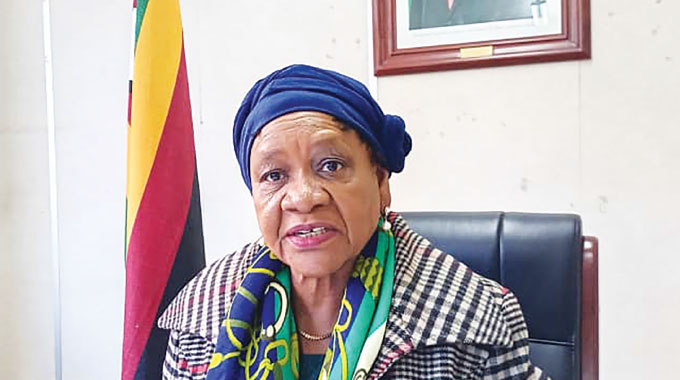
George Maponga
Masvingo Bureau
A Cabinet minister has implored traditional leaders to join the fight against poaching by imposing harsh penalties on those involved in the vice.
This comes as Zimbabwe continues to reap rewards from sustained anti-poaching campaigns that have seen a sharp decline in reported cases involving key species.
Environment, Climate and Wildlife Minister Dr Evelyn Ndlovu on Wednesday revealed that reported cases of poaching of key species such as elephants, lions, rhinos and buffaloes had dropped from a peak of 120 in 2019 to only 20 in the first eight and a half months of this year.
Dr Ndlovu was speaking during the commissioning of tourism infrastructure projects at Kyle Recreational Park on the shores of Lake Mutirikwi.
The projects, which cost US$150 000, include a new entrance gate, tourism lodges and gazebos, a solar power plant, a solar-powered water reticulation system and campsite ablution facilities.
Government, the Zimbabwe Parks and Wildlife Management Authority (ZimParks), Gonarezhou Conservation Trust and the Animal and Wildlife Area Research and Rehabilitation (AWARE) Trust partnered to undertake the projects.
The minister warned that poachers should never be treated softly and called for tough action from traditional leaders.
“On the issue of poaching of our wildlife, I want to implore our traditional leaders countrywide to join the fight against the vice and impose very harsh sentences and fines on those caught poaching,” she said.
“I propose that the culprits should be fined as much as 10 herds of cattle for a single offence by our traditional leaders.
“We must never treat poachers with kid gloves because this wildlife is our heritage bequeathed to us by our forefathers and which we must also pass on to future generations.
“If we allow these poachers to prey on our wildlife, what will tourists see when they visit us? We must jealously guard and protect our wildlife, and traditional leaders have a very key role to play in the war against poaching.”
According to Dr Ndlovu, revenue generated from wildlife through tourism and other initiatives was being ploughed back to help build schools, clinics and roads in surrounding communities.
She added that the Second Republic under President Mnangagwa wanted local communities to benefit from their wildlife resource.
Dr Ndlovu hailed the steady decline in the poaching of key species, saying it was a harbinger of victory over the unsanctioned killing of wildlife.
“I am happy to announce that poaching is under control, as shown by a downward trend in the key species poached, from 120 in 2019, 60 in 2025, to only 20 in 2026 as of today. The key species I am talking about include elephants, rhinos, buffaloes and lions,” said Dr Ndlovu.
“The Wildlife Crime Statistics also show a slight downward trend from 1,355 in 2019 to 1,001 incursions in 2025 and 714 in 2026 as of today, although there was a surge in 2024.
“ZimParks has also significantly increased its law enforcement efforts, including the acquisition of relevant technologies for improving wildlife protection capabilities, especially in providing real and near real-time data for on-ground patrol teams and researchers. This allows early detection of poachers and other environmental changes which may need urgent intervention.”
The minister said ZimParks and other stakeholders involved in wildlife conservation deserved recognition for the inroads made in combating poaching in Zimbabwe.
She noted that Zimbabwe needed to accrue benefits from its sound wildlife conservation policies, pointing out that the country continued to pay the price of a blanket ban on the trade of some wildlife products.
“Driven by our commitment to sustainable wildlife use, we continue to advocate alongside fellow CITES members and the global community to lift hunting and trade restrictions. Removing these barriers will reopen vital revenue streams dedicated to funding the conservation of our diverse wildlife resources,” she added.
“The gazetting of the Parks and Wildlife Amendment Act of 2024 provided for the establishment of the Human Wildlife Conflict Relief Fund. This fund will go a long way in providing relief to victims of wildlife.”
Dr Ndlovu appealed to the Masvingo community to contribute towards the fund, whose establishment was necessitated by increasing human-wildlife conflict cases because local habitats were carrying far more wildlife than their capacity.
“It is unfortunate that Zimbabwe is paying a price for good conservation practices, which has resulted in wildlife overabundance and the associated rise in human-wildlife conflict cases, as such cases continue to rise as shown by our national records.”
According to Dr Ndlovu, Zimbabwe continued to make huge investments in the tourism sector to consolidate its position as a key plank of the national economy in terms of contribution to gross domestic product as the country marches towards Vision 2030.
“Investments in tourism infrastructure and facilities is consistent with the country’s National Tourism Policy and the National Development Strategy 2, which acknowledges tourism as a primary engine of economic transformation with a target of US$5 billion in annual receipts by 2030,” she said.
“It is not a secret that the realisation of Vision 2030 ‘Towards a Prosperous and Empowered Upper Middle Income Society by 2030’ will depend on the practical measures that we undertake both as Government and the private sector together.”
Turning to Kyle Recreational Park, Minister Ndlovu said the place was on course to maintain its position as a potential top destination for tourists in Masvingo province, thanks to being home to a thriving white rhino population and its proximity to Lake Mutirikwi, Zimbabwe’s second-largest internal dam.
The park is also a stone’s throw from the Great Zimbabwe Monument World Heritage Site. In his address at the same event, Minister of State for Masvingo Provincial Affairs and Devolution Ezra Chadzamira, who was represented by the Director responsible for Coordination in his office, Ms Rosemary Chingwe, said Masvingo was priming its tourism sector to be a major contributor to the province’s gross domestic product as it targets a US$8 billion provincial economy by 2030.
Minister Chadzamira noted that besides Kyle Recreational Park, Lake Mutirikwi and the Great Zimbabwe Monument, Masvingo was also home to Zimbabwe’s largest internal water body, Tugwi-Mukosi Dam, and the Great Limpopo Transfrontier Park, arguably the biggest wildlife habitat in the world.
The Minister also celebrated the province’s recent hosting of the Sanganai/Hlanganani Dzimbahwe World Tourism Expo, saying it was evidence that Masvingo’s tourism sector had come of age.
ZimParks Director General Dr Eddison Gandiwa also attended the event.