admin
admin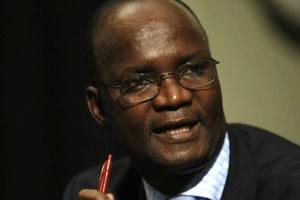
Bulawayo Bureau
THE Ministry of Information, Media and Broadcasting Services has started working on expanding the media industry with priority given to upgrading broadcasting services from analogue to digital transmission, which will see the country being able to establish up to 40 new broadcasting stations by 2015.
Addressing a well attended media stakeholders meeting at a Bulawayo hotel yesterday, Information, Media and Broadcasting Services Minister Professor Jonathan Moyo said the upgrading exercise would create jobs for hundreds of professionals in the media and enhance quality production and vibrancy of the local media industry.
He said the ministry required US$30 million for the digitalisation process in line with the International Telecommunications Union requirement, which has set June 2015 as the deadline for compliance.
“The digitalisation issue is very important for our ministry especially with respect to broadcasting services. We need to switch from the analogue system to the digital platform by 2015,” said Prof Moyo.
“With the coming transformation from VHF to UHF services we will have an increased frequency spectrum and out of this there is a possibility of establishing up to 40 broadcasting services.
“As a country, we need up to US$30 million to change from analogue to digital and we have no choice, but to find this money. Zimbabwe has 24 transmitter sites and these would be increased to 48.
“There are real businesses opportunities in this transformation process in that we will be able to have a new and efficient media platform. I am glad this is coming at a time when we are pushing for the indigenisation programme. Between now and June 2015 we will be busy working on this issue.”
Prof Moyo, who was accompanied by his deputy, Cde Supa Mandiwanzira and senior ministry officials, urged media entrepreneurs to brace themselves for the coming media growth and start deliberating on the legal implications, licensing propositions and how they would grab the opportunities on offer.
He said the digitalisation process would provide opportunities for specialist businesses such as stage designers, technicians and professionals in the arts industry.
Prof Moyo said the digitalisation process would open up airwaves, which was not possible given the limited frequency space in the analogue system, and increase broadcasting transmission and competition as there would be more radio and television stations.
He challenged journalists in the country to generate debate around the issue and encouraged film and radio producers to start working on generating quality content as there would be more demand for their products.
Prof Moyo urged stakeholders in the media to work together to preserve national interests, saying the Government would not listen to strategies that sought to divide people but listen to those that build the nation.
He said media organisations should move out of the election mode and focus on building the nation through debating critical issues that promote the founding values of the country as captured in the new Constitution.
Prof Moyo urged the media to shun polarisation and conduct operations in a more professional and ethical manner.
Earlier on, the stakeholders who were drawn from different media houses, artistes and members of the civil society, presented their submissions to Prof Moyo on how they wanted the portfolio run and highlighted the challenges they were facing.
The stakeholders called for the establishment of radio and television stations headquartered in Bulawayo, saying people from Matabeleland were marginalised in terms of broadcasting coverage.
Film producer Mr Cont Mhlanga called for the setting up of a film commission that would look at financing film production and monitor the balance of representation on people from different regions in the country.
Others called for the scrapping off of duty on media equipment being imported into the country to support growth of local industry.
Zimpapers board member Mr Delma Lupepe said equipment in mainstream media was dilapidated and urged the Government to facilitate recapitalisation of the media.
Chronicle Editor Itai Musengeyi said the print media was facing challenges importing news print and urged Government to relax duty on the raw material as well as reviving local news print production.
Mr Prince Peter Zwide Kalanga Khumalo, a descendant of King Lobengula, urged the Government to expedite the licensing of community radio stations and avail resources to support them.
Some called for the review of the censorship laws, saying the legislation was stifling creativity.
The artistes complained about piracy in the arts sector and urged the Government to act on the issue.
Musicians complained that those from Matabeleland were not given enough airplay on television and radio stations as well as in participating in national events such as national galas.


 Online Reporter