Online Reporter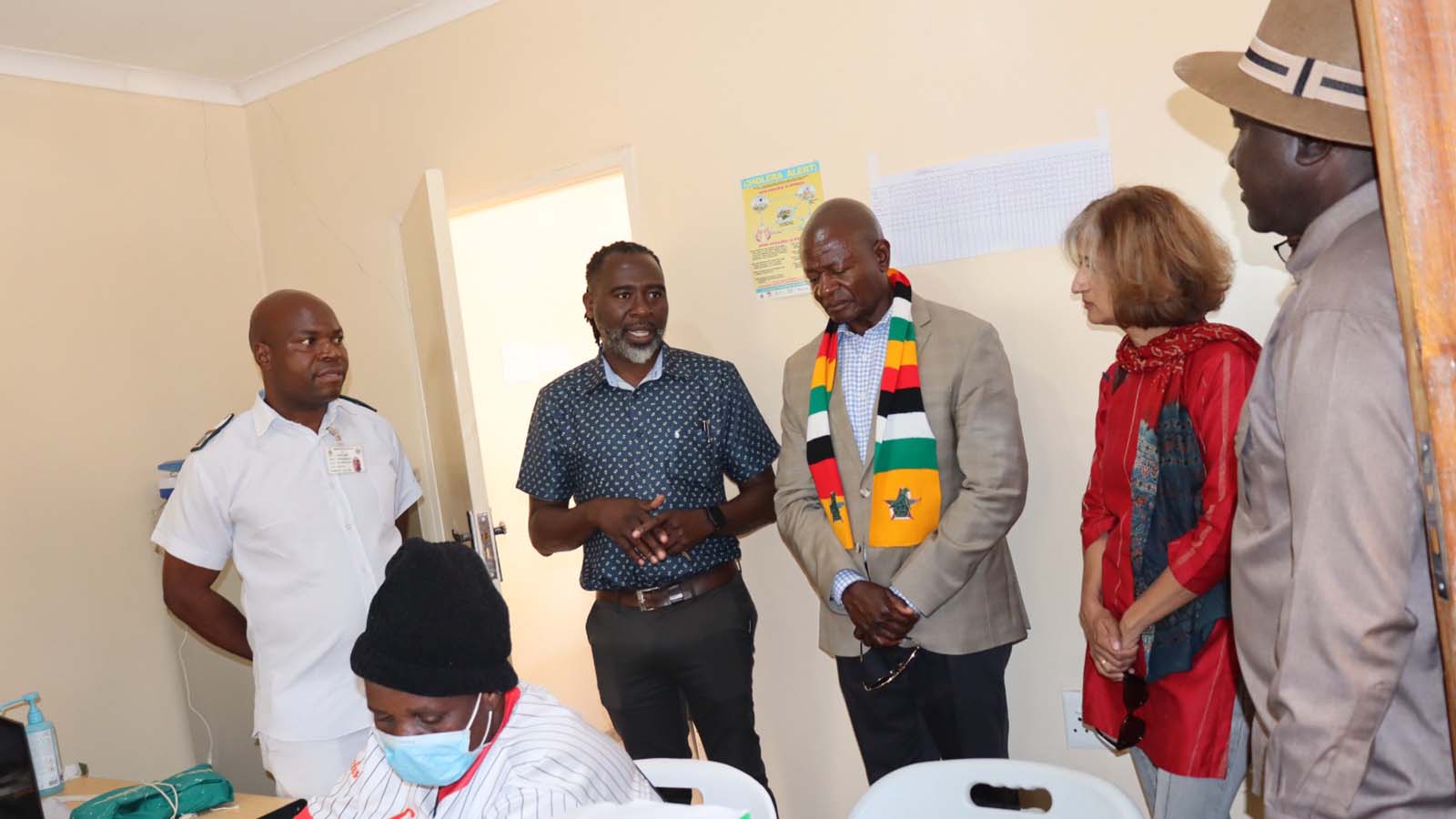
Thupeyo Muleya
Beitbridge Bureau
The Ministry of Health and Child Care (MOHCC) is using the Community Antiretroviral Therapy Refilling Group (CARG) model to support Zimbabweans returning from South Africa who are already on HIV treatment.
District Medical Officer, Dr Lenos Samhere, gave the update on Thursday during a tour of the Beitbridge Reception and Support Centre.
He was updating the Minister of Local Government and Public Works, Daniel Garwe and a United Nations delegation led by its Resident Humanitarian Coordinator, Dr Rosemary Kalapurakal.
Dr Samhere said most returnees from South Africa who need ART are already being catered for under the CARG model.
These had registered on the model since they could not access ART in South Africa because of their immigration status.
“CARG makes it easy to integrate them because they are already part of groups getting ARVs,” he said.
“Since we opened the clinic on 18 June, we have attended to 127 patients seeking ART services, and we have the support of other partners on the ground for HIV related services such as voluntary counselling and testing.”
The CARG model allows stable HIV patients who have disclosed their status to each other to form groups of six to twelve members.
One focal person collects medication for the whole group each month. This means fewer people are missing medication because of long travelling distances.
The initiative also reduces defaulting, especially in areas where health facilities are limited.
Dr Samhere said the clinic at the Reception and Support Centre started operating on 18 June and was operating 24 hours daily with day and night shifts.
The clinic staff includes Registered General Nurses, nurse aides, environmental health practitioners, nutrition staff, laboratory staff, pharmacy staff, social workers, general hands, and administration and logistics personnel.
“Since opening, the clinic has seen 1,474 clients. Of these, 929 are females, and 545 are males. Children under 15 years are 457,” said Dr Samhere.
“The clinic has also recorded 145 cases of diarrhoea and 553 cases of upper respiratory tract infections.”
On water and sanitation, Dr Samhere said borehole water is available on site and that purified water has also been donated by well-wishers.
He said there were 16 fixed toilets at the facility and that more mobile toilets have been mobilised to reach a target of 30 toilets.
“Handwashing stations are available but not adequate. A refuse compactor collects waste daily,” said Dr Samhere.
He said that for epidemic preparedness, a Cholera Treatment Unit has been set up and that so far they have no confirmed cholera cases.
Dr Samhere said partners such as UNICEF, MSF, Red Cross, and others are assisting with sanitation.
Key challenges, he said, include inadequate drugs and other commodities, IPC concerns, and toilets not being enough for the number of people present.
“To address this, key staff have been assigned duties at the centre. Drugs and sundries have been mobilised from the district hospital. Partners including MSF, UNICEF, Red Cross, NAC, Higher Life Foundation, and IMC are providing support. Mobile toilets have also been set up,” he said.
On reintegration, Dr Samhere said the plan includes family and child health services such as catch-up vaccinations, nutrition monitoring, SRH and maternity services.
He also mentioned that for infectious diseases, HIV clients under CARGs are being referred to and linked to groups while TB cases are being diagnosed, and treatment is continued.
Dr Samhere added that Non-communicable diseases (NCDs) were also being addressed, and these include mental health, hypertension, diabetes, cancer, and drug and substance abuse.
“The MOHCC structures are already in place and functional starting at the village level. So, there is also a strong community support network through existing programmes,” he said.
He said the ministry will strengthen surveillance at all levels, improve service and commodity availability, and establish designated temporary holding facilities in all districts and provinces.
The CARG model and the reception centre are part of Government efforts to ensure that no returnee is left without health care and dignity.
Minister Garwe and the UN Resident and Humanitarian Coordinator, Dr Kalapurakal, also signed a joint resource mobilisation plan to help integrate returnees from South Africa.
The minister said the government expects the numbers to increase because more funds and buses have been provided to ferry Zimbabweans from South Africa.