admin
admin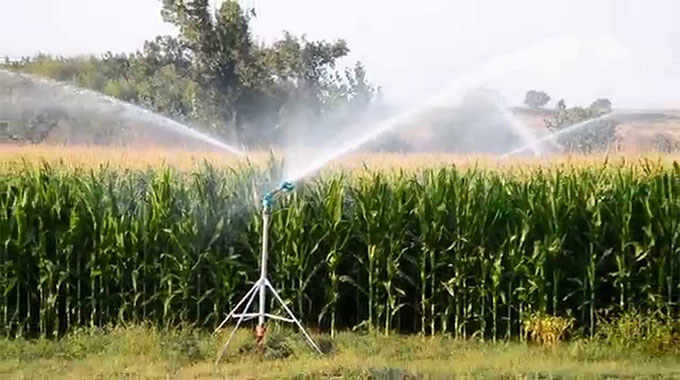
Ivan Zhakata in Masvingo
The Ministry of Lands, Agriculture, Fisheries, Water and Rural Development, alongside the United Nations Development Programme (UNDP), is ramping up efforts to empower farmers and achieve Vision 2030’s goal of becoming a middle-income nation.
The initiative leverages a project funded by the Green Climate Fund (GFC) called “Building Climate Resilience of Vulnerable Agricultural Livelihoods in Southern Africa” and focuses on strengthening the resilience of vulnerable communities, particularly women farmers, in the face of growing climate challenges.
Speaking at a GCF media workshop in Masvingo yesterday Mrs Barbara Machekano, acting Director of communications for the Ministry said they were empowering farmers by expanding irrigation capacity.
She highlighted the country’s vast water resources, with 10 700 water bodies holding the potential to irrigate two million hectares of land.
Mrs Machekano said the Ministry aimed to increase the number of irrigated hectares through smallholder irrigation schemes, ensuring food security for the nation.
“We rely heavily on rural households and subsistence farmers,” she said.
“Promoting these farmers is crucial for achieving food security. We also need private sector involvement to fully realise this goal.”
The Ministry is currently constructing 13 dams to provide sufficient irrigation water for surrounding communities.
“Urgent planning and utilization of these water bodies is essential for food security. By maximising our 360 000 hectares of irrigable land we can achieve food security as a nation,” Mrs Machekano said.
UNDP communications associate Mr Anesu Freddy said they were committed to transforming irrigation schemes into profitable ventures that benefit local communities.
“The GCF project, launched in 2020 and targeting 2.3 million farmers in Manicaland, Matabeleland South, and Masvingo, is scheduled to conclude in 2027. This collaborative effort between the Zimbabwean government and UNDP aims to empower farmers, enhance food security, and contribute to the nation’s economic growth.”



 Online Reporter