

 Chronicle Editor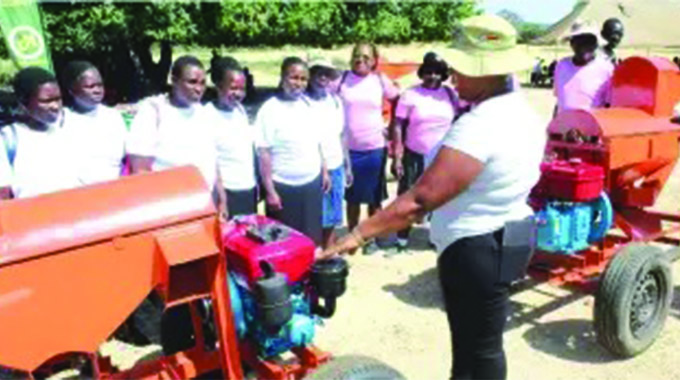
Nokuthaba Brita Ncube, [email protected]
THE UNITED States Agency for International Development (USAid) and the Food and Agriculture Organisation (FAO) have donated 20 chaff machines to the Ministry of Lands, Agriculture, Fisheries, Water and Rural Development to complement Government efforts to mitigate the effects of El Nino-induced drought.
The machines will be distributed in Matabeleland South province.
The country is reeling under the devastating effects of the 2023/24 El-Nino-induced drought. Through the United Nations Central Emergency Response Fund (CERF), FAO is leading the implementation of the project dubbed; “Mitigating the Impact of El Nino-induced Drought” (MIEND) in Zimbabwe.
The project is being implemented by the Government through provincial and district drought relief committees.
The project seeks to reduce the impact of the drought in the most affected districts in the country by improving access to survival stock feed and access to water for livestock as well as raising awareness on drought mitigation strategies.
Speaking during the handover in Bulawayo recently, USAID Bureau for Humanitarian Assistance (BHA) office director Mrs Amber Pavlin said the machines will be used in cutting chaff which will help get the nutrition for livestock around the country.
“We are providing this equipment to the people of Zimbabwe through working with the Food and Agriculture Organisation (FAO) and the Government of Zimbabwe. These machines will protect livestock from the effects of drought and help boost livestock nutrition,” said Mrs Pavlin.
The Bureau for Humanitarian Assistance USAID deputy director Mr Ahmadou Ndiade said that the initiative will contribute immensely to limiting the spread of diseases and sustaining livelihoods.

“It is part of our support for the El Nino response as you know livestock farming is an important livelihood activity for many people in this region that are targeted especially regions four and five in Matabeleland South province,” said Mr Ndiade.
Speaking at the same occasion, Matabeleland South deputy director for Agricultural and Rural Development Authority (Arda) Mr Mkhunjulelwa Ndlovu said the initiative will make a difference in terms of nutrition provision to the livestock as several districts in Matabeleland South province are faced with biomass shortages to save livestock.
“This project will be covering specifically Umzingwane District which is where it will be piloted. The entry point is to deal with the farmer field school where we are saying every village should have a farmer field school for farmers to exchange ideas which is an innovation platform,” he said.
Mr Ndlovu said the project is targeting five provinces and eleven districts.
“In terms of capacity, one machine can produce up to 50 tonnes of biomass if the farmers are well capacitated in terms of training, utilisation, business skills and plan,” he said.
“Our thrust is now to deal with the mindset of the farmer to understand that this is not a donation but a business intervention where they need to attach value to it and develop it further and the skills are passed on to the youth and women.”
Last February, FAO launched the USAID-funded project to mitigate the impact of livestock diseases in Zimbabwe. The USAID provided US$2,2 million to FAO for the “Mitigating the Impact of Livestock Diseases” one-year project.
The project’s design is based on the FAO, Department of Veterinary Services (DVS) and key livestock sector player’s technical experience in the holistic approaches for the prevention, surveillance and control of animal diseases as well as drawing on experiences and lessons from Zimbabwe and the Southern Africa region.
The project is expected to strengthen responses to livestock diseases outbreaks, thereby protecting livelihood assets and promoting improved livestock nutrition to increase animal disease resistance.
Due to the important role that women play in household resilience to shocks as well as in the livestock sector, the project will focus on enhancing women’s roles in household decision-making and project participation.


 Online Reporter