

 admin
admin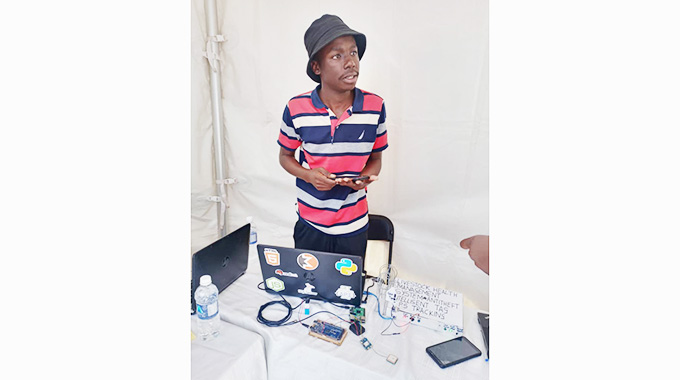
Sifelani Tsiko Agric, Environment & Innovations Editor
The lacerating regime of pain and suffering brought about by the missing of his father’s Brahman bull at a large farm in Chivhu motivated Farirai Masocha, a 21-year-old University of Zimbabwe undergraduate computer science student to develop a livestock tracking application.
Livestock means a lot to his father and losing a Brahman bull which was supposed to mate cows at the farm was quite troubling for Farirai.
“I developed the application after my dad’s Brahman bull went missing at our farm. The farm is huge and the lines of worry on my father’s face forced me to think deeply about the possibility of developing a livestock tracking application,” he told the Herald at the UZ Research Innovation and Industrialisation Week event.
“The farm is huge and I had no idea where I could find the bull. I feared that the loss of the bull could trigger depression on my father. He loves his cattle. So being a young computer science student, I thought of using what I learnt from a course on doing the internet of things.”
The Masochas have about 110 cattle that roam freely at their farm. Stock theft is a major problem in the country and developing livestock tracking applications was so dear to Farirai.
He developed a livestock monitoring and management system which can among other things – locate the animal, prevent theft as well as inform the farmer about the state of health of the animal.
In addition, the application has a veld fire detection system to help curb wildfires and deaths or injury of livestock.
“We developed tags that contain a chip that we place on animal ears or ankles. This monitors animal health and location of the animal within our farm. The chip can send signals to a communication network base station where all processing of information is done. A farmer and his farm workers can can get alerts via mobile app on the exact location of the animal within the geographical location of the farm,” the young computer science student says.
“We developed a software which communicates all the components and helps track the animal on the farm and to where it is if stolen. Even if its stolen to Masvingo or Mt Darwin we can track it.”
This application, which is still a prototype, he says, could help both large and small-scale farmers prevent stock theft and save them huge amounts of money through prevention of diseases and curbing stock theft.
“When your cattle goes beyond the geo fence of the farm, you get a notification message on your mobile app. It can tell you where your cattle is. In addition, we have a temperature sensor chip that can determine the temperature of the animal,” Farirai says.
“If the animal is sick, the temperature could be below 37,5 degrees Celsius and also if its above 38 degrees, then you know the animal is sick. You get a notification message about this and a farmer can then quickly call livestock extension workers or experts to get assistance before the animal dies.
“All this can help save our farmers and the nation at large our valuable livestock asset through the aid of computer applications. The January disease has killed thousands of animals in most parts of the country. With such applications, it is possible to detect the disease early and save our livestock asset base.”
Livestock is a stock of wealth historically in Zimbabwe and many use cattle and donkeys as draught power and to earn livelihoods through sale of the assets.
Cases of stock theft are now rampant in Zimbabwe with rustlers hitting hardest farmers in most border lying areas where rustlers work with cross-border syndicates to steal livestock.
 On average, between 5 000 and 10 000 cases of livestock thefts are reported per year in the country according to the ZRP Anti-Stock Theft Unit.
The unit has over the years intensified its campaigns, deployments and community based initiatives to fight animal thefts.
Rustling is causing huge losses to the farmers causing high levels of anxiety for farmers who have built their flock over the years.
“I believe strongly that my application can have wider application and help my dad and indeed the whole nation is fighting stock theft crimes in our country,” said Farirai.
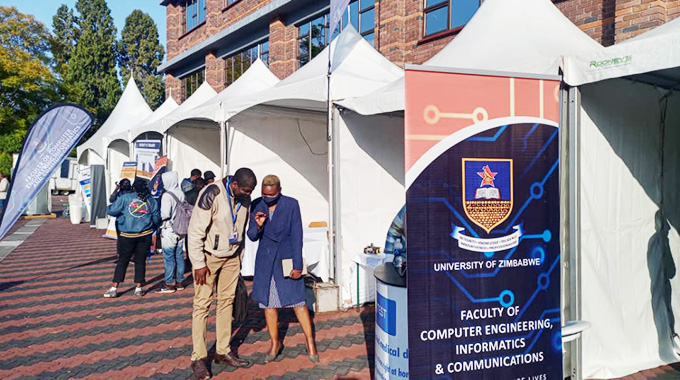
The UZ was holding the event to showcase new frontiers of knowledge and emerging technology and innovations at the institution.
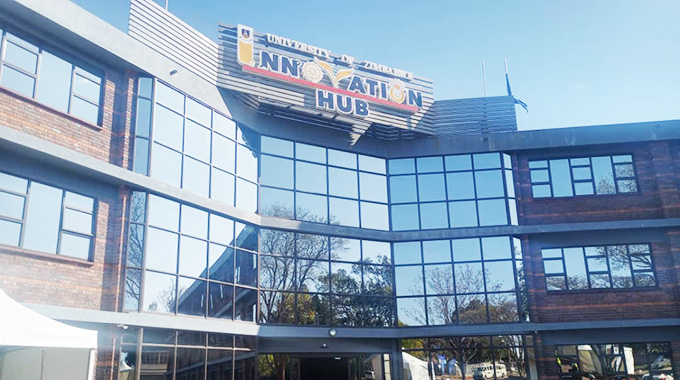
“We are so excited to be hosting this event and the UZ has a lot of talented students who are seeing possibilities and opportunities to develop new applications that can save our livestock assets, plug revenue leakages and enhance our economic growth,” said Prof Florence Mtambanengwe, executive director at the UZ Innovation Hub.
“All this is part of Education 5.0 – a solution-based education model that aims to harness the ingenuity of our students to find solutions to the country’s most pressing problems.”
The event was being held under the theme: “University of Zimbabwe: Actualisation of a Research-Innovation – Industrialisation Ecosystem Model for Zimbabwe’s Economic Development.”



 Online Reporter