


 Chronicle Editor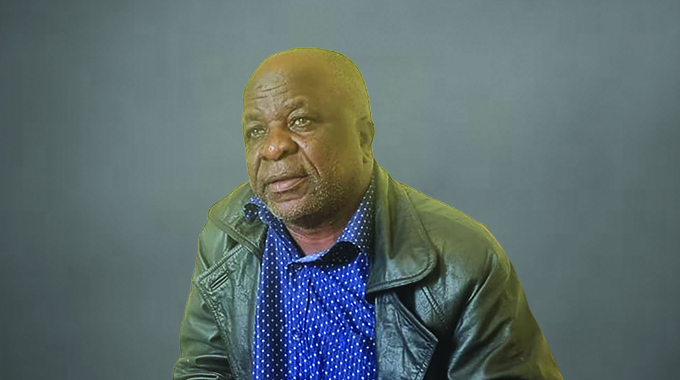
WE continue our interview with the former Battalion Medical Officer for the First ZPRA Battalion, Cde Miller Mlilo pseudonym Cde Masotsha Nkiwane. Cde Mlilo now a councillor on a Zanu-PF ticket in Bubi District, Matabeleland North Province was last week talking about his time at Nampundwe Transit Camp in Zambia before being sent to the Freedom Camp (FC) also in Zambia where he was introduced to the proper military training. Today Cde Mlilo tells our Assistant Editor Mkhululi Sibanda (MS) about his training at Camp Guerilla Training (CGT) also in Zambia. Below are excerpts from the interview. Read on . . .
MS: From FC you said you were moved to CGT. Could you tell us what happened there?
Cde Mlilo: We had to start afresh our training at CGT where at that time the camp commander was Cde Goronga, a very tough guy. In our group, I think we were more than 600 recruits and our training had its emphasis on guerilla warfare. Besides Cde Goronga we had Cde Maseka as the Chief of Staff while instructors included comrades such as Dry Phetsheya, now Dr Milton Chemhuru, the one who after Independence became the Provincial Medical Director for the Midlands Province. During the war Dr Chemhuru was known as Cde Mbeya and he was in charge of training medical officers. He is the one who trained us the medical officers.
MS: Take us through your training programme.
Cde Mlilo: On a normal training day we would wake up very early in the morning for physical exercises, military drills which were very tough. Then after the physical drills which would be after breakfast, we would be split according to our areas of specialisation such as medicine which I belonged to, artillery, reconnaissance and so on. However, when it came to tactics, shooting practice, short march and manoeuvre we would all go. Like I said before, our training was very tough and Goronga the camp commander was an uncompromising fellow. If one struggled during the physical drills and would not continue, Cde Goronga had set a rule that the not-so-fit comrade be lifted onto a stretcher bed made of thorns, ameva sibili. You will see the comrade jumping out of that stretcher bed because the thorns would be prickling him. As a result of such treatment comrades stopped being cry babies. Then at CGT, we were all armed with the Seminov weapon, but when it came to shooting practice we would use AK-47s, machine guns, and other weapons as part of training in weapon handling. We would be taught and go on to demonstrate how to strip and assemble a weapon such as an AK-47. We could do that even while blindfolded. One of the emphasis on ZPRA training was topography which meant map reading so that during operations guerillas would appreciate and navigate through the terrain they would have been deployed to. We also did judo and bayonet charge which was meant to cater for close combat action.
MS: You said you specialised in the medical field. How were you chosen?
Cde Mlilo: We were chosen to train as medical officers soon after we started training at CGT. We were selected by the camp medical officer, Cde Mbeya, uDr Chemhuru. I am not sure what qualities he saw in me but what he wanted were people who could read and understand English as well as do some calculations. Although I had not gone far in my education I passed his aptitude test.
MS: How many were you?
Cde Mlilo: We were a platoon that is 30 comrades. During training, we started practising our medical duties on fellow recruits even on the instructors. We would give them tablets when they were not feeling well or even treat their wounds in case a comrade was injured. We had a camp clinic at CGT which was well equipped.
MS: I think finally you had your pass-out parade.
Cde Mlilo: We had our pass-out parade where the ZPRA Commander-In-Chief, Cde Joshua Mqabuko Nkomo came in a Zambian helicopter as the reviewing officer. He addressed our parade and urged us to be brave as we were going to be deployed to the front. Dr Nkomo said we should show courage at the battle front. In his own words he said “Selisiya ekhaya ukuya qondana lesitha kodwa angifuni kubona inxeba esiphundu as that would be a sign of cowardice.” After the pass-out parade some of us who had specialised in certain areas were deployed to Mlungushi where there were four conventional battalions. I was immediately appointed battalion medical officer for the First Battalion which was under the command of Madliwa, uMajor-General (Rtd) Stanford Khumalo. Other battalion commanders there were Cdes Munda (Second), third by now Lt-Col (Rtd) Jack Matiwaza and the fourth by now late Colonel Soneni Maphenduka Moyo.
MS: When you moved to Mlungushi what were your first impression of the situation?
Cde Mlilo: I was taken aback because I was trained to fight as a guerilla but when I got there I found soldiers who were living in shelters, as a guerilla that was amiss. The comrades at Mlungushi had been trained by the Zambian Defence Forces and were schooled in capturing and holding the ground. They were a regular force. Some of us trained in guerilla warfare had been taught to make surprise attacks on the enemy and withdraw as soon as possible. We had also been taught to live in the bush and not to have shelters as that would expose us to the enemy. At Mlungushi the comrades also recognised ranks and saluted their superiors, something that is not done by guerillas. The comrades at Mlungushi were also required to be clean shaven which was not the case among the guerillas. So at first, it was very difficult to accept the situation.
MS: Your rank as the battalion medical officer was also recognised I suppose.
Cde Mlilo: As the battalion medical officer it meant I had to live close to the battalion commander and other senior officers such as company commanders. My rank was also up there and we had a different mess from the other ranks where we had our meals. We were senior officers, there was an officer’s mess at Mlungushi. Even our living quarters were separate from the troops and I lived closer to my battalion commander, Cde Madliwa.
MS: How many troops were there at Mlungushi?
Cde Mlilo: Each battalion had three companies of infantry men and an infantry company has at least 90 soldiers. In addition to that the battalions had attachments. When we completed our training at CGT, I and other members of the medical squad were sent to Mlungushi as an attachment to the battalions, the same applied to comrades who had specialised in artillery, reconnaissance and ant-air weapons. So at the end of the day you find that a battalion had 500 or so soldiers.
MS: What about the commanders, where were they coming from?
Cde Mlilo: The commanders were senior guerillas not in age but in war experience who had seen action from the front, but had been recalled from the front and sent to the Soviet Union to do officers courses like the battalion commanders course. Even the company commanders had been trained in Zambia and sent to the Soviet Union. Above the battalion commanders there was Dubhu or Ben Mathe (Brigadier Tjile Nleya).
MS: I’m told Mlungushi experienced heavy bombings from the Rhodesians, may you share with us what you experienced there.
Cde Mlilo: The Rhodesians after receiving intelligence about the formation of regular battalions at Mlungushi attacked us not once, not twice but on many occasions in a bid to cripple the ZPRA strategy of deploying conventional forces to Rhodesia. Of all the camps in Zambia, Mlungushi was the most attacked. They would come early in the morning, afternoon and even in the evening, but still failed to penetrate us. This was because the camp was heavily fortified and well-armed. Each battalion had four amaZegue and that meant 16 in that camp and strategically deployed. So whenever the Rhodesian aircrafts descended on the camp they met fierce resistance. They could not even direct their bombs to the positions they would have wanted. The armament that was at Mlungushi was excellent, we also had amaB10, Grap Ps and other heavy war material. That was because ZPRA as an army had transformed itself from a guerilla outfit to a proper army. So the bombardments at Mlungushi in a way prepared us for what to face when we were eventually deployed to the front. So when we came under heavy attack when we had deployed along the Zambezi River there was nothing new, we were used to that.
MS: What about casualties on your side at Mlungushi?
Cde Mlilo: I am being honest with you, we didn’t lose a single person at Mlungushi. Whatever the enemy was trying to do it failed. In fact, they got frustrated because we never changed positions as we were ready for them.
λ To be continued next week with Cde Mlilo narrating about the First Battalion deployment along the Zambezi River close to Kariba.


 Online Reporter