

 admin
admin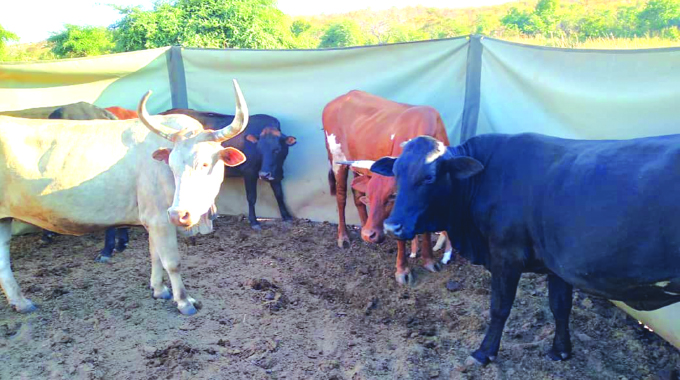
Martha Katsi Correspondent
The sweltering heat in Binga District in the Zambezi Valley, in northern Zimbabwe, makes 47-year-old Patrick Mutale’s face contort with pain as he recalls how lions killed two of his calves in 2016.
Just a year later, in 2017, hyenas devoured his 15 goats.
Mutale, a smallholder farmer in Gande Village, Ward 5 in Binga, Matabeleland North Province, still cannot comprehend the loss.
Wild animals have become a real danger to communities sharing borders with protected areas and wildlife reserves, particularly for the 16 000 people living in Wards 3, 4 and 5.
They are more of a threat than common livestock diseases.
“It was around 11pm when I heard animal noises outside. I went to check and watched helplessly as hyenas feasted on the carcasses of my 15 goats. There was nothing that I could do because of fear of being attacked as well,” said Mutale.
“In the past, we were not that threatened by wildlife, but now that wildlife populations are increasing in some places, we live in fear every day.”
Mutale blames his loss of calves and goats on poor kraals that did not give the animals enough protection.
His goats and cows were kept in a pen (or kraal) made of wooden poles with gaps that allowed predators to easily see what was inside.
The nature of these structures in Binga encouraged the predators to attack.
In Mbire district, Mashonaland Central Province, two people were recently killed by elephants, another person died from a snake bite, and yet another was reportedly killed by a hippo.
These four cases were reported by the Zimbabwe Parks and Wildlife Management Authority (ZimParks).
“Throughout Zimbabwe, cattle, goats and donkeys have been lost, while crops on close to 7 000 hectares of land have been damaged over the last three years,” said ZimParks spokesman Tinashe Farawo.
Livestock is predominantly a form and measure of wealth for most of Zimbabwe’s rural folk.
Most families own goats, cows, sheep, chicken and rely on these for food, good nutrition and livelihoods.
A loss of an animal results in a loss of wealth and can increase food insecurity.
Communities in Ward 5 living adjacent to Chizarira National Park and the Sijarira Forest both protected areas, are in constant danger from wildlife attacks.
Elephants, hyenas and lions are common and roam around, regularly killing livestock and destroying crops.
Since January 2021, more than 68 cases of human wildlife conflict were reported and attended to by the Problem Animal Control Unit at Binga Rural District Council (BRDC).
Two people were killed, one by an elephant and the other one by a crocodile. Despite the numerous reports of animals destroying crops and killing livestock, the BRDC local authority have limited resources to promptly respond to all requests.
“People are bitter and disheartened with stray animals, especially elephants, lions and hyenas and want to shoot them. This, however, is illegal and not the best solution but highlights the urgent need to find effective methods to keep the animals away from people’s livestock and crops,” said Joshua Muzamba, the chief executive officer for BRDC.
“If well managed, the wildlife can be used sustainably to benefit the same local communities through tourism ventures, cash income and food security.”
In a positive development, these tragic experiences could now be a thing of the past or, at least, the threat will be minimised, following interventions by the Sustainable Wildlife Management (SWM) Programme, which is funded by the European Union.
The SWM Programme has supported the three wards with 10 predator proof mobile bomas.
A predator-proof mobile boma is an enclosure made of opaque material to block off the view for the predator such that it cannot attack livestock if it cannot physically see the animals.
This contribution is part of the SWM Programme work in the Kavango-Zambezi (KaZa) Transfrontier Conservation Area to promote sustainable use of natural resources, including wildlife, fisheries and forests through community conservancies.
“The introduction of predator-proof mobile bomas by the SWM Programme in our community came at a time when we were losing a lot of livestock. Given the difficult economic conditions in our country, for one to raise the money to buy a replacement cow or goat is a major challenge,” said Joyce Mpande, another farmer from Ward 3.
The predator proof mobile bomas donated by the SWM Programme measures 24 meters and can house between a cattle herd of 15 to 17 animals.
Currently, the predator proof mobile bomas are being used on a rotational basis with farmers passing them on every three months.
Given the appreciation by the farmers on how the predator proof mobile boma is helping them, it is expected that the farmer would purchase their own predator proof mobile boma, so as to continue keeping their livestock safe.
In the event that the farmer fails he/she will keep his livestock in a well secured improved kraal.
Predator proof mobile bomas offer a number of advantages compared to the ordinary kraal.
A predator-proof mobile boma can be at one place for months hence increasing soil fertility and soil protection against erosion.
Poles cut to construct kraals are detrimental to the environment.
“When a farmer uses a kraal or a pen, lions scare cattle or goats and during that confusion they will break in to attack, or the livestock will break out and be attacked. The situation is different with a predator proof mobile boma which gives complete cover so that predators cannot see what is inside, and so will be deterred from breaking in,” said Maxwell Phiri, SWM Programme technical assistant.
“We’re happy with this initiative, thanks to the SWM Programme. In addition to protecting our livestock from predators, we are also improving soil fertility on the land where predator proof mobile boma is kept,” said Mutale.
“Improving soil fertility is particularly important for local communities, so that they can increase their production of maize and other crops in areas where this has been in decline.”
The SWM Programme is implemented by a consortium established by the Food and Agriculture Organisation of the United Nations (FAO), the French Agricultural Research Centre for International Development (CIRAD), the Center for International Forestry Research (CIFOR) and the Wildlife Conservation Society (WCS).
In Zimbabwe, activities are run by CIRAD in conjunction with the government. The programme aims to restore the balance between food security and wildlife conservation, an essential condition for creating a world free from poverty and hunger.



 Online Reporter