Online Reporter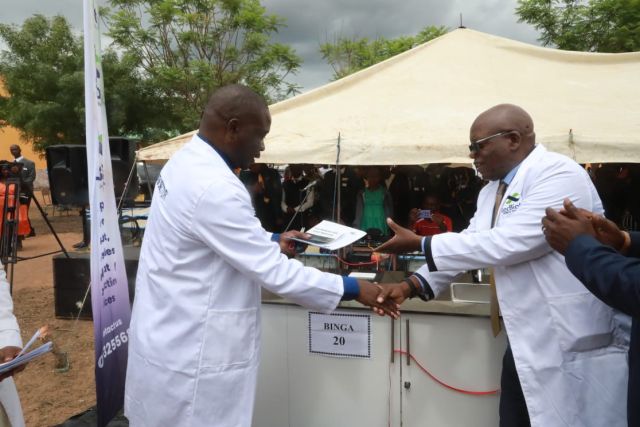
Raymond Jaravaza in Lupane
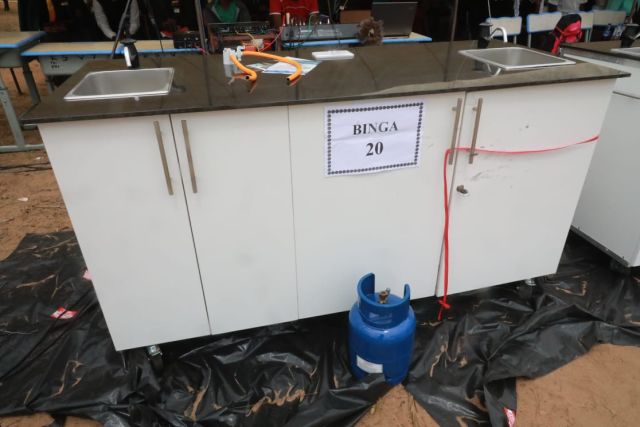
Equipped with a gas tank, solar panel, inverter, battery, hand-operated pump, and water containers, a locally manufactured mobile laboratory is set to transform science education in rural schools across Matabeleland North Province.
Access to heat, electricity, and water is essential for effective science experiments, yet these resources are often scarce in remote areas. The new mobile laboratories address this challenge by integrating all the necessary components to enable teachers to deliver practical lessons in chemistry, physics, biology and general science.
Traditionally, Science, Technology, Engineering, and Mathematics (Stem) subjects have been concentrated in urban schools, where reliable electricity, water supply, and gas are readily available. This innovation aims to bridge that gap, bringing hands-on science learning to rural communities.
Yesterday, secondary schools from Matabeleland North Province’s seven districts, namely Binga, Bubi, Nkayi, Hwange, Lupane, Tsholotsho and Umguza, received mobile labs that were donated by Hwange Colliery Company in partnership with its mining contractors that operate from its vast coal mining portfolio.
Binga received 20 mobile labs while Lupane, Tsholotsho and Hwange got 10 labs each, 12 were handed over to Nkayi, with Bubi and Umguza receiving seven and six respectively.
The mobile labs were designed by Bulawayo innovator, Mrs Sicelo Dube, a graduate of the National University of Science and Technology (Nust).
“Converting a basic room or classroom into a fully equipped laboratory can cost about US$12,000, but our mobile labs with all the critical components such as a source of heat, solar powered electricity, a manual water pump and water containers cost 10 percent of that figure,” said Mrs Dube.
“Our mobile labs were certified by the Ministry of Primary and Secondary Education in 2022 and can be used by learners in any part of the country, including in the most remote parts of Zimbabwe.
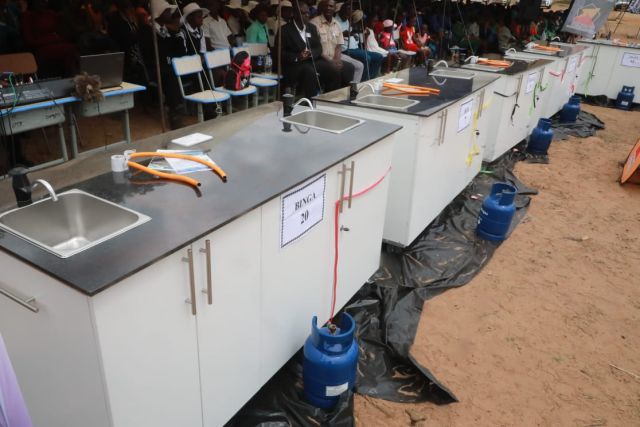
“It doesn’t matter if the school is in an area without electricity and a reliable supply of tap water; teachers can still be able to conduct science lessons effectively using the mobile science laboratories,” she added.
“We have entered into a public-private partnership with the ministry to supply rural schools with mobile labs as part of Government’s efforts to spread the teaching of Stem subjects to all corners of the country.”
As part of its Community Social Responsibility initiatives, Hwange Colliery Company invested US$90,000 to acquire the 75 mobile labs for the schools in Matabeleland North.
Mr William Gambiza, Hwange Colliery Company chief executive officer, said the donation of the mobile labs is the company’s commitment to shaping a brighter future for school children and the nation.
“As an organisation, we fully recognise that our role extends far beyond just mining of coal. We are deeply committed to Environmental, Social, and Governance (ESG) principles, which guide how we operate responsibly, sustainably and inclusively,” he said.
“This donation is a tangible demonstration of the impact of our social responsibilities where we invest in communities, in people and in the future of education.
“We believe that quality education is the cornerstone of sustainable development. It empowers individuals, strengthens communities, and builds resilient societies,” said Mr Gambiza.
“By supporting science education, we are laying the foundation for future engineers, doctors, researchers and leaders who will drive Zimbabwe’s growth and prosperity.”
Matabeleland North Provincial Minister of State for Provincial Affairs and Devolution, Richard Moyo, said the initiative was to equip the schools to enable rural learners to pursue Stem subjects.
“The introduction of these mobile science laboratories is not merely the distribution of equipment; it is the opening of new doors of opportunity for our rural learners.
“For too long, many of our rural secondary schools have operated without adequate science laboratories, thereby limiting the full delivery of the Heritage-Based Curriculum.
“The initiative is firmly aligned with our national agenda of ensuring access to modern technology and quality education, regardless of location,” said Minister Moyo.
The commissioning ceremony was attended by hundreds of school children from local schools, Government officials, traditional leaders, officials from Hwange Colliery Company, villagers and parents.
“We celebrate the successful implementation of a landmark initiative that will empower learners in 75 secondary schools across our province. This initiative originated from the resolutions adopted during the quarterly Provincial Development Committee held in March and it is positive to see those resolutions translated into tangible action within such a short time. This is the spirit of servant leadership, responsiveness and commitment that defines our Government,” said Moyo.
He said that by bringing state-of-the-art equipment to rural communities, the technological divide between learners in urban and rural schools was being significantly narrowed, creating a fair platform for all learners to succeed.
“STEM is a cornerstone of innovation and industrialisation and therefore by equipping rural schools with laboratories, we are investing in the intellectual capital that will steer Zimbabwe’s future growth,” he said.
A headmaster from a satellite school that was built eight years ago using devolution funds from the Government and with support from non-governmental organisations, said teaching science subjects without laboratories is impossible.
“Schools that were beneficiaries of the donation from Hwange Colliery Company and its partners must strive to acquire more mobile labs to strengthen their capabilities to teach science subjects.
“The free mobile labs that we got lay the foundation for our schools to introduce science subjects, which are impossible to teach without the right equipment,” said the headmaster.