Online Reporter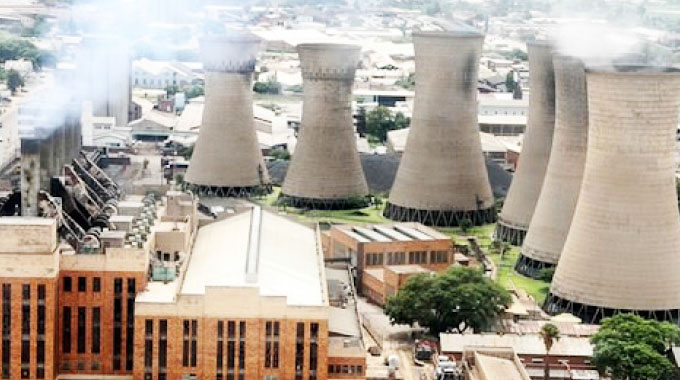
Rutendo Nyeve recently in Hwange
THE power utility, Zesa Holdings, is embarking on a major initiative to repurpose and revitalise its decommissioned thermal power stations in Bulawayo, Munyati, and Harare through adoption of new and efficient technology to boost domestic electricity generation.
The project, which promises more cost-effective operations, has already commenced at the Munyati Power Station.
Zesa acting chief executive officer, Mr Cletus Nyachowe, revealed this during a visit to Hwange Power Station by the Parliamentary Portfolio Committee on Energy at the weekend.
The initiative marks a strategic shift from outright replacement to intelligent repurposing of existing infrastructure to ensure positive outcomes for the national grid.

The three stations, Harare (built in 1942), Bulawayo (1947) and Munyati (1957), were once cornerstones of the country’s energy supply.
However, after decades of service, their ageing technology and infrastructure became increasingly inefficient, expensive to run, and environmentally non-compliant, leading to their eventual decommissioning.
In an exclusive briefing, Eng Nyachowe detailed the new approach.
“We are not just replacing things, but we are more like re-purposing so that we improve the performance,” he said.
Drawing a parallel to the successful rewinding of generators at Kariba South Power Station, which increased output, he confirmed that the decommissioned thermal stations would undergo a more profound technological transformation.
“You are aware that we closed Munyati, Harare and Bulawayo. So, Munyati has changed and we are using a new technology. We are using it for quality, but producing higher amounts,” said Eng Nyachowe.
“So, we are changing the boilers, we are changing the temperature. We are quite advanced in Munyati.”
The repurposing of the old power stations signals a pragmatic and innovative strategy by Zesa to leverage existing assets with modern technology, offering a glimmer of hope for a more stable and cost-effective power supply for the nation.
A key breakthrough in the Munyati project has been the successful testing of coal from the Sengwa Coal Mine in Gokwe.
The utility has found the coal to be highly compatible with the new plant technology, a development that is set to drastically reduce operational costs.
“The other benefit is that we tested Sengwa coal in Gokwe and we found that it is suitable, it is good enough for our generators. So, that reduces the coal cost,” said Eng Nyachowe. “Because we used to ship coal from here in Hwange to Munyati. That takes up a very high cost. So, it is a trucking cost.”
He elaborated on the strategic logic, which promises to be a big win for Zimbabwe’s energy generation landscape.
“The time has just become better. We looked at Munyati and said when we change the technology, then we get coal from a closer supply.
“That is why we started with Munyati. Then we will look at Bulawayo and Harare,” said Eng Nyachowe.
The revival of the three small thermal power plants is critical for Zimbabwe, which continues to face a significant power generation deficiency, leading to prolonged load-shedding that stifles industrial and domestic activity.
Returning these stations to the grid, with enhanced efficiency and lower running costs, will provide a much-needed buffer and improve national energy security.
Eng Nyachowe also indicated that Zesa is exploring renewable opportunities.
He said new low head technology is being considered for small hydro-power projects on dams in regions like the Eastern Highlands, which could add several megawatts to the national grid.