


 Online Reporter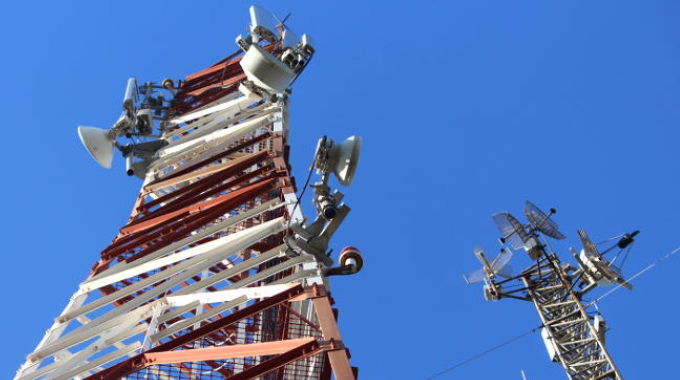
Your Money, Your Call
Cresencia Marjorie Chiremba
LAST Thursday, I watched a customer pace furiously outside a mobile network shop in Harare’s central business district.
She was not alone.
Around her, a dozen more stood clutching their phones, wearing the same look of frustration that has become all too common lately.
One of the mobile network providers seems to have gone on a silent sabbatical. And this is not just about bad reception — it is about bad business.
Since June, the network’s performance has gone from frustrating to downright disruptive.
Calls randomly drop.
Sometimes, you cannot hear the other person. At other times, the phone rings endlessly, but never connects.
One friend joked: “I have developed trust issues — I do not even know if my call went through or if it is just ghosting me.”
If only it were just a joke!
As consumers, we have learnt to endure a lot. Power cuts? We buy solar panels. Water shortages? We sink boreholes.
But when the very thing that connects us to our clients, loved ones, banks and ride-hailing services becomes erratic, we are left stranded in both business and life.
I run a consultancy that relies heavily on virtual communication.
WhatsApp calls have become a gamble.
Zoom meetings get rescheduled.
Even a basic voice call now comes with the anxious prayer: “Please do not cut.”
This is no longer inconvenience — it is interference.
Now let us talk legal.
Under Zimbabwe’s Consumer Protection Act (Chapter 14:44), every consumer has a right to “fair, honest and decent service”.
Section 50 is clear: Service providers must act “in a manner and quality that consumers are reasonably entitled to expect.”
Dropped calls, mute lines and a total absence of accountability?
That is not it.
What is worse is the radio silence from the service provider.
There is no SMS alert, no statement and no formal apology.
When customers complain, they are given vague answers: “It is a temporary glitch” or “We are aware of the issue”.
Aware is not enough!
Where is the restitution?
The above-named Act also states in Section 53 that if services are substandard or fail entirely, the consumer has a right to a refund or reasonable remedy.
Here is the million-dollar question:
Who refunds you for airtime lost in mid-sentence?
Who repays the cost of missed business deals due to an undelivered message or a frozen app?
We are not demanding miracles.
We understand the challenges of maintaining infrastructure under tough economic conditions. But we also understand what basic service looks like — and this is not it.
What we need is transparency.
A public service provider must treat public communication as part of the service — not a courtesy. If network upgrades are underway, let us know. If signal towers are down, say it plainly. Respect our intelligence as much as our money.
Some customers are already switching to smaller, alternative networks, not because they offer superior coverage, but because at least their struggle is honest.
Loyalty is eroding and with it, the goodwill that takes years to build.
At the end of the day, this is not just about dropped calls.
It is about a deeper disconnect between service providers and their customers.
A relationship that should be built on trust, respect and clear communication has turned into one-sided frustration.
To the network provider: We are not just subscribers. We are your stakeholders.
Your business exists because we choose to use your service. But if this silence continues — on the lines and in your offices — do not be surprised when your loyal customer base quietly walks away.
And when that day comes, we will not need to drop the call.
The connection will already be gone.
Cresencia Marjorie Chiremba is a marketing and customer service consultant, customer experience columnist and sales and service trainer. Contact details: info@ customersuccess.co.zw or +263712979461, 0719978335, 0772978335, www.customersuccess.co.zw



 Bongani Ndlovu
 Online Reporter