admin
admin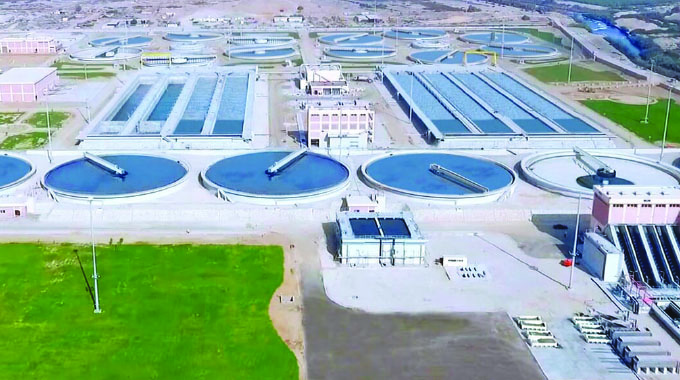
Akinwumi Adesina
AfDB President
African countries need to mobilise a lot more private financing for climate change and green growth.
Dr Akinwumi Adesina, president of the African Development Bank, proposes five approaches that governments and development partners should take.
African countries, which accounted for only three percent of the cumulative carbon emissions globally, now suffer disproportionately from its negative consequences. At the COP 27, Egypt launched the Nexus on Water, Food and Energy, a bold effort to mobilise US$14 billion to tackle the effects of climate change.
The African Development Bank is leading the effort to mobilise US$1,4 billion to support desalination and wastewater treatment plants for agriculture. So far, we have helped mobilise US$2,2 billion from development partners.
Across the Sahel, hotter climate is drying up water basins; the Lake Chad Basin which used to support livelihoods of millions of people in Nigeria, Niger, Chad and Cameroon, has shrunk to 1/10th of its size.
In several parts of the Horn of Africa, rains have not fallen for over four seasons. And in Malawi, Mozambique, Madagascar, Zambia and Rwanda, cyclones and floods have left devastation in their wake, with loss of lives and destruction of infrastructure.
And the small Island states are buffeted by rising sea levels, coastal erosion, and losses.
Whichever way you look at it, Africa is being devastated by climate change. It loses US$7 billion-15 billion every year due to climate change, which is projected to rise to US$50 billion by 2030.
Finding the financial resources to tackle climate change is increasingly difficult for African countries that are still reeling from the effects of Covid-19 pandemic, now exacerbated by climate change, debt and inflation arising from a mixture of global geopolitical conflicts and the high global inflationary trends.
Africa’s cumulative climate financing needs are estimated at US$2,7 trillion between 2020 and 2030.
Climate adaptation costs are estimated between US$249-US$407 billion over the same period.
Yet, climate financing resources are only flowing to Africa in trickles, as the continent receives only three percent of global climate finance, of which 14 percent is from the private sector, the lowest in the world. There is much to do to leverage private sector into climate finance and green growth.
The African Development Bank contribution
We have exceeded our commitment to provide 40 percent of our total financing to climate, reaching 45 percent in 2022. We committed 63 percent of our total climate finance to adaptation, exceeding the global target of 50 percent, earning the Bank praise from the UN Secretary General at the UN General Assembly as a global leader on climate adaptation.
To do more, we launched the African Adaptation Acceleration Programme, together with the Global Centre on Adaptation, to mobilise US$25bn for climate adaptation. While developed countries must meet their commitment to provide US$100bn annually to developing countries in climate finance, this is minuscule compared to financing needs.
Public climate financing must be complemented by mobilisation of resources from the private sector.
To mobilise more private sector climate financing for Africa, we launched the African Financial Alliance for Climate, to bring together all financial institutions, stock exchanges in Africa, to green the financial ecosystem.
Financial institutions should incorporate climate financing into all their operations. The valuation of companies on the stock exchange based on the greening of their portfolios will provide greater incentives for green investments.
The use of green bonds can mobilise global green financing to Africa. That is because Africa currently accounts for just 0,2 percent of the US$2,2 trillion of cumulative global green bonds issued up to 2022. The bank has issued more than US$10bn of green and social bonds in the past 10 years, which has allowed us to support green projects such as the Cabeolica wind farm in Cabo Verde which supplies 20 percent of its electricity and the Gabal El-Asfar water treatment plant in Egypt which supplies water for over 3,3 million people, one of the 10 largest water treatment plants in the world.
We are using the private sector to transfer to the market the climate risks facing countries, by insuring countries against climatic shocks.
The Africa Disaster Risk Financing Programme, which is being implemented in partnership with the Africa Risk Capacity, supports African countries in managing risks of climate disasters through risk profiling, contingency planning, and disaster risk financing.
Three years ago, when Madagascar suffered from droughts, the programme disbursed US$2,1 million to support losses suffered by 600 000 vulnerable people. Similarly, when Malawi experienced droughts, the insurance programme unlocked $14,2 million as pay-outs to farmers. The bank is working now to deepen the development of reinsurance markets to expand capacity of the private sector on market risk transfers.
We must do more to green the infrastructure space of Africa through private sector financing.
Therefore, the African Development Bank, Africa50 and partners launched the Alliance for Green Infrastructure in Africa (AGIA). It will accelerate private sector investments in renewable energy, green urban transport systems, green hydrogen, and climate-resilient infrastructure.
AGIA plans to mobilise US$500 million of project preparation and project development financing using private equity platforms and mobilise US$10bn for private sector financing for green infrastructure in Africa.
The bank is using blended financing to accelerate private investments in electricity. We are implementing with the public and private sector a US$20 billion Desert-to-Power programme to develop 10 000 megawatts of electricity using solar in the Sahel and provide electricity for 250million people.
As the world moves to transition to electric vehicles, Africa stands to be able to attract billions of dollars in private investment for greening global transport systems.
That is because Africa has 80 percent of the global deposits for platinum, 50 percent of cobalt, 40 percent of nickel, and substantial deposits of lithium.
Africa must set up itself to manufacture lithium-ion batteries to tap into the future market of electric vehicles that some projections that is estimated to run into several trillions of dollars in the future.
The cost of establishing a lithium-ion precursor factory in Africa is three times less expensive than in the US or China.
The future before us is full of challenges on climate change, but massive opportunities on green growth of our economies.
To mobilise a lot more private financing for climate change and green growth, governments and development partners should take five approaches.
First, establish national development plans for green transition for their economies.
Second, subsidise green industries, to spur growth, raise demand, profitability, and sustainability.
Third, multilateral and bilateral financial institutions should provide guarantees at scale to help de-risk investments by the private sector.
Fourth, support should be provided for the preparation and development of bankable projects that can provide high risk-adjusted returns to the private sector.
Fifth, existing public-financed infrastructure should be transferred to the private sector – what we call asset recycling – to mobilise more private sector resources for greener infrastructure.
The future of Africa is green.
Our sun, wind, geothermal and water should power our continent.
Our infrastructure should be green and greener.
Our economies must be climate proofed and resilient.
Let us unleash the power of the private sector for a greener Africa. – New African.


 Online Reporter