Moffat Mungazi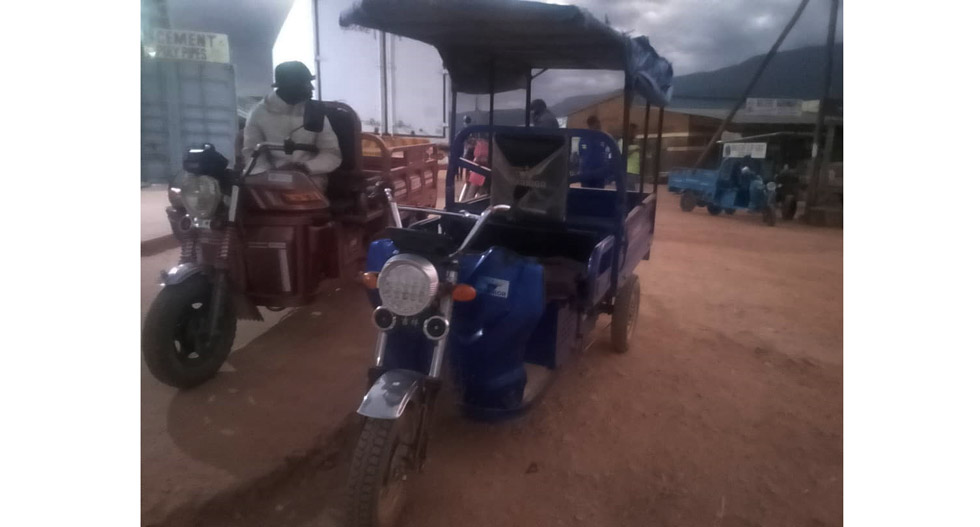
Ray Bande
Senior Reporter
MOBILITY scooters with scooter cargo trailers — wheeled containers designed to be towed behind a mobility scooter to provide additional storage space for carrying larger or heavier items — have become a common sight in areas like Chipinge, Hauna, Birchenough Bridge, and Murambinda, among other parts of Manicaland.
These removable trailers typically feature a sturdy frame, removable cargo box, and pneumatic tyres for effortless movement.
They are attached to the rear accessory port on the back of the mobility scooter.
The trailers can be used for various tasks, including hauling groceries, personal belongings, or even camping equipment.
In recent times, mobility scooters have gained popularity as a public transportation option, providing a faster and more flexible commute than traditional buses or trains.
Mr Aaron Chanaiwa (23), a mobility scooter rider from Hauna in Honde Valley, said the device has made life easier for locals.
“Mobility scooters are making life easier for people around here. It is a cheaper option for the public. If someone needs to transport a few items from one point to another, they find it more cost-effective to hire us, as we charge a small fee of US$2 to US$3 for short distances.
“We have been using these scooters here for about a year now. We source them from Harare. Some individuals work for operators who have multiple scooters. In these cases, the riders work on a commission,” he explained.
For those employed by mobility scooter operators, the arrangement typically involves pocketing their earnings over the weekend (Saturday and Sunday), and handing over an agreed-upon amount to the owner from Monday to Friday.
In most cases, drivers hand over US$20 per day to the operator from Monday to Friday, and if they fail to meet this target, they will borrow to make up the agreed amount.
Conversely, if they exceed the daily target of US$20, they keep the excess.
Another mobility scooter rider in Hauna, Mr Murehwa Maboni had this to say: “I earn between US$30 and US$40 per day. The battery lasts a day, and I pay US$10 for a replacement battery the following day. This allows me to save some money from my daily earnings. Our wish is to have access to cheaper recharging options or even fuel-powered scooters, as this will enable us to save more, given that the device will consume less fuel.”
However, mobility scooters also pose safety risks.
Concerns about safety, particularly regarding lithium-ion batteries, have led some public transport operators to express reservations about their use in communities.
Apart from the fire risk posed by lithium-ion batteries due to potential internal faults and overheating, there are also concerns that some pedestrians and drivers view mobility scooters as unsafe and disruptive, especially when used without proper regulations.
The rapid adoption of mobility scooters has outpaced regulations, resulting in a lack of clear guidelines on their use and enforcement.
Acting Manicaland provincial police spokesperson, Assistant Inspector Wiseman Chinyoka stressed the importance of adhering to road use regulations to address safety concerns.
“We acknowledge the convenience that mobility scooters have brought to communities using them. However, as police, we must emphasise the need for mobility scooter drivers to adhere to road safety regulations.
“In Nyanga, two mobility scooter drivers were recently involved in a head-on collision, resulting in serious injuries. Drivers must wear requisite protective gear, and hold a valid Class Three driving licence,” he said.
There have been clashes between mobility scooter drivers and law enforcers.
In November last year, at Hauna, mobility scooter drivers had running battles with law enforcement agents, resulting in the confiscation of several scooters.
Assistant Inspector Chinyoka also expressed concerns over the use of mobility scooters in smuggling goods across the border with Mozambique.
“We are concerned about the use of mobility scooters to smuggle goods across the border with Mozambique. We have made several arrests of mobility scooter riders smuggling iron sheets, blankets, bales of second-hand clothes, and other items,” said Assistant Inspector Chinyoka.
Nevertheless, mobility scooters hold promise as a sustainable and efficient mode of public transport.
However, addressing safety concerns and developing comprehensive regulations is crucial for their widespread adoption and convenient use.
For convenience, mobility scooters can bypass traffic congestion and navigate city streets more efficiently than traditional public transport, saving commuters time.
In terms of sustainability, mobility scooters produce zero emissions, reducing air pollution and greenhouse gas emissions compared to cars. In addition, mobility scooters may be more inclusive than bicycles or e-bikes for people with disabilities, as they do not require pedalling.
Furthermore, the cost-effectiveness of mobility scooters has made them even more attractive. In fact, mobility scooters can be a more affordable alternative to taxis or ride-sharing services, especially for shorter distances.


 Online Reporter