Tendai Gukutikwa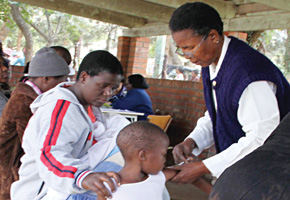
Tendai Gukutikwa
Health Reporter
THE Ministry of Health and Child Care this week joined the rest of the continent in commemorating African Vaccination Week, held annually in the last week of April.
This year, the awareness campaign, which ran from April 24 to 30, was held jointly with World Immunisation Week under the theme: ‘Immunisation for All is Humanly Possible.’
In Manicaland, the week was marked with intensified efforts to promote the importance of immunising children under the age of five.
Manicaland provincial health promotions officer, Mrs Agnes Mugumbate said the ministry intensified community outreach programmes during the week to ensure that every child, including those in remote and hard-to-reach areas, receive due and overdue vaccines.
“With this year’s theme in mind, we are immunising all babies, leaving none of them behind. This is because an immunised community is a healthy community,” she said, adding that health teams have been deployed into communities, spreading the message on the importance of vaccines and administering antigens and Vitamin A supplements to eligible children.
At health centres, staff continued to speak to mothers and caregivers about the value of immunisation and encouraged them to return for missed doses.
“We were not only operating from the clinics. Our teams went out into communities, especially those far from health facilities. In some places, people do not get their children immunised because there are no clinics nearby.
So we closed that gap this week by having health personnel going to hard-to-reach areas,” she said, adding that they worked closely with traditional, religious and community leaders to help reach families that hesitated or refused to vaccinate their children in the past.
“We will continue to engage leaders because they are trusted in their communities. They can help us convince those with doubts to bring their children for immunisation,” she said.
Mrs Mugumbate said the week was, not only about delivering vaccines, but also education.
“We are raising awareness about diseases that affect children when they are not vaccinated. These diseases include measles, polio, whooping cough and others that can kill or leave a child with permanent complications. We are doing everything we can to prevent that,” she said.
She said the Ministry of Health and Child Care is also conducting Acute Flaccid Paralysis (AFP) surveillance throughout the province.
AFP surveillance is a system that health officials use to monitor for cases of polio.
Apart from catching up on missed immunisations and checking for new cases of preventable diseases, they are also monitoring for any adverse reactions to vaccines among fully vaccinated children.
She stressed the importance of community involvement in the vaccination drive.
World Health Organisation (WHO) describes vaccines as one of the greatest public health achievements in human history.
Since 1974, more than 154 million lives were saved through immunisation, which amounts to over 3 million lives per year.
Infant deaths were reduced by 40 percent and more children are now living past their first birthday than ever before.
WHO says the measles vaccine alone accounts for about 60 percent of those lives saved.
In recent years, vaccines have expanded to include those against malaria, HPV, cholera, dengue, meningitis, Ebola, mpox and RSV, showing just how far science has come in preventing disease.
But millions of children around the world still miss out.
World Immunisation Week 2025 is a reminder that more needs to be done. It also marks the mid-point of the Immunisation Agenda 2030, a global effort to increase access to vaccines.


 Online Reporter