daniel chigunwe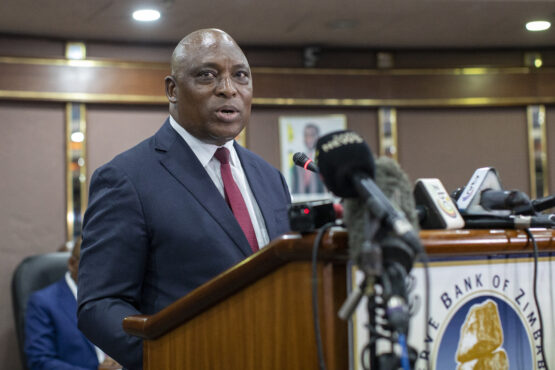
Tapiwanashe Mangwiro
With an aim to establish a more stable, self-sustaining currency, the Reserve Bank of Zimbabwe (RBZ) is working to build substantial foreign currency reserves, primarily through mineral royalties.
This reserve-building effort aligns with international standards, where central banks aim to secure import cover for three to six months.
However, Zimbabwe’s unique, partially dollarised economy, where U.S. dollars are legally accepted for transactions allows for some flexibility in reserve levels since a portion of import needs can be covered by the U.S. dollar supply in the market.
This setup presents both an opportunity and a challenge as Zimbabwe strives for a monocurrency system anchored by strong reserves.
The RBZ Governor, Dr John Mushayavanhu, said the bank is working on building foreign currency reserves in order to continue to support the stability of the ZiG.
“The recalibrated monetary policy framework launched on April 5, 2024 which introduced the structured currency, Zimbabwe Gold (ZiG), committed to fully-back the currency. As such, the Reserve Bank has been building foreign currency reserves through the in-kind mineral royalties from the Government.
“International benchmark for international reserves for countries in a mono-currency ranges between 3-6 months of import cover. The import cover is, however, lower for countries in a partially dollarised economy since companies and individuals are allowed to officially hold and trade in USD, which is readily available to fund imports,” the Governor said.
Analyst, Tafara Mtutu, believes that monocurrency needs the central bank to be disciplined in getting reserves and build them with discipline in order to be self-sustainable.
“So, currency in circulation is circa US$2,5 billion and in our own coffers we have around US$450 million, which we need to increase that currency circulation to about US$2,5 billion, US$3 billion thereabout.
“If we work with the receipts that we get from ZIMRA through royalties of gold and we assume that the gold price remains at the current price then we will likely have what we need to de-dollarise in the next 12 to 15 years,” Mtutu asserted.
However, the assumptions are based on the fact that the gold price remains as it is right now and the RBZ is consistent and disciplined as well as the fiscal authorities in terms of money printing.
Economist, Gladys Shumbambiri-Mutsopotsi, believes Zimbabwe’s economy is not yet ready for de-dollarisation, as the country still struggles with high poverty and unemployment rates, as well as a large trade deficit.
“The citizens are still recovering from past currency shocks, and trust in the local currency is still low. A de-dollarisation roadmap may be seen as inconsistent with current policies, and changing the time frame from 2030 to the rumoured 2026 deadline may lead to market instability.
“The impact on stock markets is uncertain, but it may lead to increased volatility and decreased investor confidence,” she said.
Economist, Enoch Rukarwa, believes promoting the use of local currency in a multi-currency system can offer significant economic and national benefits, but it also comes with risks and challenges.
“Local currency usage strengthens the central banks control over monetary policy, enabling better management of inflation and interest rates all things being equal. However, taking stock of what is happening on the ground the market seems not yet ready for de-dollarisation especially in the short to medium term,” Rukarwa added.
According to him, over-reliance on local currency use has proved to be inflationary in the past due to challenges around money supply management and confidence deficit.
“The Zimbabwean local currency has a history of instability and devaluation; pushing for its use through legislation might be met with skepticism and confidence deficit from stakeholders,” Rukarwa noted.
The RBZ said it has a strategic intent to build its official reserve holdings to adequate levels to continue to support ZiG stability


 Online Reporter