Online Reporter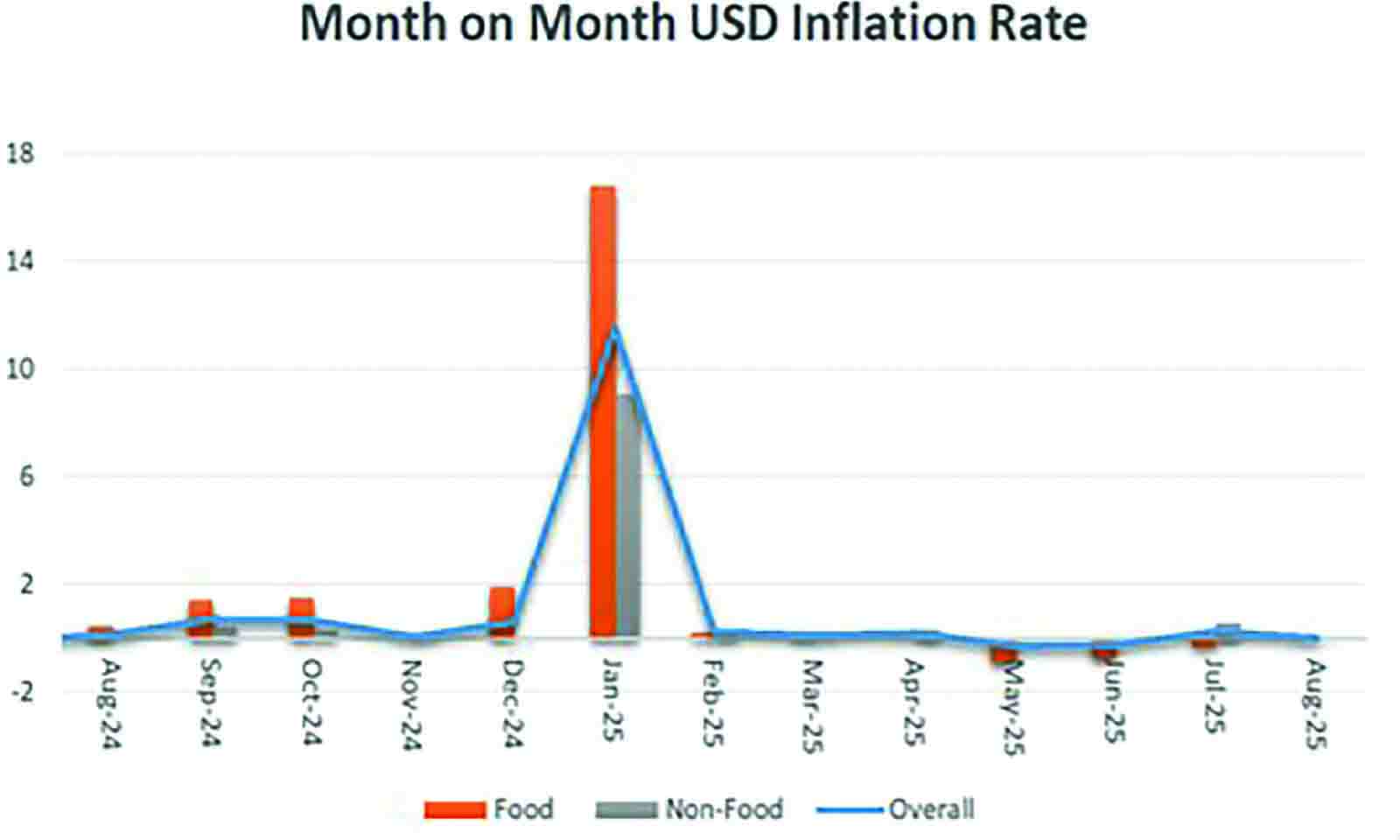
Business Reporter
Consumer prices recorded a marginal decline in September, marking a positive sign of the effectiveness of the Government’s policy interventions to maintain durable stability in the economy.
According to the Zimbabwe National Statistics Agency (ZimStat), the ZiG month-on-month inflation rate fell by 0,2 percentage points, down from 0,4 percent in August, reflecting easing pressure on non-food items.
“This means that prices as measured by the all-items ZiG CPI decreased by an average of 0,2 percent between August and September 2025,” ZimStat said in its monthly update released yesterday.
“The results reflect a period of relative price stability.”
The Reserve Bank of Zimbabwe recently said monthly inflation had averaged 0,6 percent since February, and was projected to remain below 3 percent for the rest of the year, amid tight monetary and fiscal policies.
While overall prices dipped in September, food and non-alcoholic beverages saw modest gains.
The segment rose by 0,2 percent in September compared to a 0,1 percent decline the previous month, indicating slightly firmer demand for essentials.
In contrast, non-food inflation dropped by 0,5 percent, easing from 0,6 percent in August and pulling down the headline figure.
The mixed picture highlights how different parts of the consumer basket are responding to current market conditions.
Analysts noted that food price stability will be critical heading into the last quarter of the year, traditionally a period of higher spending.
Despite September’s month-to-month slowdown, annual inflation in ZiG terms stood at 82,7 percent, showing prices nearly doubled compared with a year earlier.
However, the broader trend indicates progress with the average monthly inflation rate between January and September being 1,6 percent, a marked improvement from previous years.
“While the year-on-year rate remains elevated, the mean month-on-month figures suggest inflationary pressures are gradually being contained,” ZimStat said.
In US dollar terms, consumer prices remained flat for the second month running. The all-items US dollar consumer price index recorded zero inflation in September, underlining the stabilising effect of dollar transactions in some sectors of the economy.
Food and non-alcoholic beverages in dollar terms inched up 0,1 percent, while non-food prices slipped by 0,1 percent.
The year-on-year USD inflation rate was 13,4 percent, far lower than the ZiG-based measure, reflecting the relative resilience of hard-currency prices.
The mean month-on-month US dollar inflation rate for January to September was 1,3 percent, suggesting a largely steady trend for consumers who transact in dollars.
The weighted CPI, which blends ZiG and US dollar price movements, also signalled cooling inflation.
Headline month-on-month inflation registered at -0,1 percent in September, a slight improvement from zero in August. Annual weighted inflation slowed to 25,1 percent.
“This weighted outcome reflects the combined influence of both ZiG and US dollar pricing structures across the economy,” ZimStat explained.
Economists say the September figures may strengthen confidence that the prevailing price stability will last after years of volatility. With both ZiG and US dollar indicators showing moderation, businesses and households could benefit from greater predictability in the months ahead.
This also augurs well for Zimbabwe’s plans to reintroduce an exclusively domestic currency monetary regime beyond 2030, by which time Zimbabwe should have all key fundamentals to support a domestic mono-currency monetary policy.
ZimStat underscored that its price survey, conducted between September 11 and 17, points to growing stability in the pricing environment, giving policymakers some breathing space as they pursue broader economic reforms.