peter
peter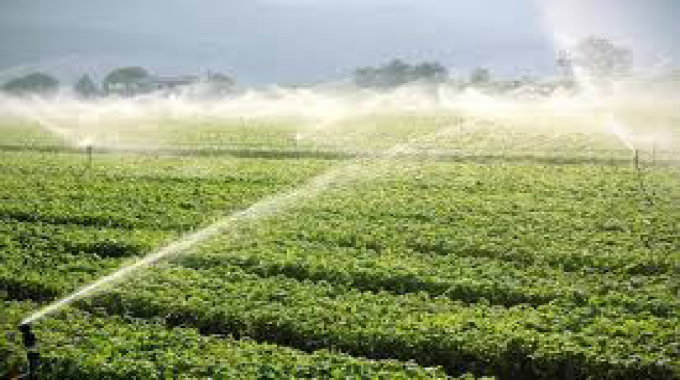
Johnsias Mutonhori, Midlands Correspondent
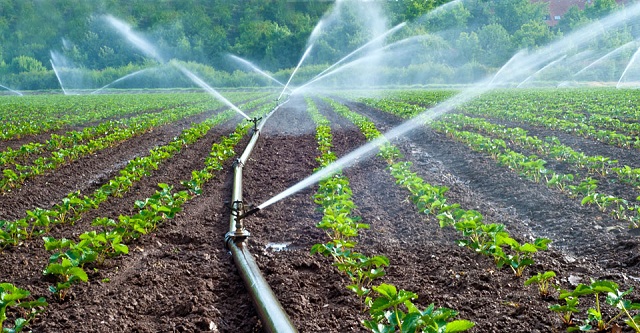
MORE than 980 households are set to benefit from the revitalised Exchange Irrigation Scheme in Silobela that was commissioned last Wednesday as the country moves to ensure food security at community level.
The 169-hectare irrigation scheme with 982 beneficiaries was commissioned by the Minister of Lands, Agriculture, Fisheries, Water, Climate and Rural Development, Dr Anxious Masuka, and is arguably the largest in the Midlands Province in terms of size and number of beneficiaries.
Speaking in an interview on the sidelines of the commissioning ceremony, Minister Masuka said sustainable agriculture was key to rural industrialisation and development as the country moves towards attainment of Vision 2030.

“Agricultural production must facilitate rural industrialisation and development and catalyse the attainment of Vision 2030 which is possible through innovation and a revolutionised agriculture system. This must be replicated across irrigation schemes in the country. The viability of irrigation schemes determines sustainability and this is where production and sustainability are linked to the President’s vision for 2030,” he said.
Minister Masuka urged irrigation scheme beneficiaries to take farming as a business focused on attaining profits.
“As Government we hope that the rehabilitation of this scheme will go a long way to transform the livelihoods of the 982 farmers that are in this irrigation scheme. However, this can only be achieved if farmers focus their energies on improved production and profitability. I therefore urge you to take extreme ownership of the irrigation scheme which should be run as a business,” he said.
Chairperson of Exchange Irrigation Scheme Mrs Elizabeth Mushonga applauded the Government for revitalising the scheme saying the project has been lying dormant for a long period of time.
“The scheme has become bushy and was being used as grazing land. I want to thank the Government for its intervention that has seen the irrigation scheme being rehabilitated.
“The canals, fence and pipes were all down and it’s now different. We are hoping that we are going to use it effectively and efficiently for the development of our community and the country at large,” she said.
Another beneficiary Mr Shepard Dzinoreva said they were now able to grow crops throughout the year and cater for all of their clients and children.
“I am happy that we no longer wait for the rainy season. Now we can grow crops all year round and that way we are able to cater for our clients and feed our families all year round.”
Exchange Irrigation Scheme was established in 1972 as part of compensation for relocated farmers from Hunyani settlement in Chirumhanzu District during the colonial era.
Since then, no notable renovation has been done to the scheme despite having outlived the lifespan of its canals and pumping units which is 10 years on average.
It was declared dysfunctional in 2017, after pumping units broke down coupled with the drying up of Exchange Dam due to siltation.
The scheme became one of the beneficiaries of the International Fund for Agriculture development (IFAD) through the Smallholder Revitalisation Programme (SIRP), something that brought hope to the Silobela community.
The irrigation rehabilitation scheme is a seven-year programme which started in 2016 and is expected to revitalise 5 200 hectares in Masvingo, Manicaland, Matabeleland South and Midlands provinces.



 Online Reporter