Theseus Shambare
Tomorrow, as buses begin carrying learners back to boarding schools across the country, Shamiso Chabata will join dozens of parents and guardians bidding farewell to their children.
To many, the youthful-looking woman standing beside teenage Courtney may appear more like an elder sister than a mother.
But behind the smiles lies a story of sacrifice, carved through years of struggle, heartbreak and resilience.
Shamiso gave birth at the age of 18.
Soon after, the child’s father walked away, leaving her to raise their daughter alone.
For many young women, such circumstances often mark the collapse of dreams and opportunities.
For Shamiso, however, it became the beginning of a battle she refused to lose.
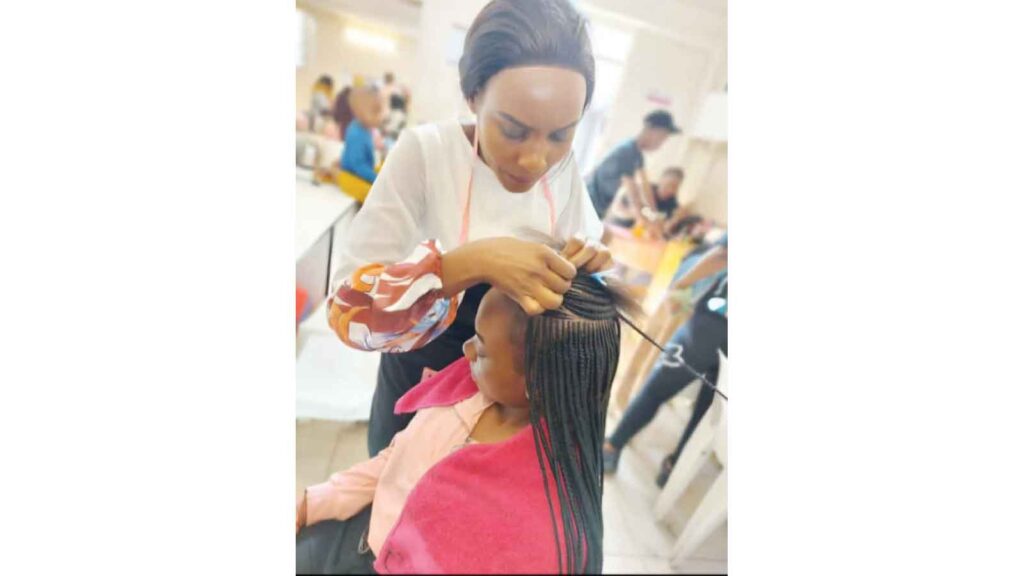
Shamiso Chabata at work.
Today, her daughter Courtney is close to completing her Ordinary Level studies at St John’s Chikwaka in Goromonzi, with only one term left before final examinations.
What makes this achievement remarkable is not only that Courtney attends boarding school, but that the fees, uniforms, groceries and transport have largely been financed by a single mother working as a hairdresser at Joina City in Harare.
Inside the bustling complex, where music blares from salon speakers and customers move constantly through narrow corridors, Shamiso spends long hours on her feet braiding hair and styling clients — all in pursuit of one goal: securing a better future for her daughter.
“I made it a point that I will oversee my daughter’s welfare without any disruption,” she declared.

Shamiso and daughter Courtney.
Across Zimbabwe, countless women carry similar burdens — often silently. Some are tilling fields after losing their husbands.
Others are building businesses from almost nothing. Many are raising children alone while simultaneously holding entire households together.
As Zimbabwe joins the rest of the world in celebrating Mother’s Day today, their stories reveal a generation of women whose strength is reshaping families, communities and livelihoods.
In the red soils of Craigengower Farm in Glendale, Mazowe district, Mashonaland Central province, Esther Makwara has turned personal tragedy into transformation.
Widowed and left to raise four children alone, Esther could have surrendered to despair.
Instead, she chose the land.
The farm she received under Zimbabwe’s Fast-Track Land Reform Programme became her starting point.
“Getting that land was the beginning. I had somewhere to start again. Farming gave me purpose and a future for my children,” she said.
The journey was far from easy.
In the early years, securing quality seed, fertiliser and farming equipment was a constant struggle.
Most of the work was done manually, with modest harvests barely sustaining the household.
Still, she persisted.
Driven by the need to feed her children and preserve her late husband’s legacy, Esther continued working the land through difficult seasons.
Her determination soon attracted support from agricultural advisory services officers, who provided technical guidance on crop management, irrigation and market access.
Slowly, the harvests improved. The income grew.
Then came a turning point.
“I started seeing results — better crops, better income. So, I now use tractors. It changed everything,” she said.
Today, Esther is no longer simply surviving. She now leads the farm’s irrigation committee, mentors other women farmers and has become a respected figure within her community.
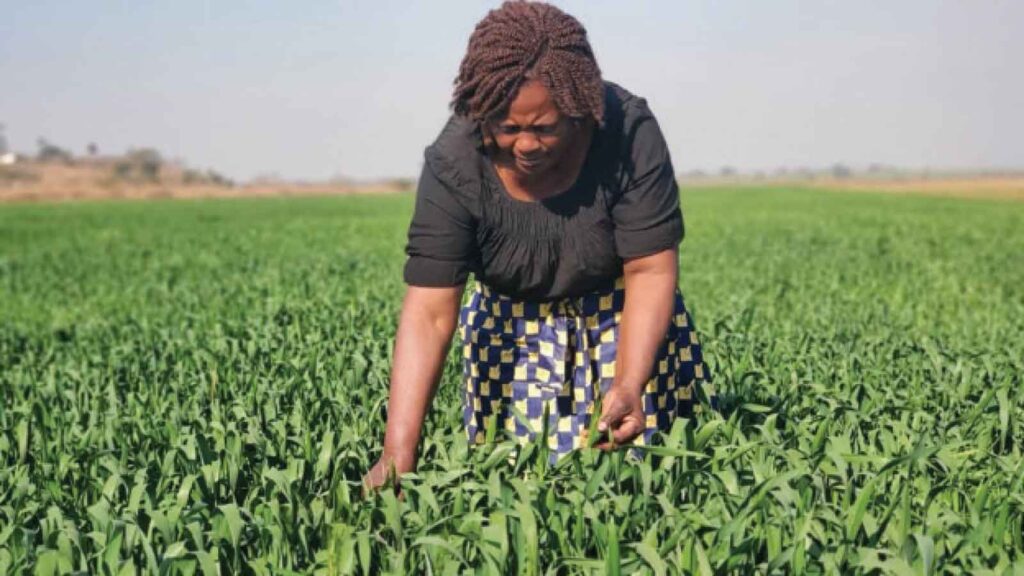
Esther Makwara
She is also among beneficiaries of the inaugural Presidential Productivity Booster Kits Programme and has secured title deeds for her farm. For Esther, motherhood evolved beyond raising children.
It became something about rebuilding an entire future from the ashes of loss.
Hundreds of kilometres away in Zvishavane, Midlands province, another woman is quietly redefining resilience.
In a region where many families depend on dangerous and unpredictable mining activities, Sibusisiwe Nyakunhuwa has built stability through agriculture.
Though married, she operates her agricultural enterprise independently from her husband, becoming both a provider and role model to her children.
Around her, many men continue risking their lives in unstable mining operations in search of income. But Sibusisiwe chose a different path. She runs a horticulture enterprise, producing tomatoes, cabbages and other vegetables year-round.
“Our families relied on mining income, which was never stable. Now women are taking charge. We feed our children, pay school fees and make sure no one goes hungry,” she said.
Most of her workers are women — mothers balancing the demands of family life with the pressures of earning an income.
Together, they plant, weed and harvest while simultaneously carrying the invisible emotional labour of motherhood.
By creating employment opportunities and food security, Sibusisiwe has transformed vulnerability into resilience.
In many ways, her fields have become more than a business.
They have become a safety net for entire families. Her story reflects a growing reality across Zimbabwe’s rural communities: Women are no longer merely participating in agriculture; they are increasingly becoming its backbone.
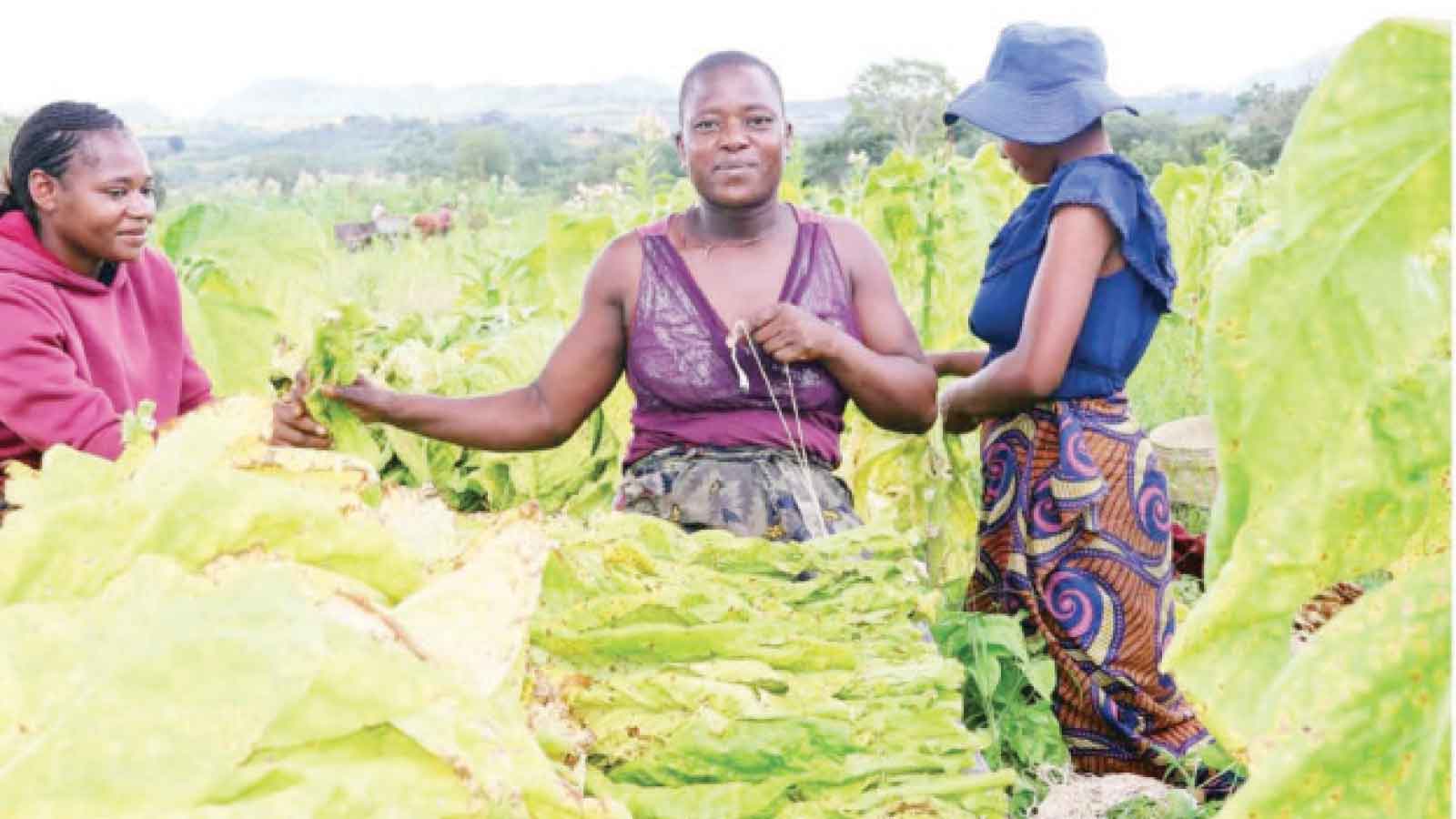
Further north in Guruve, Mashonaland Central province, Charity Munaki moves steadily through rows of towering tobacco plants under the rising sun.
Her hands expertly select mature leaves from a crop she carefully nurtured for months.
In her two-hectare tobacco field, planted separately from the three hectares managed by her husband Ashton, Charity works with the quiet confidence of someone who has discovered her own economic voice. Her grower number is more than a farming registration detail. It is a declaration of independence.
For years, Charity worked alongside her husband in the fields, contributing labour from planting to curing, yet never fully stepping into financial control of the crop.
“I used to fear taking control of my own crop,” she admitted.
The breakthrough came in 2024 when she joined a contract farming scheme that provided agricultural inputs worth about US$600 for a half-hectare plot.
“It was a small beginning but one that changed everything in my view of agriculture,” she said.
After her first successful harvest, she reinvested the earnings and gradually expanded her tobacco production from half a hectare to one hectare and eventually to two hectares this season.
Now in the final reaping stage, she expects to produce at least 6 000 kilogrammes of tobacco. But beyond the numbers lies something more profound.
For Charity, farming has become a source of confidence, dignity and self-belief.
Her success mirrors a wider shift occurring across Zimbabwe’s agricultural landscape, where women are increasingly asserting themselves as decision-makers, land users and income earners.
From crowded salon corridors in Harare to irrigation plots in Mazowe, from farms in Zvishavane to tobacco fields in Guruve, Zimbabwean women are carrying far more than the title of motherhood.
They are carrying households. They are carrying communities. And in many ways, they are carrying the future itself.
This Mother’s Day, their stories stand as a reminder that behind many of Zimbabwe’s quiet successes are women who refused to surrender to circumstances.