Online Reporter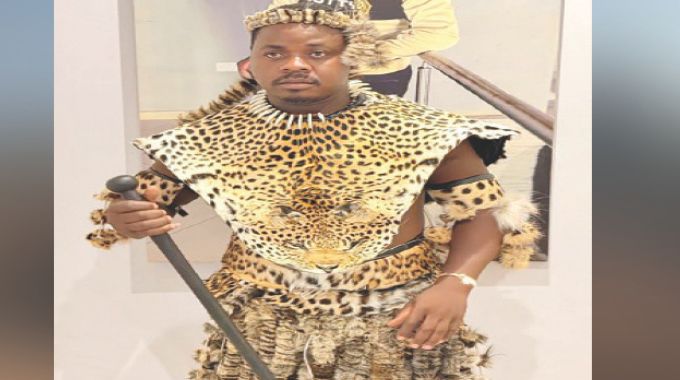
Mthokozisi Ncube, [email protected]
FOR many musicians, music is simply a career, a way to earn a living and build a name. But for Blessing Bhankwe, better known as UTsheketsha Ogezayo, it is something much deeper. To him, music is a mission.
It is a mission to preserve culture, share life lessons and pass on values that can guide future generations. His work is not just about rhythm and melody, but about keeping traditions alive in a fast-changing world.
Born on 18 March 1992 in E-Insiza, Filabusi, UTsheketsha grew up in a Bhankwe household where culture and tradition were part of everyday life. In his home, indigenous music, proverbs and teachings from elders were not just background noise — they shaped how he understood the world.
From a young age, he was surrounded by stories, wisdom and music that carried meaning. These early experiences became the foundation of the artist he is today.
“Music is not just entertainment for me,” he says. “It is how we keep our history breathing.”
Now, as he continues to build his career, those same values remain at the centre of everything he does. Every song he writes carries a message. Every performance is an opportunity to connect people with their roots.
In an exclusive interview with Zimpapers, UTsheketsha Ogezayo opened up about his journey. He spoke about how traditional sounds first captured his heart and how the guidance he received from elders became the inspiration behind his lyrics.
He also shared his belief that young artists today have a responsibility that goes beyond chasing trends or popularity.
For him, music is about purpose.
He said that during his childhood, he spent a lot of time listening to traditional genres such as Mbaqanga, Maskandi and Isicathamiya — styles known not just for their sound, but for the messages they carry.
“During my childhood, I spent a lot of time listening to Mbaqanga, Maskandi and Isicathamiya music. Those genres played a huge role in shaping the person I am today because they carried messages that taught us about life, culture and respect,” said UTsheketsha.
These genres, he says, did more than entertain. They taught young people how to live, how to behave and how to respect others. They carried stories of everyday life, struggles and traditions — things he believes are slowly being lost.
That is why he has chosen to follow a similar path in his own music.
He wants his songs to teach, to guide and to remind people of where they come from.
“The music I listened to growing up was more than entertainment. It carried teachings and wisdom that guided us as young people. I realised that songs have power because they preserve messages for generations,” said UTsheketsha.
For him, the idea of legacy is very important.
“A song is a legacy. Long after the singer is gone, the message remains. That inspired me to use music to pass on the lessons and values I received to today’s youth”.
Despite his strong passion for music from a young age, UTsheketsha did not rush into recording.
He only began taking music seriously in 2016. Even then, he chose to move carefully, taking time to learn and improve before sharing his work with the public.
“I started singing in 2016 and began working on demo recordings. At the time, I did not feel ready to release them to the public because I wanted to improve and develop my sound. I spent time learning, practising and perfecting my craft before taking the next step,” he said.
This patience paid off.
In 2018, he made his official entry into the music industry when he released his first songs. His debut singles, Mayihlalela and Fimbo, introduced his sound and message to listeners.
He did not stop there.
Soon after, he released his debut album titled Ngale Ndandatho, which featured 14 tracks. For him, this project was not just a collection of songs, but an important milestone.
It marked the moment when his voice reached a wider audience.
UTsheketsha said the album played a key role in establishing his identity as an artist who blends music with meaningful messages rooted in culture and everyday experiences.
Like many artists, his journey has also included changes and adjustments along the way — including his stage name.
He said that he was initially known as Qhathanzipho, but later had to change it.
“People used to call me Qhathanzipho, but I later realised that the name already existed. To avoid confusion, I shortened it and eventually adopted another identity that people connected with more,” he said.
His current name, UTsheketsha Ogezayo, has an interesting background, closely linked to his life experiences.
Before fully focusing on music, he worked in the mining sector. It was during this time that the name began to take shape.
“I worked in the mines and often referred to myself as a tsheketsha. When young people asked where I worked and I told them I was a tsheketsha, they would laugh and say there was no such thing as a ‘Tsheketsha Ogezayo’,” said UTsheketsha.
The reactions he received amused him, but they also created something unexpected.
“They said they had never seen one and thought I was joking. Over time, people began associating the name with me because wherever they heard it, they knew exactly who was being referred to.
“The name became popular among friends, relatives and supporters, and it has stayed with me ever since.”
Today, UTsheketsha Ogezayo continues to grow as an artist, staying true to his mission. His music is deeply rooted in culture, daily life and the lessons he learned while growing up.
He does not see himself as just a performer, but as a storyteller and a messenger.
For him, every song is an opportunity to preserve identity and pass on knowledge.
He believes that in a time when many young people are influenced by modern trends and fast-changing lifestyles, there is still a need to hold on to culture and tradition.
Through his work, he hopes to bridge the gap between the past and the present — making sure that the wisdom of older generations is not forgotten.
For UTsheketsha, music is more than sound. It is memory. It is identity. It is a way of teaching without standing in a classroom.
Above all, it is something that lives on beyond the artist.
As he continues on his journey, one thing remains clear — his mission is not just to entertain, but to leave something behind.
Something meaningful. Something lasting.