Chronicle Editor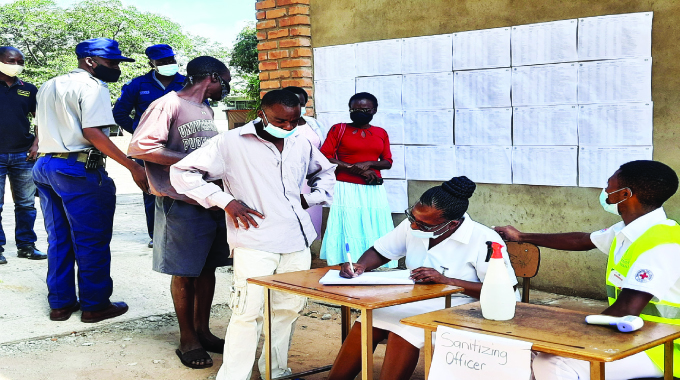
Bruce Ndlovu, Sunday News Reporter
THE by-elections held across the country on 26 March were unique for many reasons. For one thing, rarely has a by-election attracted such attention, not only within Zimbabwe but outside the country’s borders as well.
What made the world’s eyes turn on Zimbabwe, at a time when there’s abundant turmoil elsewhere across the globe, was the sheer scale of the by-election, which gave March 26 the appearance of a mini national plebiscite.
The country’s political parties locked horns for 122 municipal and 29 parliamentary seats, which represented unprecedented numbers for by-elections by all accounts.
While some of the vacancies came as a result of such unforeseen and unfortunate natural occurrences as death, the unusually large number of by-elections can be attributed to the blood-letting in the opposition MDC-Alliance, whose fractured leadership has been at loggerheads since the harmonised elections in 2018.
While for political parties, the elections were a pointer, a political yardstick for the bigger task that lies ahead of them in 2023, directing them to their strengths and weaknesses, the 26 March by-election also highlighted the fact that there is still a lot of work to do to ensure that voters are sufficiently educated on voting day processes, lest they be left behind.
One thing that stood out like a sore finger and became evidently clear to all stakeholders is that there is need for more voter education campaigns to cultivate interest in national political processes as well as give out information on the requisite documents. A number of incidents in various wards across the country highlighted the need for increased voter education and vigilance, if everyone in the country is going to enjoy their constitutionally enshrined right to vote for local and national leadership of their choice.
On the day, a number of voters were turned away due to several irregularities, with some failing to meet the national identity requirements, a prerequisite for one to vote. Some had also registered late, after the cut off date to be able to vote in this particular election, yet many were not aware of that technicality.
In Pumula, some were turned away for incorrect identification documents as one had a driver’s licence, another a war veterans’ card, while in neighbouring Nkulumane some voters were turned away for having wrong IDs, some had drivers’ licences and photocopies of ID documents. In Gwanda, some voters were turned away, with one sent back home for using an expired passport while the other four did not appear on the voter’s roll.
Mr Mthabisi Ncube, was turned away from Jahunda Park polling station in Gwanda’s Ward 7 as his passport had expired. He did not have an ID and had brought his birth certificate and O-level certificate to authenticate his identity.
The number of people that were turned away because they did not possess the right identity documents indicates that while the vast majority know that only a valid passport or national ID will allow them to vote, some still have the mistaken belief that any document will allow them to exercise that right.
Someone turning up to a polling station with a birth certificate might appear comical at face value, but it is hardly feasible that such a voter would have done so to waste theirs and everyone’s time. Instead, this might be an indication that education, packaged so carefully and abundantly in various media platforms by different organisations, might not have reached that particular voter.
But some were just trying their luck or being criminal. In Mufakose (Harare), a woman, Elizabeth Chinyoka, was arrested for using her sister’s identity card to vote. She allegedly produced a national identity card in the name of Zvanyadza Chinyoka who is her sister and she was given two ballot papers and she voted and left only for the real Zvanyadza to turn up 30 minutes later at the same polling station to cast her ballot. Elizabeth was later arrested and charged with impersonation.
Also in Harare, one Tafadzwa Mupanguri from Highfield was arrested for allegedly using an identity card that belonged to another man, Zvikomborero Mupanguri, while voting in the by-elections in Highfield East constituency.
It is alleged that he produced the identity card to a polling officer who told him that it did not belong to him and after he insisted it was his, he was arrested and searched and was found in possession of a birth certificate in the name Tafadzwa Mupanguri.
In Mabvuku, Tendai Artwell Gonye was arrested for chewing a ballot paper. Gonye allegedly went into the voting booth and marked his ballot paper and came out without placing the ballot paper in the ballot box. He was reportedly stopped by cops at the polling station and was advised to place the ballot paper in the ballot box.
He allegedly refused and became violent before putting the ballot paper in his mouth and chewed it and threw pieces of the left ballot paper on the ground.
While there might have been a comic tinge to some of the incidents, they also betrayed the fact that some voters might not understand that there are rules and laws that govern the polling booth, like everywhere else in Zimbabwe.
The by-elections also brought into sharp focus the fact that a large number of voters still do not take part in the electoral process. As a Sunday News crew made its rounds in Tsholotsho South during the day, some people spoken to seemed ignorant of the fact that they were supposed to vote on the day. This was also the case in large parts of Bulawayo, where the rain dampened the spirits of an electorate that seemed to have been bitten soundly by the apathy bug.
Therefore, with the 2023 looming ever nearer on the horizon, 26 March served as a very effective dry run, allowing the authorities and civic organisations seized with voter education to redouble their efforts and make sure that the country’s electorate is aware of what is required of it when it steps into the voting booth.
While the crowds pulled at rallies prior to the election and the astonishing numbers pulled in some wards across the country show that the people of Zimbabwe still have a healthy appetite for politics, more can still be done to make sure that the country’s citizens continue electing their leaders smoothly.


 Online Reporter