

 admin
admin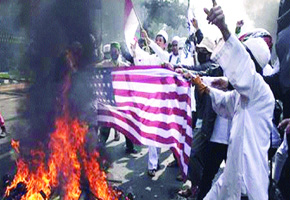
The mufti of Libya, Sadeq al-Gharyani, said in a statement published by the LANA state news agency that a march called for later yesterday should be halted “because this march will not be secure”.
“I call on the people not to participate in this march so that no blood is spilled,” he said. “There are some people who want to use these protests to cause violence.”
At the Shara Zawiyah mosque in central Tripoli, the preacher called on believers to respect the mufti’s ruling and avoid demonstrations because it could not be guaranteed they would be peaceful.
Similar speeches were delivered at mosques elsewhere in the capital and in Benghazi.
Libya’s Interior Ministry said police had been placed on a maximum state of alert to prevent violence for three days beginning on Thursday.
A week ago, Libyans held a massive, government-backed pro-democracy demonstration in Benghazi, the main city in the east, which culminated with protesters peacefully sweeping an Islamist militia, Ansar al-Sharia, out of its bases in the city.
That demonstration subsequently turned violent when protesters stormed the headquarters of another militia group, Rafallah al-Sahati, which operates with the government’s permission. Eleven people were killed and scores injured in clashes at a Rafallah al-Sahati base.
Civil society groups have been calling for a second round of “Rescue Benghazi Day” demonstrations, and a similar “Rescue Tripoli Day” demo to be held in the capital this week. Militia groups had said they would hold counter demonstrations of their supporters.
But the government appears to have decided to discourage the anti-militia street movement for now, after enthusiastically supporting last week’s Benghazi demonstration when the army flew fighter jets overhead to salute protesters.
Prime minister elect Mustafa Abushagur said late on Thursday any protests must be peaceful:
“Demonstration is a national right in a democratic state, as long as it is disciplined and presents no danger to the state, and there is no loss of life. It should be conducted in a civilized manner.”
The army’s chief of staff announced on Thursday the military would be barred from participating in demonstrations this week.
Some activists also said the prospect of violence had persuaded them not to protest this week.
“I would like a peaceful protest, but I think this protest on Friday could be used by Gaddafi supporters to cause violence,” Tripoli human rights activist Jamal al-Hajji said.
Many Libyans are fed up with the militias, which formed during last year’s civil war that ousted Muammar Gaddafi but still patrol the streets a year later, sweeping people off the streets and holding them in semi-official jails.
Public calls to curb the militia have gathered strength since the killing of US Ambassador Christopher Stevens and three other Americans in an attack on the consulate in Benghazi on 11 September.
Washington suspects Islamist militia groups, such as Ansar al-Sharia in Benghazi, may have played a role in the attack, and praised the Benghazi protesters for rising up against the group.
Since the killing of Stevens, the government has taken a two-track approach – shutting down Islamist militias like Ansar al-Sharia that operated without official government permission, but also offering public backing to many of the most powerful armed groups, which have official licences to operate.
Fears demonstrations on Friday could turn violent prompted the US embassy in Tripoli, already operating under tight constraints after the Benghazi attack, to further cut back on staffing temporarily. Other diplomatic missions also issued cautions about possible unrest. — Reuters



 Online Reporter
 Bongani Ndlovu