


 Online Reporter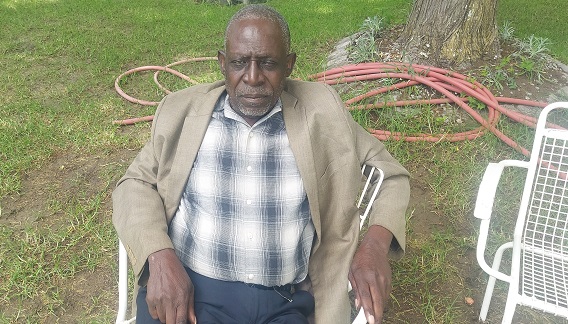
CDE WILFRED BALENI this week concludes his account by telling our Society Editor PRINCE MUSHAWEVATO about his journey after returning from training in the Union of Soviet Socialist Republics (USSR). He highlights how the experience transformed him into a vital cog of the Zimbabwe African People’s Union (ZAPU) administration team during the struggle.
********************
Q: Now that you were back in Lusaka after training in the Union of Soviet Socialist Republics (USSR), what happened next?
A: We were deployed. Some individuals wanted me to further my training, but that plan was later overturned. I was immediately deployed to the national commissariat, which was then headed by Professor Enos Malandu. He was an accomplished academic and combatant.
So, we then had two commissariats: one for the army, the Zimbabwe People’s Revolutionary Army (ZIPRA); and the other for the party (ZAPU), which is the one I joined.
Its function, the party commissariat, was to blend army and party operations to ensure unity of purpose.
Besides Prof Malandu, Abraham Sebele was also in the national commissariat of the party. By then, Cde Ambrose Mutinhiri was still the acting army commander. I majored in administration until the ceasefire. I never got involved on the battlefield. We planned everything for the fighters and ensured they had the necessary logistical and financial support to win the war against the Rhodesians.
Q: What exactly were your responsibilities as part of the commissariat?
A: From the commissariat side, we dealt with the political education of the fighters, creating syllabuses and teaching materials. We would also join the foreign affairs team when they attended conferences overseas.
We would particularly target youth conferences and we would solicit funds and foodstuffs, which would then be distributed in camps back home and in neighbouring countries.
I used to stay with one of the comrades I worked with during that time, here in Gweru; he was the deputy director of foreign affairs but is now deceased. We received most of our funds from communist and Scandinavian countries through their foreign affairs departments. I remember at one point he was very happy after we secured a significant sum of money to continue the struggle. This is part of the money that I believe was used during the post-independence campaigns and to purchase properties that you have heard were said to belong to ZIPRA fighters. This was an investment made with the foresight that the struggle would be prolonged. It was our duty in administration to make those decisions. Perhaps I should also mention that we had some members of the Indian and coloured communities who greatly supported the struggle, including one individual who bought Joshua Nkomo a Mercedes-Benz to use after his release from prison.
Q: What challenges did you face in your operations?
A: Working within the commissariat itself presented a challenge. It is not easy to persuade someone to do something; you need tact and careful choice of words. That is why some comrades later accused us of misleading them after independence. Some of the things we had told them did not come to pass. For instance, some felt that after independence, they would be able to cross the border with their weapons and act as they pleased, which was not the case as many were enlisted into the army, where discipline is paramount.
However, we would try to make them understand that the hardship we were enduring was for the purpose of liberating the country and enjoying the fruits of self-rule. We made them realise that the pain they were experiencing then was nothing compared to the oppression we were fighting against.
To avoid intimidating potential recruits, we devised euphemistic names for drills, like the “short-march”.
From the name, one would automatically think it was something simple, but it was a very difficult and laborious drill that would last about eight hours non-stop. Many struggled to complete it. It required a person of strong character to endure it. Thus, it was our duty as the commissariat to make them understand that this was a necessary process for us to achieve our objective.
Radios in the camps were only listened to by the commissariat team. They were the ones who would then interpret the news to everyone else. We would inform them about what was happening back home and the successes we were achieving.
We were in charge of the combat diary.
However, we would not exaggerate; we just needed to provide them with information that boosted their morale.
Q: How did your leaders conduct themselves in training camps?
A: Before joining the recruitment camp, one might have thought they were self-centred.
But I remember very well that our commanders, from the camp level up to the High Command, used to join the queue with everyone else when it was mealtime.
They would get their food from the cooks and receive the same portions as everyone else in the training camp and they would wash their plates after eating.
The same was true at the ZIPRA or ZAPU headquarters. That is how humble they were. We maintained that culture throughout the struggle. It perhaps only changed after we returned home when the officers’ mess and similar structures were created. Our commanders were good in the sense that they understood the struggle well and what needed to be done to win the war.
They had basic formal education, but they were highly intelligent. I do not think you can be a good commander if you cannot read a map.
Besides, when we were being selected for military training, they considered your academic background. I know some got frustrated because they joined the struggle after only reaching Grade Two or without any schooling at all, while someone with an Ordinary Level education would understand a lot and eventually attain a senior post. Remember, we had lessons in topography that required one to be academically well-versed in the subject. These required basic education, although one could also learn by observing others. We had some individuals who were naturally sharp, with no academic background, but still performed well, even better than those who were educated, which often surprised many.
Q: Briefly take us through your experiences after independence?
A: We returned home and were deployed to provinces just before the elections.
Once the elections were over, we went to our assembly points. I was at Mike Assembly Point until the integration period. However, I was not attested into the national army. But that was also the time we experienced some disturbances in the country. That is my story.



 Online Reporter