

 admin
admin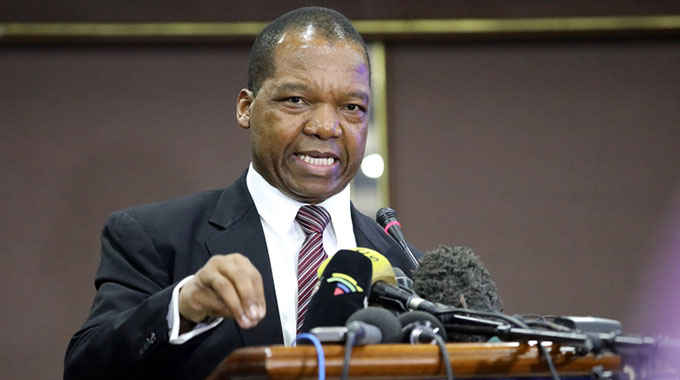
Taking Stock Kudzanai Sharara
While the maiden Monetary Policy Committee (MPC) Statement presented by its chairperson and RBZ governor Dr John Mangudya didn’t pull any punches in highlighting all ills bedevilling the country’s economy, it lacked initiatives that will be put in place to deal with these challenges. The Reserve Bank of Zimbabwe’s Monetary Policy Committee (MPC) held its inaugural meeting on October 28 and 29, 2019 and as expected correctly noted a number of issues that require urgent implementation for attainment of macroeconomic stability for sustainable development.
In particular, the committee presented a very frank statement of all the problems; inflation trends, cash challenges in the economy, exchange rate and foreign exchange inflows and outflows, as well as the interbank market and national payment issues, however, it revealed no action plan.
Rather than giving the comfort and confidence that Zimbabweans sought, there was widespread frustration and indignation as the statement did not offer much in terms of how the central bank will deal with the issues at hand.
The overall statement was dovish. It took a gradual approach to dealing with hot potato issues in the economy. People expected more; a departure from the past; a confidence booster; none was offered. There was no shaking of the table.
Most of the concerns that were noted by the MPC as requiring urgent implementation, have been in the public domain for long. The inflation pressures, weakening currency, and cash challenges in the economy, Zimbabweans have lived through it all, and what is needed now are solutions. The MPC statement offered little in that respect.
For instance, the committee talks of the potential for economic growth. That is known, Zimbabwe is endowed with natural resources currently in demand across globe, but the economy is not growing. All that is needed to be said is what will be done to grow the economy. The Committee says appropriate structural policies are needed to ensure sustainable growth but falls short of the details of what those structural policies are. What did the new members suggest, maybe we need to see minutes of the deliberations like they do in the United States? Maybe that can give us clues.
On one of the most concerning issues, that of elevated inflation, the Committee said it will put in place measures that are meant to limit pass through effect to inflation by stabilising the exchange rate and boosting confidence in the local currency. It adds there is also need to enhance confidence to reverse adverse inflation expectations as well as put in place a “credible disinflationary programme” which targets attainment of the desired inflation path in the short term. This is all well and fine, but again there is lack of detail on how all this is going to be achieved.
Confidence levels with regards anything that the RBZ says or plans to do is very low and the MPC statement was a missed opportunity to start building up on confidence. The MPC statement left many with questions. What is a “credible disinflationary programme” that the Committee talked about? What does it entail? What measures are going to be put in place to stabilise the exchange rate, which have not been put in place before? What is the new line of thinking given we now have six new members who were previously not part of the processes of determining monetary policy direction? The MPC statement does not show all this.
Government, RBZ indirectly causing exchange rate instability
There was a revelation by the MPC when it said unequal distribution of money supply, which is heavily skewed toward a few corporates is the main challenge within the economy as opposed to the general level of money supply. Now what the Committee did not say, but which is evident is that Government fed into the skewedness by consistently awarding tenders to the same institutions at the expense of other economic players. In the fuel sector for example, the industry has a few dominant players making huge profits and excess cash. In a hyperinflationary environment, chances are that, excess cash will seek to hedge by against loss of value by buying foreign currency and drive exchange rates.
Recently, we heard that one big corporate in the fertiliser manufacturing sector got the biggest chunk of Government tenders while an established state owned player, ZFC, was overlooked. Such decisions put a lot of cash in the hands of a few companies that might not know what to do with it besides buying forex and driving exchange rates. Then you have the ethanol deal with Green Fuel. Of all the petrol that is being consumed in the country 20 percent is going to one company and given the price that is then charged (ZWL$1,20 per litre) imagine the amount of money that is being made by just one company. Recently, Government announced that Sakunda hand partnered CBZ in distributing agriculture inputs to the various parts of the country.
With the dominance these companies have in the economy, it will not be a surprise if they then end up holding the biggest chunk of money supply in the economy and in the process destabilising the exchange rate or shaping the route it should follow. There is thus need to open up the economy to many economic players and agencies to avoid the skewedness in money supply holdings towards a few entities. For now, it appears that the state seeks to avoid accountability by blaming third parties. This is not the decisive action that Zimbabweans are expecting.
On the part of cash challenges there is no doubt more notes and coins are needed. The current physical cash level of just 4 percent of broad money supply is low compared to regional and international levels of between 10-15 percent. But as the new notes are being injected, measures have to be put in place to make sure that the notes are accessible to all economic players unlike now when some have to pay a premium. But so far there are no measures in place that the same people hoarding cash will not continue doing the same to the disadvantage of the rest of Zimbabweans.
The trust deficit that currently exist is a major huddle that need to be overcome. Zimbabwe is also a highly in formalised country with a significant number of people and businesses not operating bank accounts. If these players continue to dominate trades, then the money is bound not to go back to the banking sector once its withdrawn.
Lastly some good news
Access to foreign currency in a country heavily dependent on imports has always been critical and it seems this is an area where there is some kind of light in terms of where the MPC wants things to go. Its statement reads, “the Committee took note that to ensure transparency and effective monitoring, the Reserve Bank will shortly introduce the Reuters system for foreign exchange trading by all banks. Furthermore, the Committee underscored the need for banks to put available foreign exchange balances on the market for trading purposes.
In this respect the Reserve Bank will also make efforts to increase the flow of foreign exchange to the market.” At least these are concrete measures that hopefully will go a long way in bringing transparency to the forex interbank market. What is now left is to bring exporters to the table. Issues of retention thresholds and surrender requirements have to be addressed to make exporters comfortable playing on the formal market.


 Online Reporter