

 admin
admin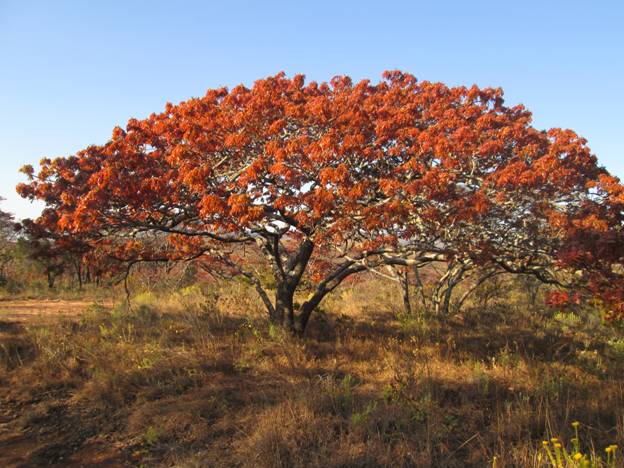
Sifelani Tsiko
Agric, Environment & Innovations Editor
Unknown caterpillars are plaguing some miombo woodlands across the country damaging one of Zimbabwe’s most common indigenous tree species – the iconic Msasa or igonde trees (Brachystegia spiciformis), a senior plant protection expert says.
Shingirai Nyamutukwa, head of the Plant Quarantine & Plant Protection Research Services Institute of the Agriculture Ministry said yesterday that the caterpillars attacked trees in Chihota, Sanyati and Makoni districts were they have been sighted.
The caterpillars are stripping mature Msasas of their leaves in just a couple of days.
“We are experiencing outbreaks of caterpillar pests that are attacking Msasa trees. Reports have been received from Chihota, Sanyati and Makoni Districts,” Nyamutukwa said.
“The caterpillars are defoliating Msasa trees in numbers. The reports started coming in this past weekend probably due to the recent windy conditions and rain that fell a few weeks ago. Wind is known to carry adult moths that lay eggs resulting in the caterpillars developing from the hatching eggs. It’s the first time that this caterpillar has been reported in many years.”
From around September, the Msasa trees form a breath-taking spectacle adorning themselves in their new dark red young leaves, the sign for many Zimbabweans that spring has arrived.
These woodlands are the most extensive woodland type covering most parts of the central watershed of the country.
The most common tree is the Msasa, which has diverse uses ranging from watershed protection, provision of soil fertility, grazing and browsing, firewood, mushrooms, caterpillars and timber.
“We are yet to determine the type and name of the caterpillar. We are still looking for the name. It’s my first time to see it on the Msasa tree,” Nyamutukwa said. “I used to know one caterpillar species known as Pachymeta robusta which is yellow and hairy, but this one is new to me. Investigations are still going on.”
The caterpillars are brown while some look greenish and have white and brown on their bodies.
Plant experts say Miombo woodlands demonstrate a remarkable capacity to recover after disturbance, due to tree regeneration from the roots and stumps.
They have been shown to do this after agricultural clearance, charcoal production and selective logging.
This woodland type covers an estimated 2.7 million square kilometres across seven countries that include Angola, Democratic Republic of Congo, Malawi, Mozambique, Tanzania, Zambia and Zimbabwe.
Miombo woodlands are now increasingly under threat from rapid urbanisation, changing land use and land cover changes that have intensified over the last half a century.



 Online Reporter