admin
admin
Lovemore Ranga Mataire
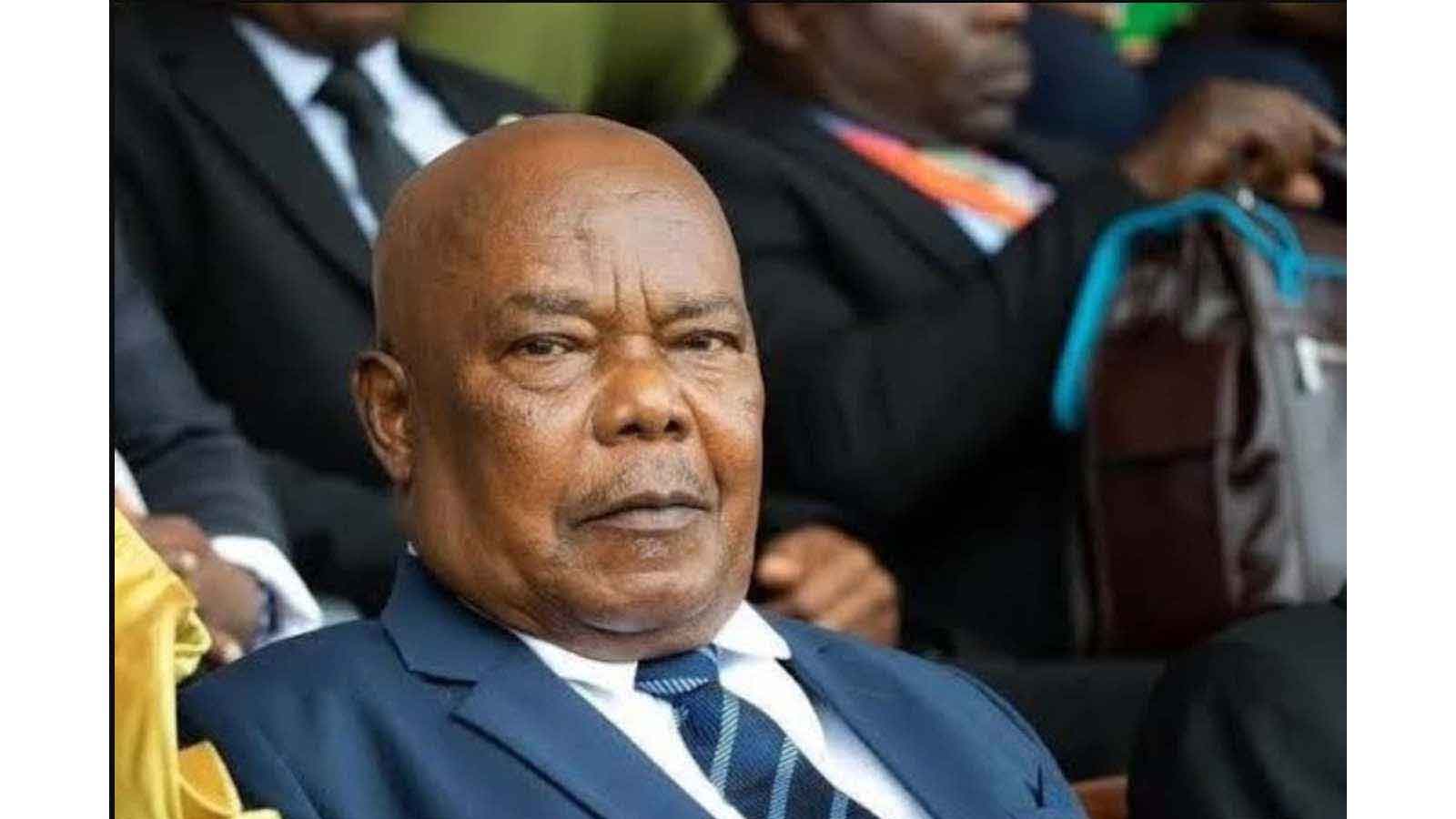
Many would agree that the former Midlands Governor and Zanu-PF Politburo member Cde Cephas George Msipa (85), who died at Westend Hospital in Harare early yesterday, was an affable, accessible and humble politician whose influence cut across the political divide, race, class or ethnicity.Born in a family of 10 children in Shabani on July 7 1931, Cde Msipa was introduced to the early racial disparities of Rhodesia as a young boy growing up in rural Shabani.In his autobiographical book titled “In Pursuit of Freedom and Justice” Cde Msipa explains how he got the surname Msipa instead of Gumbo, which was his father’s totem and surname.
“In Belingwe, most of our relatives, including my Gumbo brothers, Joram and Rugare, use the Shona surname, Gumbo (leg), which is Msipa (muscle/ligament) in Ndebele. As a matter of fact, Munene Hospital in the district was named after my great-grandfather who welcomed the Lutheran Church and allowed them to establish a mission in Belingwe in 1980. His name was Mnenengwa Gumbo but the missionaries shortened it to Mnene in appreciation of his granting them permission to establish a church, school and hospital.”
It is in the same book that he recounts of his early encounter with Benjanmin Burombo, the political activist who used to come and stay at his father’s house. The young Msipa idolised Burombo’s humility and his commitment to ceaselessly work for the good of the people
Maybe his somewhat multi-ethnic upbringing (Shona and Ndebele) had much bearing on his future adult life as he found it easy not just to socialise with individuals across the racial or ethnic lines but also managed to build solid friendships that transcended petty inhibitions.
Married to Charlotte Sithabile Msipa and blessed with eight children, the young Msipa had a difficult childhood. His father was a hardworking peasant farmer who toiled for his children to attain some education. The young Msipa was educated at Siboza School from 1941 to 1943 before going to Dadaya Mission where he was taught by the late Ndabaningi Sithole.
In 1949, Cde Msipa left Dadaya only to return two years later to train as a primary school teacher. An astute and self-motivated student, Cde Msipa privately studied for his Matriculation Exemption Certificate from 1953 to 1954.
Upon completion of his teacher training stint at Dadaya Cde Msipa was deployed at various schools in Shabani and Kwekwe between 1953 and 1957. He later headed various schools in Harare between 1959 and 1964. It was during his stint as a teacher that he came face to face with the sheer discrimination of the white minority rule, which used to have different pay scales and conditions of service for whites and blacks with the latter group always getting a raw deal.
Inspired by the need to fight for the welfare of black teachers, Cde Msipa ran and won the race for the presidency of the Rhodesia Teachers’ Association in 1961 and marshalled the organisation until 1964 when he was dismissed from the teaching profession. He, however, remained at the helm of the organisation until 1965 when the organisation retained him as its paid secretary.
His international exposure to colonial disparities came in 1963 when he attended the World Teachers’ Conference in Rio De Janeiro, Brazil, where he interacted with fellow teachers. His political consciousness was further heightened when he later attended a seminar in Nairobi, Kenya.
An early experiment with the multi-racial Capricorn Africa Society, which he was the chairperson of for a short time proved impracticable as barely a year later he became the Midlands correspondent for the African Daily News. He said in an earlier interview published in our sister paper after the publication of his memoir that his motivation for becoming a journalist was to expose the dreary conditions and struggles of black people.
Finding all his efforts to highlight the conditions of the Rhodesian black man ineffective, Cde Msipa joined the Zimbabwe African People’s Union (Zapu) in 1961. But already, the colonial regime had his movement and activities put on their radar and four years after joining Zapu, Cde Msipa was arrested in November. In early 1966, Cde Msipa escaped prison and was on the run from police for 10 weeks before he was arrested and sent for indefinite detention during which he read for an external degree with the University of South Africa and graduated with a Bachelor’s degree in Administration.
In 1971 Cde Msipa was out of detention and got a job as a public relations officer for a textile company. In November of the same year, Cde Msipa was invited by Cde Josiah Chinamano, a Zapu top guru, to accompany him as a representative of Zapu during a meeting with Sir Alec Douglas-Home. The same meeting was also attended by the now alte Edson Sithole and Michael Mawema.
Cde Msipa was a founder member of the African National Congress and was appointed the secretary-general of the same party but his textile job made it impossible for him to actively participate and he resigned in 1972. Realising his rich history in education, the ANC found it fitting to appoint him secretary for education in September 1975, a position that earned him a place in the delegation to the constitutional conference held in the then Salisbury. In 1976, Cde Msipa left the country on a mission to brief the Ghanaian and Nigeria governments on the progress of the conference. He was again a member of the ANC delegation to the Geneva Conference in October 1976.
Cde Msipa remained very active in liberation activities and at independence he was appointed the Deputy Minister of Youth, Sports and Recreation, Manpower Planning and Development and later as Minister of Resources and Development. He also served as Minister of State Responsible for State Enterprises and Indigenisation.
In 2000 Cde Msipa was appointed Governor of Midlands Province, becoming one of the longest serving provincial ministers in the country when he was re-appointed in 2003 and 2005 until his retirement in 2012. In 2014 Cde Msipa retired from active politics and decided not to contest his Zanu-PF Central Committee position.
The inimitable Cde Msipa had an infectious disempowering smile, which by default made him a suitable candidate as the go-between in the consummation of the 1987 Unity Accord between Zanu-PF and PF-Zapu.
In an interview with this writer, Cde Msipa said he single-handedly had to convince the late Father Zimbabwe Dr Joshua Nkomo to come to the negotiating table with President Mugabe, which later led to the signing of the historic Unity Acord in December 1987. His traits as a unifier and father figure were to manifest in his leadership at various ministries and also as the Midlands Provincial Governor.
Cde Msipa was a principled family man who never hesitated to express his views on issues of fundamental importance. In 2004, Cde Msipa quit the Zimbabwe International Book Fair board after rumours that it was associated with gay activities.
Upon his retirement from active politics Cde Msipa’s fervent belief in education was exemplified by the formation of the CG Msipa Scholarship Trust which committed itself to assisting underprivileged children from all the country’s 10 provinces.
Commenting on his term as the Midlands Provincial Governor, Cde Msipa said: “I had an open door policy. People used to come to my house to explain their problems. It was quite a challenge.”
Such was Cde Msipa’s humility. A very unassuming gentleman whose contribution and commitment to the liberation of Zimbabwe remains invaluable in life and death.Cde Msipa is survived by eight children and several grandchildren.


 Online Reporter