

 admin
admin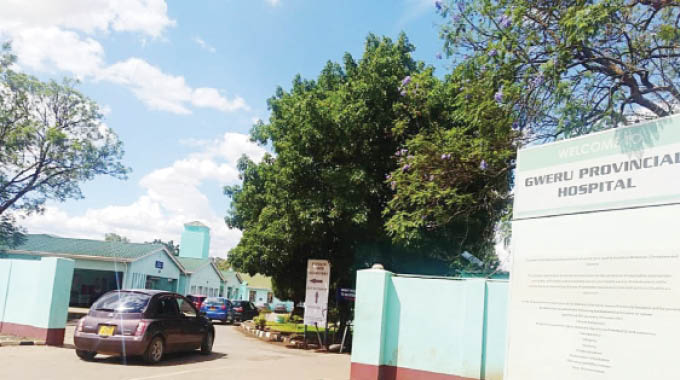
Patrick Chitumba, Midlands Bureau Chief
In 2015, the Midlands State University (MSU) introduced medical studies as part of its plans to broaden the scope of its degree programmes.
It subsequently established the Faculty of Medicine which resulted in the founding of the medical school based at Gweru Provincial Hospital. This has seen the university receiving a lot of support which has in turn benefited the residents of Gweru and the Midlands province as a whole.
The establishment of the medical school at Gweru Provincial Hospital has attracted more clinical specialists to the city, which has seen patients from Midlands and Masvingo who used to be referred for specialist treatment in Harare and Bulawayo saving time and money since the services are now within reach.
In a recent interview, MSU director of public relations Mrs Mirirai Mawere said the MSU Faculty of Medicine is using GPH as its teaching hospital for the clinical years which start in the third year.
She said the inaugural group of students is now in its fourth year of the five-year MBChB programme which began in 2015. “The University now has specialists in various clinical disciplines including Internal Medicine (Physicians), General Surgery, Orthopaedic Surgery, Neurosurgery, Paediatrics, Obstetrics and Gynaecology, Psychiatry, Anaesthesia and Community Medicine among others. The University also has over 30 staff development fellows being trained in various specialties,” she said.
“In addition to using GPH as a teaching hospital, the university has a vision to one day construct a teaching hospital of its own. But for now, the facilities and support from GPH are adequate and GPH has been approved by the Medical and Dental Practitioners’ Council of Zimbabwe to be the teaching hospital.
“In effect, many people in the Midlands Province and nearby provinces like Masvingo no longer have to be referred to Harare or Bulawayo for specialist care. The University is also now making its modest contribution towards the training of medical doctors in Zimbabwe.”
Mrs Mawere said in addition to medical students, GPH has also been training junior doctors commonly referred to as Junior Resident Medical Officers (JRMOs) in Medicine and Surgery.
“Because of the presence of additional medical specialists, the Medical Council has just authorised GPH to host training for senior doctors called Senior Resident Medical Officers (SRMOs) in Obstetrics and Gynaecology, Paediatrics and Anaesthesia,” she said.
Mrs Mawere said the laboratories for Anatomy, Biochemistry, Physiology and Histology were constructed to the satisfaction of the University of Zimbabwe College of Health Sciences (UZCHS) and the Medical and Dental Practitioners’ Council of Zimbabwe.
She said the first intake of 20 students was in February 2016, adding the students use the curriculum of the Bachelor of Medicine and Bachelor of Surgery (MB, ChB) and the first cohorts will be offered UZ degrees when they complete their training.
“We have a dedicated modern Medical Library that can seat 68 students and has hard copies and electronic copies of medical textbooks and journals. There’s an excellent facility for e-Learning and the students can also access the Medical Library electronically even when they are off campus,” said Mrs Mawere.
The teaching venues have modern teaching equipment which includes an Interactive Board (i-board) and an Electronic Board (e-board). “One of our fourth year medical students, Miss Lynette Ndlovu, was elected the president of the Continental Federation of African Medical Students’ Associations (FAMSA).
She’s the first female from Southern Africa to be president of FAMSA. At the recent Annual General Meeting of the Zimbabwe Medical Students’ Association (ZIMSA), which consists of students from UZ, Nust and MSU — students were elected into six of the 12 ZIMSA executive posts.
The ZIMSA president is an MSU third year student, Mr Dennis Maramwidze,” she said.
GPH medical superintendent Dr Fabian Mashingaidze said the coming in of the MSU Medical School has seen the rise in the number of specialist doctors at the hospital.
“We now have more specialist doctors meaning our patients have more medical doctors attending to them. They no longer need to travel to Harare or Bulawayo for specialists. The school is contributing in the training of doctors, which is a plus for the country,” he said.
Dr Mashingaidze said the Government had availed $1million of the $5 million aimed at upgrading the Medical School.
“With the money from Government, we are looking at expansion work which will involve the construction of new theatres, a renal unit, High Dependence Unit (HDU), Intensive Care Unit (ICU) and extra wards among other notable infrastructural upgrades. We are going to have a completely new block to house theatres, Intensive Care unit, renal unit and some wards. The ICU we have now is small as it has only three beds hence the decision to build a bigger one,” he said.
Dr Mashingaidze said an increased number of specialist doctors calls for more space hence the expansion projects underway.


 Online Reporter
 Bongani Ndlovu