Online Reporter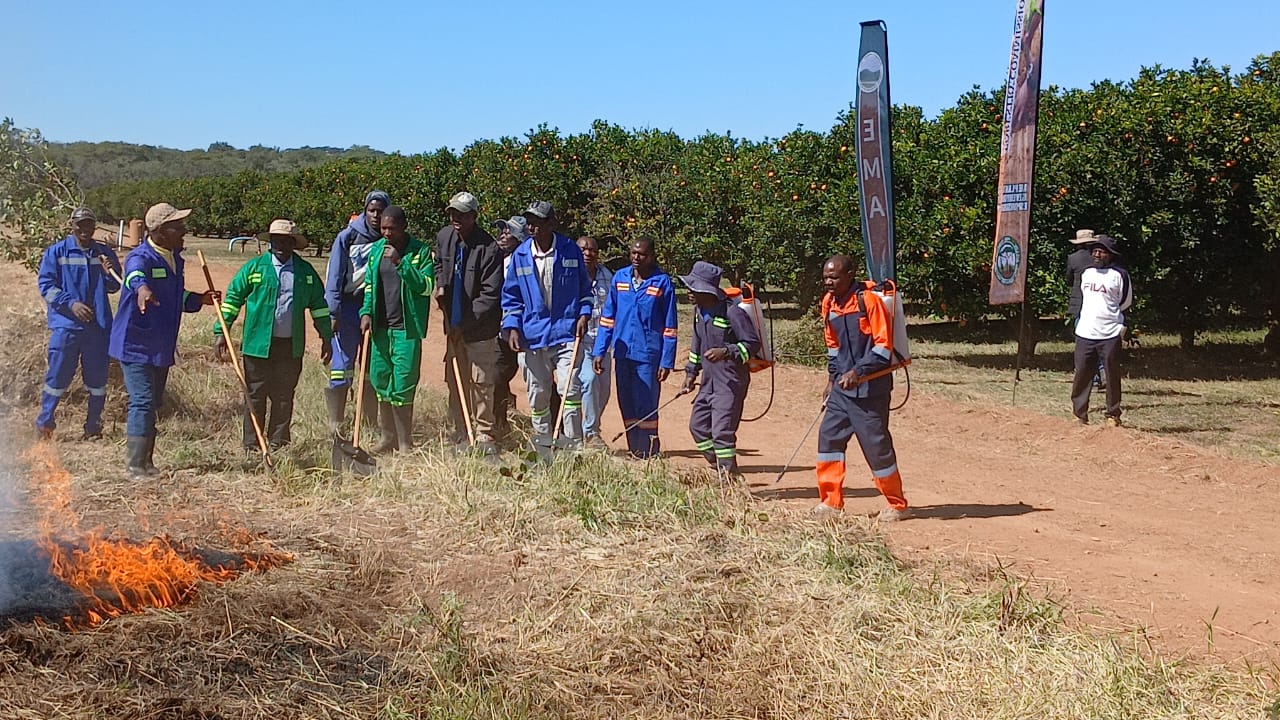
Patrick Chitumba. [email protected]
STAND at Gwenoro Farm in the fire-prone corridor between Shurugwi and Gweru and the evidence is immediately visible: a nine-metre-wide ribbon of bare earth winding around the perimeter of Midlands State University’s strategic agricultural asset.
It may not appear dramatic. There are no banners and no fanfare. Yet the 15 kilometres of fireguard constructed this dry season represent the university’s first line of defence in a battle that extends far beyond preventing veld fires, touching on climate resilience, food security and, as MSU Vice Chancellor Professor Victor Muzvidziwa aptly puts it, “our identity as Zimbabweans”.
The fireguards were recently showcased during the belated combined Midlands Provincial Fire Launch and World
Environment Day commemorations co-hosted by the Shurugwi and Gweru districts.
Although delayed, the event carried even greater significance this year.
Midlands Province lost 70 636 hectares to veld fires in 2024. In 2025, that figure increased to 73 566 hectares, representing a 4,15 percent rise.
Gweru, Chirumanzu, Shurugwi and Kwekwe remain among the province’s major fire hotspots.
“Although delayed, this moment is no less urgent and no less profound,” Prof Muzvidziwa told farmers, miners, students and Government officials gathered at Gwenoro Farm for the commemorations.
“We gather at Gwenoro Farm, a strategic agricultural asset of Midlands State University, situated in the fire-prone corridor between Shurugwi and Gweru districts. This location symbolises both our vulnerability and our resolve,” he said in a speech read on his behalf by Professor Parwada, Executive Dean of the Faculty of Agriculture,
Environment and Natural Resources Management.
He said protecting the farm from veld fires was critical for the university to sustain production and productivity.
“We export peas, citrus, general horticulture, greenhouse horticulture and general agronomy. We are also into goat, beef and poultry production on that 592 ha farm,” he said.
Prof Muzvidziwa traced the origins of Zimbabwe’s National Fire Launch to the devastating fire seasons of the early 1990s, which destroyed vast tracts of woodlands, farmland and settlements. In response, Government, through the
Environmental Management Agency (EMA) and the Forestry Commission, institutionalised the annual launch to galvanise preventive action. World Environment Day, established at the 1972 Stockholm Conference, serves as a reminder that humanity has only one Earth.
For Zimbabwe, he said, the two commemorations converge around a shared truth: the environment is the foundation of nationhood.
“Our heritage is not merely the stone monuments of Great Zimbabwe or the spiritual pools of Matobo,” the Vice
Chancellor said. “It is the living miombo woodlands, the mopane forests, the musasa and mukwa trees that have sheltered our people for centuries. These forests hold our medicines, our totems, our sacred groves. When fire
consumes them uncontrollably, it does not just burn biomass – it erases indigenous knowledge, dries up springs,
and chases away wildlife that our folklore celebrates. Conserving our natural resources is, therefore, an act of preserving our identity as Zimbabweans.”
At Gwenoro Farm, Prof Muzvidziwa said, MSU has moved beyond rhetoric and embraced practical, low-cost intervention measures.
Using ploughs, ox-drawn and tractor-drawn implements, the university established nine-metre-wide fireguards around the farm perimeter and along key internal firebreaks.
The 15 kilometres constructed this season alone are designed to halt fires capable of spreading at speeds of up to 20 kilometres per hour — the kind of uncontrolled veld fires that can leap across roads and small rivers.
“Prevention is cheaper than suppression,” Prof Muzvidziwa said. “At Gwenoro Farm, situated vulnerably between two districts, we have demonstrated that.”
He said the fireguards form one component of a five-pillar strategy that the university describes as proactive rather than bystander action.
Prof Muzvidziwa said MSU offers a Bachelor of Science Honours Degree in Environmental Management and
Resilience Building, as well as postgraduate diploma and MSc programmes in Disaster Management and Climate Change Adaptation.
“Its graduates are now found in EMA, the Civil Protection Unit, local authorities and the private sector. We are producing not just graduates, but also practical solutions that keep Zimbabwe’s granaries full,” Prof Muzvidziwa said.
He said MSU staff and students are using Geographic Information Systems (GIS) technology to map fire risks along the Shurugwi-Gweru corridor.
Their findings, he added, demonstrate how land-use changes have contributed to increased fire frequency.
“Those recommendations are now feeding into local policy. Beyond fireguards, MSU conducts controlled early burning under EMA permit to reduce fuel loads before the peak fire season. It trains neighbouring smallholder farmers to construct fireguards with their own oxen and labour. Demonstration days teach how to maintain early
burning strips and mobilise community brigades. Some farmers have now formed fire management clubs,” he said.
Prof Muzvidziwa said the university is also promoting apiculture by placing beehives within woodland areas.
Bees, he noted, not only generate income but also discourage indiscriminate burning because fire destroys hives and livelihoods.
“This has created a win-win for conservation and livelihoods,” he said.
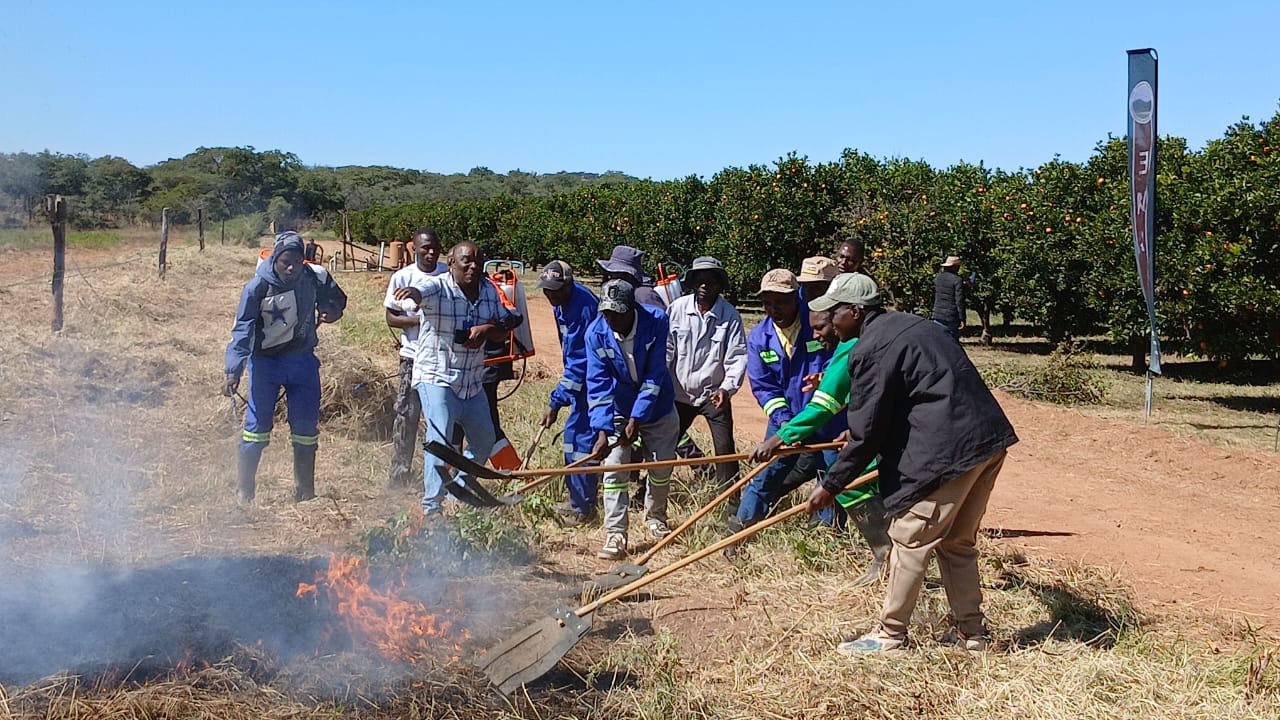
Prof Muzvidziwa said MSU has also assisted in establishing community fire-fighting teams equipped with hoes, shovels, water drums, beaters and backpack sprayers.
He added that the university’s zero-littering policy helps remove glass and metal containers that can intensify sunlight and become sources of ignition across campuses and farms.
Prof Muzvidziwa was unequivocal about the importance of the issue.
“Fire protection and environmental management are not side issues – they are central to climate action and food sovereignty,” he said.
He explained the chain reaction caused by uncontrolled fires: they release stored carbon into the atmosphere, worsening global warming.
They degrade soil structure, reduce fertility and accelerate erosion. They destroy grazing land, kill pollinators and
worsen the effects of drought.
In a country already grappling with erratic rainfall, rising temperatures and prolonged dry spells, he warned that “every hectare burned is a step backwards in our fight for food security and climate resilience”.
Conversely, he argued, properly managed landscapes retain moisture, regenerate soils and support more reliable harvests.
“By protecting our environment from fire, we are investing in predictable food systems and reducing our dependence on rain-fed unpredictability. A nation that fails to protect its environment has no claim to food sovereignty,” he said.
Forests, he reminded the gathering, are Zimbabwe’s “natural water harvesters, carbon sinks, and biodiversity havens”.
Lose them and the consequences extend far beyond the loss of trees. Crop production declines, livestock suffer from
reduced grazing and rural livelihoods are placed under severe strain.
Prof Muzvidziwa stressed that MSU cannot win the fight against veld fires alone.
Continues on www.chronicle.co.zw
He paid tribute to Tongogara Rural District Council for its fire planning and by-law enforcement efforts, EMA for technical guidance and early-burning permits, the Forestry Commission for providing seedlings and fire-wise agroforestry training, and traditional leaders for mobilising local communities.
“Hupenyu hunotsamira panharaunda ne zvakasikwa – the interdependence of life and nature. Let me sound a clarion call: every citizen is a firefighter; every day is environment day,” he said.
“Let us not wait for the smoke to darken our skies before we act. Let us maintain our fireguards, practise zero
littering, report arsonists, and protect every tree as though our children’s future depends on it – because it does.”
EMA provincial manager Mr Benson Bhasera said uncontrolled veld fires continue to have devastating socio-economic consequences for biodiversity and rural livelihoods.
“Veld fires not only destroy our precious biodiversity but also directly threaten human livelihoods; it is our collective duty to act responsibly and prevent these incidents entirely,” said Mr Bhasera.
In preparation for the 2026 fire season, EMA conducted a fire risk assessment to identify high-risk zones across the country.
The assessment revealed that 41,93 percent of the country is at high risk of veld fires, 31,95 percent at medium risk
and 11,69 percent at extreme risk.
Provinces along the Highveld — namely Mashonaland West, Mashonaland East, Mashonaland Central, Manicaland and Midlands — remain the most vulnerable.
The 2026 veld fire forecast indicates that areas classified as extreme risk have expanded into zones previously
regarded as medium risk.
Speaking on behalf of the Minister of State for Provincial Affairs and Devolution for Midlands, Owen Ncube, the Permanent Secretary for Provincial Affairs and Devolution, Dr Edgar Seenza, applauded MSU’s active community
engagement and reiterated Government’s strong support for grassroots educational campaigns that promote sustainable environmental management.
“Having an institution like MSU actively embedded within the community guarantees the safety and enlightenment
of our people, as they are continuously empowered with practical, life-saving knowledge,” Dr Seenza said.
The commemorations featured highly interactive activities, including tree-planting initiatives and live fire-fighting demonstrations, allowing local farmers and community members to exchange experiences and acquire practical
veld fire management skills.
As the dry season intensifies, those 15 kilometres of bare earth at Gwenoro Farm represent far more than a boundary.
They stand as a powerful statement that universities must lead from the field, not merely from lecture halls. In protecting trees, MSU is helping to safeguard Zimbabwe’s climate resilience, food security and the living natural heritage that defines the nation.