admin
admin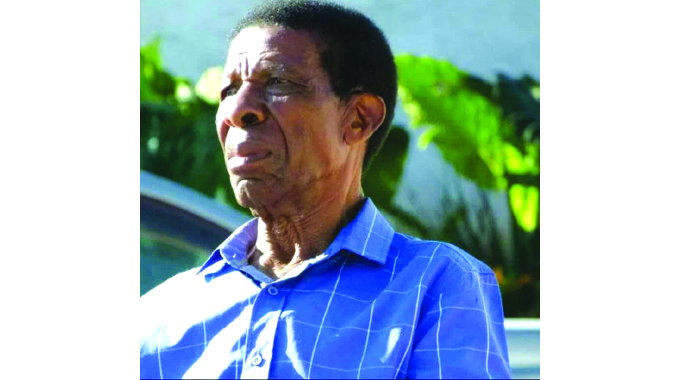
Walter Muchinguri
The country’s drive for economic freedom and indigenisation cannot be complete without reference to a respected businessman and pioneer of black empowerment in the pre-and post-colonial era, Mr Ben Mucheche, who died at his Beatrice Farm on Wednesday at the age 96.
Family spokesperson, Mrs Elizabeth Mucheche Parirenyatwa, said Mr Muchecheied at his home in Beatrice on Wednesday, is survived by six wives, 29 children, 56 grandchildren and 27 great grandchildren.
Mourners are gathered at Farm 13, Plumstead Rd in Beatrice.
Mr Mucheche, the first black African to own a fleet of taxis and open a taxi rank in Zimbabwe, was well known for running a successful bus company which he founded before independence.
Economic emancipation and public transport business were critical issues that were very close to the businessman’s heart and he dedicated a lot of his time and a large portion of his life in this sector.
His dedication to the two issues saw him giving long service to the transport industry as vice president and later president of the Zimbabwe Transport Organisation, a post he only relinquished in 2004 after 32 years at the helm.
On the economic front, Mr Mucheche pushed for indigenisation and the emancipation of black business people as the president of the Rhodesian African Chamber of Commerce in the 1970s and as president of the Indigenous Business Development Centre (IBDC), an organisation he founded in 1991 together with other prominent business personalities such as the late Paul Mukondo, John Mapondera, Strive Masiiwa, the late Rodger Boka, Enock Kamushinda and Mrs Jane Mutasa.
Mr Mucheche, who was also a staunch supporter of the country’s land reform programme, was born in Chishawasha, Mashonaland East province on March 31, 1927 and attended school at Chishawasha Mission up to Standard 6 in 1946.
After school, he taught at Acturus Mine School for two years before he quit to join the Rhodesian Selection Trust, which was dealing in housing projects.
The trust had just acquired the 300-acre Vainona Estates and he was appointed a foreman of the estates responsible for the construction of roads, developing of stands and a junior and secondary school.
In 1956, he left the Trust at the age of 29 and moved to Harare where bought his first taxi after making a down payment of 300 pounds and started operating in Mbare.
This was during a period when the taxi business was classified in two classes; Class 1 for whites and Class 2 for blacks.
Black owned taxis were only allowed to operate in Mbare and Old Highfield townships.
After six months he had raised enough money to buy a second taxi, which he gave to his brother who operated in Old Highfield.
He and other black taxi owners then opened the Machipisa Taxi rank.
In 1959, Mr Mucheche bought his first farm in Muda, Enkledoorn (now Chivhu) in an area known then as the African Purchase area.
By 1962, his fleet of taxis operating under the name Easi-way Taxis (Pvt) Ltd, had grown to eight. He then made a decision to sell them and bought two 44-seater Albion buses, which operated on the Domboshawa and Bindura routes.
Again, the odds were stacked heavily against him and other black transport operators because of a difficult and restrictive business environment where urban transport was controlled by whites, while black-owned buses were only allowed to operate within certain boundaries in rural areas.
Nonetheless, he persevered and four years later he bought a big DAF bus, which was a game changer in the passenger transport business. By 1974, his fleet had grown to 27 buses and had also opened a branch in Wankie (now Hwange) with five buses.
He became one of the biggest black employer with over 100 employees and was moving around in a shiny new Mercedes Benz.
By 1979, his fleet of buses had grown to 75 and he had bought another farm in Beatrice, where he later moved to settle with his family in 1986.
He was now the director of a thriving business empire that comprised of Mucheche Bus (Pvt) Ltd, Mucheche Properties (Pvt) Ltd and Zimbabwe Express Motorways.
Despite overseeing his growing empire, Mr Mucheche never shied away from new challenges.
At one time he was the vice-chairman of the Jairos Jiri Association and a member of the Natural Resources Board and Commission of Inquiry into Racial Discrimination 1976, which was chaired by Sir Vincent Quenet.
One of his notable appointments was that of being a Rhodesian Reserve Bank director on November 3, 1977, together with Mr Zacharia Ngalane for a period of five years by the then president Wrathall in terms of the Reserve Bank of Rhodesia Act of 1964.
In March 1978, he was appointed to the board of Triangle Ltd. During this time, Mr Mucheche and other black businessmen such as Mwayera and Makomva played a pivotal role in supporting the war of liberation through supplying freedom fighters with food, clothes and money
They also used their buses and vehicles to transport the goods and freedom fighters from towns to the rural areas.
Mr Mucheche’s support for the liberation struggle started in the 1960s when nationalist politics was heating up and he was requested to ferry some of the nationalists such as James Chikerema, George Nyandoro and Paul Mushonga since they had no money.
In the 1970s, he became very close to the late former President Robert Mugabe and the late former secretary general of Zanu (PF) Edgar Takere, who were frequent visitors to his offices where they sometimes kept important files.
His support for the liberation struggle was not without its own dangers and an incident in the late 1970s led to his detention at Southerton Police Station after police trailed a driver he had sent to buy some supplies for freedom fighters to Macheke.
The police then traced the number plate on the vehicle that the driver had used to Mr Mucheche and he was arrested, branded a terrorist, beaten up and locked up for two days.
Since there were not many black businesspeople in colonial Rhodesia, Mr Mucheche was the go to person when nationalists needed help in terms of transport, money, food and telephone.
At one stage he was approached by ZAPU led by the late Dr Joshua Nkomo to provide a vehicle for use. He provided the vehicle before any payment was done.
“I was then instructed to drive the car to Bulawayo and delivered it to the president’s residence. While the leadership was in Addis Ababa, Ethiopia for an OAU meeting, the party was banned and all the political leaders were detained,” Mr Mucheche said in an interview published by a local weekly newspaper during the early years of independence.
“All the assets of ZAPU were confiscated by the Rhodesian government and sold by public auction, including the car.”
Mr Mucheche had been a strong advocate for black empowerment dating back to the pre-independence era when he started advocating for the emancipation of black people and for businessman to be given war compensation, among other issues, as president of the Rhodesian African Chamber of Commerce.
He also advocated for aid for rural area traders.
After independence, he continued with his crusade.
In January 1987, he became the interim chairman of the Mashonaland Development Foundation, a grouping of 30 Harare-based businessmen and professionals, that was aiming to mobilise technical and financial aid for self-help projects.
In April of the same year, he was also appointed chairman of the Goromonzi District Development Committee and in November he was elected chairman of the Mashonaland East Development Association.
In March 1989, he was appointed director and chairman of the Rural Transport Co-operative Limited, the business wing of the Zimbabwe Transport Organisation.
It was, however, in 1991 when the real push for indigenisation intensified with the formation of the Indigenous Business Development Centre (IDBC).
April 1994 saw him assuming the presidency of the IBDC. His appointment led to a four-month leadership wrangle with his predecessor Chemist Siziba, which only ended in August.
As IBDC president, he pushed for the establishment of the Indigenisation Commission, which the Government of that time agreed to in principle.
He also fought for black business people to be treated fairly by financial institutions during a time when most were having their properties attached and sold due to failure to service their debts.
He also arranged revolving loan facilities with organisations such as the Credit Guarantee Company.
Mr Mucheche was fond of nurturing young business people and always emphasised on listening to advice, keeping and honouring promises, paying debts and loans as agreed and establishing trust with financial institutions.
Away from the world of business and advocating for economic emancipation, Mr Mucheche was a staunch supporter of the country’s biggest football club, Dynamos, and he never missed an opportunity to watch his team playing at home.


 Online Reporter