Chronicle Editor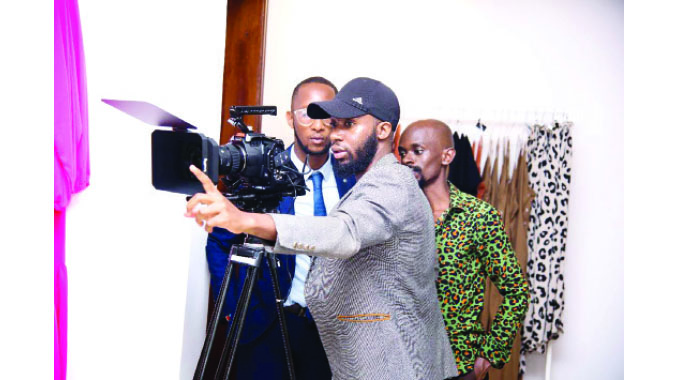
Mbulelo Mpofu, [email protected]
IN 2019, two film students from Zimbabwe, Nobert Mapfoche and Rutendo Mahofa benefitted from the MultiChoice Talent Factory (MTF) Southern Africa Academy skills development programme and received placements in major television productions after their graduation.
Four years on, the former is making strides in the film sector.
Mapfoche is carving his path in the cut-throat sector and he has been increasing his skills in behind-the-scenes production in TV and entertainment. His story has “determination and hard work breeds success” written all over it and shows that with the accumulation of appropriate information and knowledge, only one’s imagination can determine how far one can go.
The MTF Academy was launched to provide skills development opportunities for aspiring filmmakers across the continent and to stimulate the creation of increased quality content for Africa’s film and television industry.
Chronicle Entertainment‘s Mbulelo Mpofu (MM) conversed with Nobert Mahofa (NM) to be up to speed with what the filmmaker has been up to since his graduation.
Below is the interview:
MM: Since your graduation, what have you been up to and what are you working on?
NM: I have been honing my skills and I am co-producing a feature film titled Kigal 21 which explores cultural differences, racial equality, African pride and self-worth.
It’s a romantic drama film that I feel will resonate with many Africans on a personal level. I’m also working on reality shows, TV shows and documentaries.
MM: How has the MTF helped you as a filmmaker?
NM: The MTF Academy has been an incredible stepping stone for me as a filmmaker. Being able to collaborate with and learn from talented filmmakers from different African countries has broadened my perspective and helped me to develop my craft in new and exciting ways. The programme’s emphasis on practical, hands-on training has also been invaluable in preparing me for real-world challenges on set.
MM: What are some of the lessons you learned after being placed at Zambezi Magic Productions?
NM: I worked mostly on dramas and reality shows for Zambezi Magic Productions. Working on Zambezi Magic film production sets has taught me many important lessons, such as the importance of communication, organisation, and attention to detail.
It has also reinforced the idea that film-making is a collaborative artform, and that the success of a production is not an individual’s game, but that it often comes down to the strength of the team you work with.
MM: What do you think makes a great film?
NM: I believe that a great film is one that tells a compelling story in a unique and engaging way, while also connecting with the audience on an emotional level. It’s one that leaves a lasting impression long after the credits have rolled and inspires the audience to take action and to continue watching more films.
MM: How does being part of the first cohort of the MTF make you feel?
NM: I can say that the experience was truly transformative and had a profound impact on my career as a filmmaker. Being immersed in a community of talented and passionate filmmakers from across the continent and beyond was an incredible learning opportunity, and I was able to expand my knowledge and skills in ways that would not have been possible.
Through the programme, I gained exposure to new techniques, technologies, and approaches to film-making, as well as a deeper understanding of the social, cultural, and political context in which films are made and consumed. I am grateful for the opportunity and will continue to apply the skills and knowledge I gained to create meaningful, memorable and impactful films.
MM: As a filmmaker, what do you think is Zimbabwe’s greatest need within the sector?
NM: Zimbabwe’s greatest need within the film sector is increased investment and support for local filmmakers. There is so much talent and potential in Zimbabwe, but without the proper resources and funding, many great ideas may never see the light of day.
MM: Besides film, what else do you do?
NM: In addition to film-making, I am into sales and marketing. I enjoy growing brands by helping them grow their online presence and creating strong brand identities.
MM: Moving forward, what can we expect from you and what is your message to want-to-be filmmakers in Zimbabwe?
NM: In the future, you can expect thought-provoking campaigns, engaging films and TV shows. My message to aspiring filmmakers in Zimbabwe is that the future belongs to those who believe in the beauty of their dreams. If you’re willing to pursue your vision with passion and determination, you will ultimately succeed.
It won’t be an easy journey, but in the end, it will be worth every step of the way. The film sector is constantly evolving, and those who are willing to adapt, innovate, take risks, and challenge the status quo are the ones who will succeed. —@MbuleloMpof



 Online Reporter