Online Reporter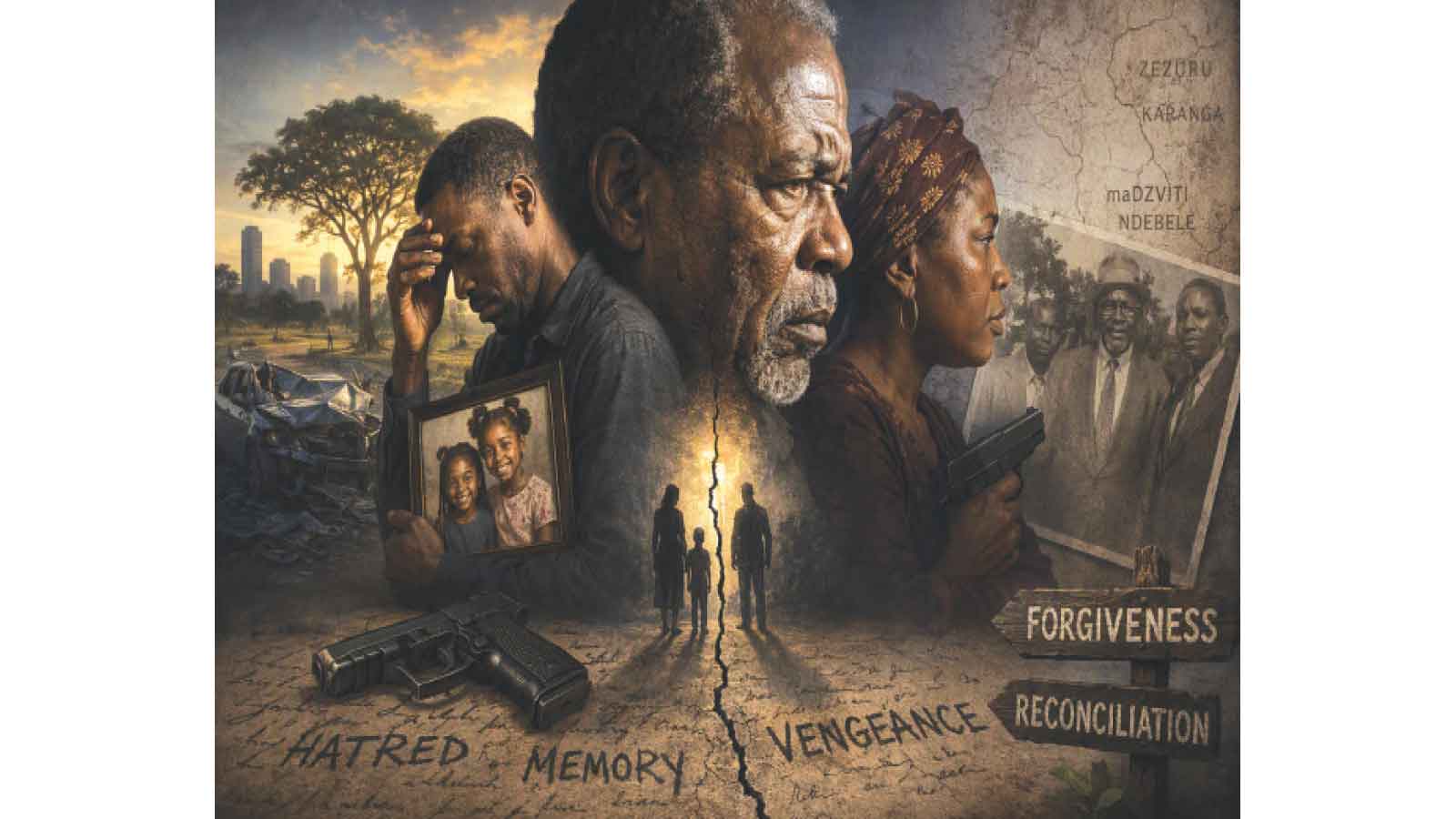
Elliot Ziwira-At the Bookstore
THE past is stubborn, for it lingers in the present and stretches its shadow over the future.
It is trite that when old hurts, wrongs and toils are constantly revived without a corresponding willingness to heal, the future becomes a battlefield where inherited scars are used to justify fresh wounds.
That is why Charles Mungoshi’s timeless short story “The Sins of the Fathers”, first published in “Writing Still”, edited by Irene Staunton and published by Weaver Press, speaks as urgently to today’s reader as it did more than two decades ago.
True, forgiveness never comes cheaply. Only those who learn to forgive themselves can genuinely forgive others. Across cultures, families, communities and nations remain theatres where individuals wrestle for dominance, often because they refuse to release the burdens of yesterday.
At the centre of this endless theatre of conflict are words. Words are capable of building bridges as readily as they can destroy them.
On matters concerning the family, Mungoshi has few equals. A grandmaster of metaphor, he probes the intimate spaces of family life with such emotional precision that readers inevitably discover fragments of themselves in the suffering and triumphs of his characters.
The writer’s genius lies in dissolving social, racial and political barriers so effortlessly that the fictional world becomes indistinguishable from lived reality. The reader turns each page only to find personal experiences reflected in unfamiliar faces.
For better or worse, families shape destinies. Words—spoken, withheld or remembered—often determine whether individuals are nurtured or broken. When words are reinforced by action, then catastrophe arrives wearing many disguises.
In “The Sins of the Fathers”, Mungoshi employs characterisation and setting to expose how fissures within a family mirror fracture within a nation. Through familiar settings and carefully woven historical allusions, he illustrates the tragedy of allowing yesterday’s conflicts to dictate today’s choices, with violence remaining the preferred instrument for settling old scores.
A master of suspense, Mungoshi begins the story with unforgettable lines: “Everyone had gone and they were now alone, Rondo Rwafa and his father, the ex-minister. Unknown to the father, the son—who’d never handled a gun before— had one in the inside pocket of his jacket. By the end of the day, he would shoot—or not shoot—his father.”
Immediately, questions overwhelm the reader. Why would an otherwise responsible son contemplate killing his own father?
The story unfolds at a funeral at Rondo’s Borrowdale home in Harare. An accident has occurred, but its full horror remains concealed, allowing suspense to tighten with each passing page.
A week after the tragedy, Rwafa, the retired Minister of Security, tells his grieving son: “Your grief will pass away like dew in the morning sun. One day you will be grateful, glad that this has happened now and not later. You will remember me and thank me.”
The reader soon learns that Rondo has lost his daughters, six-year-old Yuna and five-year-old Rhoda, together with his father-in-law, Basil Mzamane, in a devastating road accident.
The mystery only deepens. How could any father expect gratitude from a son shattered by such unbearable loss?
Rondo, a journalist, has never truly known his father. Memories of childhood leave him emotionally paralysed, reducing him to a man trapped beneath a shadow he cannot escape. His inability to assert himself earns ridicule among friends and colleagues in the newsroom.
To Rwafa, he is simply “a slob”.
It is Rondo’s mother who finally exposes the roots of the family’s tragedy. She describes her husband as “one bombed-out battlefield of scars”, explaining that his deepest wound is his inability to forgive—not enemies alone, but everyone around him.
His bitterness is anchored in ancient ethnic grievances because he is “Zezuru-Karanga and, once-upon a time, they were raided by the maDzviti-Ndebele.”
When Rondo marries Selina, a “muDzviti”, his father considers the marriage a betrayal that contaminates the family bloodline with what he dismissively calls “Ndevere blood”.
Selina’s father, Basil Mzamane, a successful businessman and Member of Parliament from northern Matabeleland, stands as Rwafa’s complete opposite. Humble, accommodating and forgiving, Mzamane embodies the possibility of reconciliation, making him intolerable in Rwafa’s eyes.
Although the two men belong to the same political party, they remain prisoners of irreconcilable histories. Rwafa, a liberation war veteran and former minister, cannot release old grievances. He continues to see traitors and enemies everywhere, even where none exist.
Time, often celebrated as humanity’s greatest healer, proves powerless against a heart determined to preserve hatred.
The implication that Rwafa orchestrates the accident that kills Mzamane and his own grandchildren reveals how vengeance eventually consumes those who harbour it. In his warped reasoning, his son will eventually thank him.
But violence has never produced lasting victories.
There is little affection left between father and son. Even Rwafa’s marriage has withered under the weight of resentment. Mungoshi captures these emotional ruins with remarkable restraint, showing how death itself becomes another instrument for settling old scores.
As hatred reaches its terrifying climax, Selina possesses a gun handed to her by her mother-in-law. Rondo carries another, uncertain whether he can even use it, or against whom. Rwafa, too, keeps his service pistol within reach.
Three generations stand on the edge of irreversible destruction, not because strangers invaded their home, but because words spoken decades earlier continue to dictate present choices.
Then comes “a soft muffled plop” from the guestroom where Rwafa has locked himself.
Whether that sound finally buries the past remains uncertain.
That ambiguity explains why “The Sins of the Fathers” (2003) continues to reverberate across generations, even to this day. Mungoshi refuses to offer easy redemption, because societies rarely heal simply through the passage of time. Healing demands courage to challenge inherited prejudices, reject convenient enemies and rebuild bridges destroyed by reckless words.
Therefore, Mungoshi’s story is not just about one fractured family. It is about every society that mistakes memory for vengeance, history for perpetual conflict and identity for division.
His enduring warning is that while words can preserve history, they can also imprison generations. Used wisely, they build bridges. Used carelessly, they leave families, communities and nations stranded on opposite shores, haunted by fathers who never learnt to forgive, even themselves.
For an immersive reading experience, visit the DigiHub Retail Shop at Herald House, corner George Silundika Avenue and Sam Nujoma Street in Harare.