admin
admin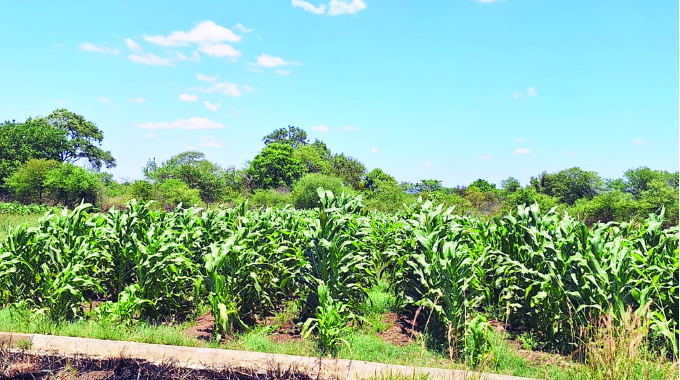
Rumbidzayi Zinyuke, Health Buzz
Climate change remains one of the most critical threats to humans across Africa and the world over.
Not only does the phenomenon put vulnerable populations at heightened risk of negative health outcomes, it also exacerbates existing health challenges, creating new ones.
According to the World Bank, the health costs of climate inaction may well surpass US$21 trillion in low- and middle-income countries by 2050.
But it does not only affect health, it is a cross cutting issue that is impacting every sector from education to water and sanitation as well as economic development of many nations.
Despite its global nature, the impacts of climate change are felt by the people right at the grassroots.
In Masvingo for instance, the changing weather patterns have been a cause for concern. For people who rely on agriculture as their main source of livelihood, the erratic rainfall recorded over the past years have affected not only their incomes but it has resulted in less food for the people and increased burdens of malnutrition and other diseases.
The drought experienced in the 2023/2024 agriculture season further exacerbated the situation.
Therefore, sustainable solutions are needed to tackle these challenges that may seem insurmountable.
The Sustainable Development Goals (SDGs) provide a blueprint for achieving a better and more sustainable future for all.
With 17 interconnected goals, their success depends on how well projects engage and benefit the people they are designed to serve.
Mushandike Irrigation Scheme is one of the oldest irrigation schemes in Zimbabwe, located in the drought-prone Masvingo Province.
The scheme was established to provide local farmers with a reliable source of water for agriculture.
However, climate change has significantly disrupted its functionality. Erratic rainfall, dwindling water resources, and aging infrastructure have left farmers struggling to produce enough food for their families and markets.
Recognising the scheme’s potential, Government and its partners have adopted a people centred approach to address some of these gaps.
With funding from the African Development Bank (AfDB) in partnership with AFC Land and Development Bank and Government through the Ministry of Lands, Agriculture, Fisheries, Water, and Rural Development (MLAFWRD), the Food and Agriculture Organisation (FAO) is implementing the Zimbabwe Emergency Food Production Project (ZEFPP) to support farmers such as those in the irrigation scheme.
Through an Irrigation Management Committee (IMC) that manages the operations of the whole scheme and sub-committees that address specific areas for each group, all efforts have been put towards ensuring production is not compromised.
For 57 members of the Takunda Group at the scheme this intervention has brought back the hope that they can prosper once again.
“We have been working as a group and I am happy to say that we have seen a great change in our harvests. The just ended winter wheat season was good and we all sold our wheat to pay off our loan and the excess was channelled towards domestic use. Our families do not go hungry and we can afford to send our children to school,” said Mr Denhere Busumani the vice chairperson of Takunda Group.
The Mushandike project is addressing several SDGs simultaneously, demonstrating the interrelated nature of sustainable development.
It is speaking to SDG 1 that advocates for No Poverty. By boosting agricultural productivity and incomes, the project helps lift farmers out of poverty.
It also addresses SDG 2 of Zero Hunger as the improved irrigation enables consistent food production, contributing to food security in the region.
Climate-smart technologies as those being implemented at Mushandike help communities adapt to climate change and reduce greenhouse gas emissions as outlined in SDG 13 (Climate Action), while sustainable farming methods protect land resources and biodiversity spoken of in SDG 15 (Life on Land).
Above all, the availability of a variety of food sources for the farmers is directly addressing SDG 3 that seeks to ensure health and wellness for all.
The Mushandike initiative also resonates strongly with Zimbabwe’s NDS1 (2021–2025), which emphasises sustainable economic growth, food security, and climate resilience.
The economic blueprint identifies agriculture as a critical driver of development, aiming to modernise irrigation systems, promote renewable energy, and support smallholder farmers.
The project also aligns with the Government’s ambition to achieve a middle-income economy by 2030, as improved agricultural livelihoods contribute to broader economic transformation.
The interventions at Mushandike underscore the importance of putting people at the heart of development projects.
It has instituted participatory planning as engaging farmers from the outset ensures that the project addresses their needs and priorities. For example, the choice of crops, irrigation methods, and governance models were informed by consultations with local stakeholders.
Agriculture extension officer for ward 15, Mrs Kundai Machengere, farmers were working well together.
“Each member of the group has 1,5 hectares, but they cannot plant the whole hectarage during the summer season since the water from the irrigation is limited. So they agree on what to plant and the area to put under that particular crop.
“Our farmers are growing mostly maize, wheat and sugar beans. Others are also putting horticultural crops such as cabbages, tomatoes and onions. This season, farmers are expecting to increase their hectarage if we get more rains as predicted by the Met department,” she said.
Beyond technology, the project invests in human capital by equipping farmers with skills to manage and sustain the scheme. This empowers them to adapt to future challenges independently.
Special efforts have also been made to involve women and youth, groups often marginalised in agricultural projects. This inclusivity ensures equitable benefits and harnesses diverse perspectives for innovation.
Twenty out of the 57 members of village 15 are women. And these women are doing well.
Says Mrs Grace Mapinge: “As women, we are happy to have been empowered with the tools and skills to participate in this project. Not only are we getting money to help out in the home, we are bringing healthy and nutritious food on the table for our families.
Despite the successes, the Mushandike initiative faces challenges. Limited financial resources constrain the scale of implementation, while climate variability continues to pose risks.
However, these challenges also present opportunities for innovation. Scaling up partnerships with private sector actors and other partners could enhance funding and expand the project’s reach.
Additionally, integrating digital technologies such as weather forecasting apps and market access platforms could further improve outcomes for farmers.
Early results from the Mushandike project are promising. Farmers report increased yields, reduced production costs, and greater resilience to drought. For instance, maize and horticultural crops, once dependent on inconsistent rainfall, now thrive under consistent irrigation. Improved incomes have enabled families to invest in education, healthcare, and better housing, breaking the cycle of poverty.
During the 2023 winter wheat loan cycle 1 584 farmers received support and 37 940 tonnes of wheat were harvested. For the 2024 winter wheat production, 1 766 farmers nationwide benefited from the seed revolving fund enabling them to have access to certified seeds and fertilisers.
The work at Mushandike Irrigation Scheme exemplifies how putting people at the centre of development can unlock the full potential of the SDGs, national strategies, and regional visions.
By empowering communities with climate-smart technologies, sustainable practices, and participatory governance, the project not only transforms livelihoods but also contributes to a broader movement toward a resilient, equitable, and sustainable future.
As Zimbabwe and Africa strive to meet their development goals, the Mushandike story serves as a beacon of hope and a testament to the power of inclusive, people-focused development.
Feedback: [email protected]



 Online Reporter