Online Reporter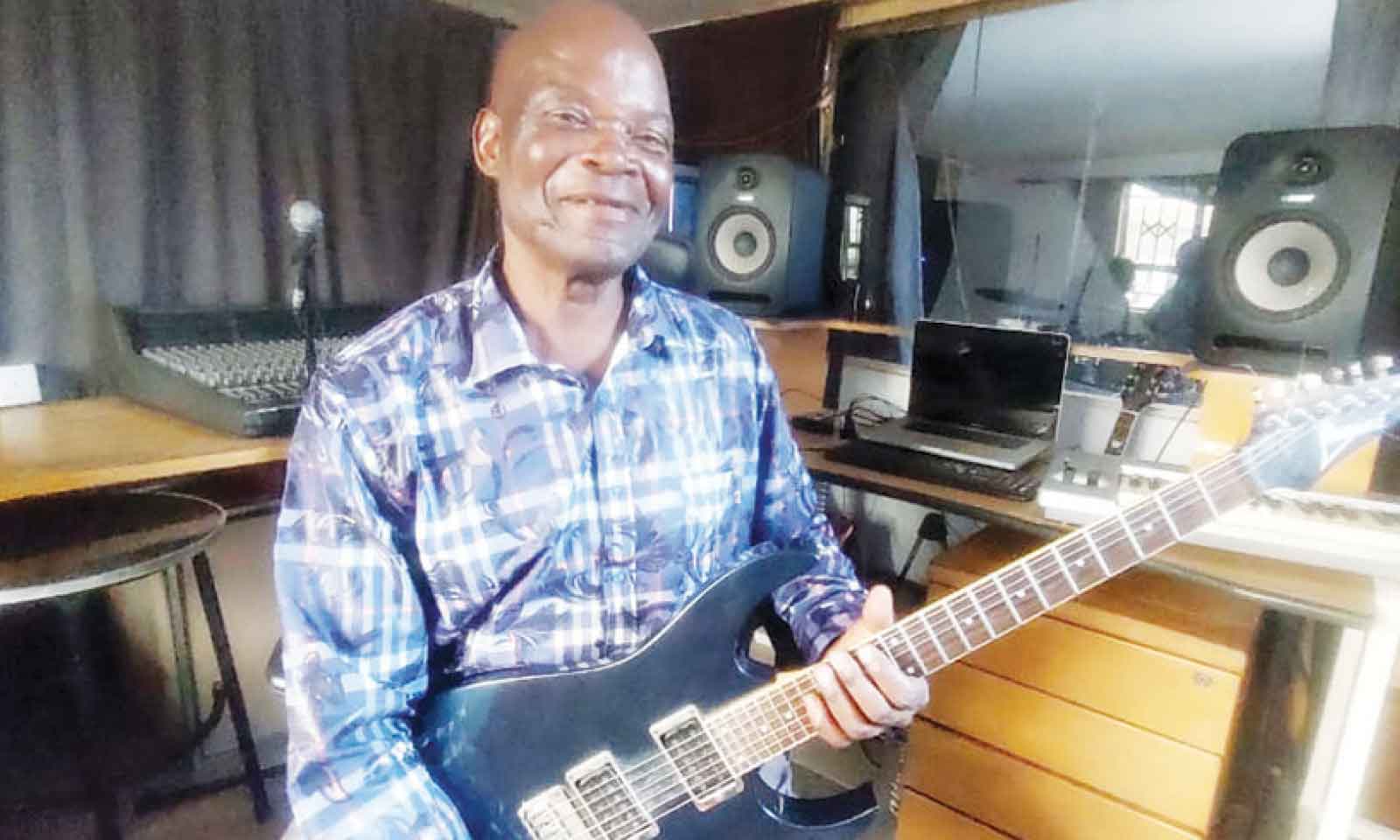
Takawira Photoveteran Nyashanu Dapi
DENDERA music star Solo Makore, who played the rhythm guitar for Simon Chimbetu’s revolutionary song ‘‘Ndarangarira Gamba,’’ is celebrating more than 40 years in the music industry.
But, he has a serious problem.
Makore, who leads the group Fogo Fire, has revealed he charges US$350 for a show.
After that, he pays US$200 for the hired PA system.
This means he is left with US$150, after his shows, which he has to share with his band members.
“My shows are always packed, which gives me hope that one day, when God knocks on my door, I will be able to perform across the whole nation because my fans like my music.
“I charge a flat fee of US$350 and, after deducting US$200 for the PA system hire, I’m left with very little to share among my band members.
“It’s a struggle, but I won’t give up.”
Makore, who was born in Mozambique, is appealing for support to help him acquire these essential tools, including a PA system, and a vehicle to transport his group.
He joined Chimbetu’s band in February 1984.
“I started playing my first three-stringed man-made Olivine gallon acoustic guitar in August 1975 when I was ten.
“I participated in the Zimbabwean war of liberation as a Mozambican school kid.”
Makore’s music career spans over four decades.
He formed his group Fogo Fire and was a huge success.
He has ten albums under his belt.
The albums include “Akarumwa NeChekuchera” (1990), “Wafurirwa Ukabvuma” (1992), “Baba Watawanda” (1993), and “Chirikadzi” (2002).
He credits the late Chimbetu for playing a very influential role in his musical journey.
“Today, I am now an independent Zimbabwean under my own roof and having created my own legacy.
“I have my own house at number 6183, Tariro Township, Hopley, Harare.
“I built it after my band, ‘Fogo Fire,’ gave me hits like ‘Ronie’, ‘Marimuyenzi’, ‘Vanegodo’, ‘Chirikadzi’, ‘Maminimini,’ and many more off my 10-albums.”
Businesswoman Mai Jojo, who runs the Colour Purple Arts Village, said:
“We must keep looking after these artists, our Zimbabwean entertainment industry is very small, these artists need medication, accommodation, instruments and legal aid.
“I do not have budget for their welfare because I am old now but I can’t close my door and that’s why I built that studio for them.”