Online Reporter
Business Reporter
MUTAPA Investment Fund chief executive officer Dr John Mangudya has said the fund’s commitment to transparency and accountability is firmly entrenched in national laws, dismissing “myths” that the entity was designed as a vehicle for looting public resources.
Speaking at a public lecture series organised by the Zimbabwe Newspapers Group in partnership with the Harare Institute of Technology and Mutapa Investment Fund in the capital yesterday, Dr Mangudya said Parliament’s role in holding Mutapa and its various entities to account is a legal mandate enshrined in the Constitution of Zimbabwe.
The lecture was sponsored by ZESA Holdings, NetOne, AFC Insurance, AFC Leasing, CABS, POSB, TelOne, Air Zimbabwe, FBC Holdings, BDO, Petrotrade, Willowvale Motor Industries, Homelink, Printing and Minting Company of Zimbabwe and the Export Credit Guarantee Corporation of Zimbabwe.
Mutapa’s accountability, Dr Mangudya said, is exercised through the Minister of Finance, Economic Development and Investment Promotion, who is required to table the fund’s annual and audited financial reports before the Legislature.
The process ensures that Parliament maintains rigorous oversight over the sovereign fund’s entire portfolio. “We must maintain comprehensive records of financial transactions and prepare quarterly financial statements,” said Dr Mangudya at the well-subscribed event. “The accounts must be submitted to Treasury. And they (the reports) are subject to Parliamentary scrutiny through authority vested in Parliament in terms of section 119 of the Constitution of Zimbabwe.
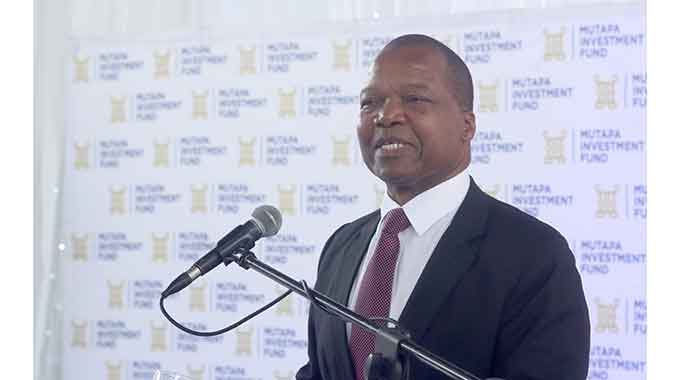
Dr Mangudya
“People will say, I know this fund is a law unto itself, but that is simply not the case. No, we are not. Parliament’s role in holding Mutapa entities to account is therefore firmly entrenched in the relevant laws.”
Underlining a commitment to timely public disclosure, Dr Mangudya said the fund had already submitted its 2024 annual report to the Minister of Finance and has since produced its 2025 financial statements.
The Mutapa CEO said it was critical to give investors current financial statements about the company to enable them to make decisions based on the real-time value of assets under the fund’s portfolio.
Beyond national legislation, Dr Mangudya said Mutapa subscribes to the Santiago Principles, a set of 24 global benchmarks established in 2008 by the International Forum of Sovereign Wealth Funds.
The principles are designed to promote transparency, good governance and prudent investment practices in sovereign wealth funds across the world.
He further highlighted the fund’s growing international footprint, noting its membership in the African Sovereign Investment Forum (ASIF).
Dr Mangudya, who serves on the ASIF executive committee, confirmed that Mutapa is also an affiliate of the international forum.
He projected that by the end of year, the fund would fully cement its standing within the global sovereign wealth community.
“The numbers are there for all to see,” Dr Mangudya said, signalling an open-door policy for scrutiny. “We are more than happy to entertain any direct questions regarding our operations.”
Dr Mangudya also revealed the fund’s plans for a strategic restructuring exercise of its entities.
The ambitious plan, which will be short-term to long-term, seeks to revitalise State-owned entities through aggressive capital injection, efficiency gains and the elimination of bureaucratic layers.
A cornerstone of the restructuring involves the total reorganisation of the mining sector.
Moving away from fragmented ownership models, the fund is establishing five specialised companies to focus on specific resource groups — Mutapa Gold Resource, Mutapa Base Metal, Mutapa Energy Minerals (focusing on Lithium and Nickel), Mutapa PGMs (Platinum Group Metals), and Mutapa Rare Earths (a future venture).
Dr Mangudya said Zesa Holdings is being re-bundled.
Under a newly approved structure, Zesa Private Limited will hold 100 percent ownership of the utility, with former standalone entities like the Zimbabwe Power Company (ZPC) being integrated as internal divisions to streamline operations.
The National Railways of Zimbabwe is looking to raise capacity from 1,8 million tonnes through the leasing of locomotives and wagons.
At Air Zimbabwe, plans are underway to sell long-haul Boeing 777 aircraft to fund a new domestic fleet.
Dr Mangudya also set a target for the airline to resume the lucrative Harare-London route by June 2026.
In the agricultural sector, the fund is prioritising the fertiliser value chain to ensure food security. Capital is being injected into Sable Chemicals, Chemplex (ZFC, ZimPhos), and Dorowa Minerals to ensure the local production of affordable fertilisers.
The Cold Storage Company (CSC) is being revived to boost beef production.
Dr Mangudya also highlighted plans to reorganise the fund’s energy cluster, which includes the National Oil Infrastructure Company (NOIC).
To transform Zimbabwe into a regional energy hub, Mutapa will expand the Feruka oil pipeline’s capacity from the current three billion litres per annum to five billion litres per annum to meet both domestic and regional demand.
To unlock value, Mutapa is consolidating its vast real estate holdings — previously scattered across various entities — into a unified portfolio.
By leveraging its consolidated group balance sheet — which includes major enterprises transferred from nine ministries — the fund targets raising financial resources to support national programmes and uplift Zimbabwean livelihoods.
Dr Mangudya emphasised that the ultimate goal of the fund is to support the National Development Strategy 2 (NDS2) strategic initiatives.
“We are an active investor and an engaged shareholder,” Dr Mangudya told the audience. “There is nothing too small and nothing too big for us to consider as we work towards improving performance across all our entities.”
Dr Mangudya outlined Mutapa’s legal foundation, strategy and role in driving national development.
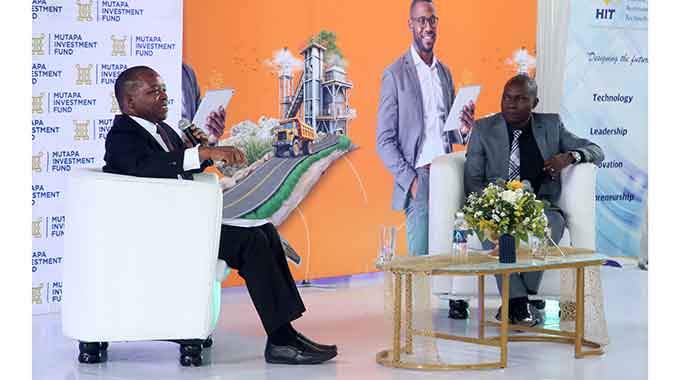
Dr Mangudya emphasised that the ultimate goal of the fund is to support the National Development Strategy 2 (NDS2) strategic initiatives.
He noted that Mutapa was originally established in 2014 through an Act of Parliament as the Sovereign Wealth Fund of Zimbabwe.
The fund was later remodelled and renamed the Mutapa Investment Fund on September 19, 2023, following the enactment of the Finance Act No. 13 of 2023.
Initially, the fund was focused on growing State-owned assets, predominantly in the mineral resources, before its mandate was extended to encompass a diversified investment portfolio.
According to Dr Mangudya, under its initial design, the fund was meant to be capitalised using royalties, dividends, profits from investments, as well as fiscal and balance of payments surpluses.
However, the strategy has since shifted.
“The new strategy capitalises the fund through the transfer of 30 State-owned Enterprises (SOEs) and investments under the Government portfolio,” said Dr Mangudya.
This approach allows the fund to directly manage and enhance the performance of key national assets.
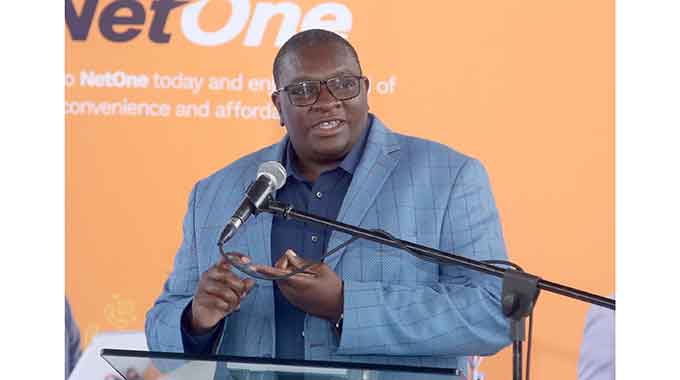
Mr Elias Mambo
Dr Mangudya said Mutapa, with a gross asset value of US$16 billion, followed global best practices, drawing comparisons with sovereign wealth funds such as Ethiopian Investment Holdings, Mubadala Investment Authority of the United Arab Emirates, Dubai Investment Authority and Singapore’s Temasek Holdings.
He emphasised that the fund is anchored on strong governance values that include accountability, transparency, excellence, commitment, integrity and sustainability.
Dr Mangudya said MIF is a product of extensive research conducted by the State Enterprises Restructuring Agency (SERA), aimed at improving the performance and efficiency of State-owned enterprises by eliminating bureaucracy and red tape.
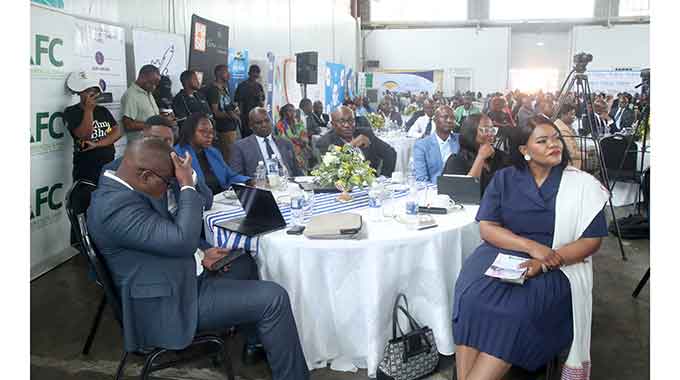
In his foreword to the fund’s annual report and first set of audited financial results, President Mnangagwa underscored the rationale behind his administration’s decision to set up Mutapa as part of a bold and strategic initiative to consolidate the country’s commercial assets under a sovereign wealth fund with a professional investment team.