

 Online Reporter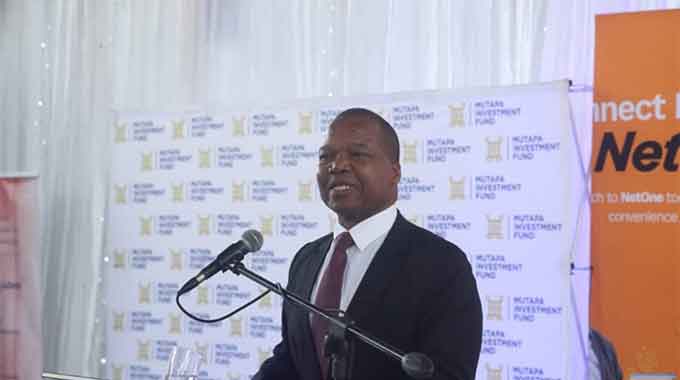
Business Reporter
“Zimbabwe’s biggest problem is not a lack of money, but our failure to pay it back.” This was the blunt assessment of Dr John Mangudya, chief executive of the Mutapa Investment Fund, as he delivered a stinging rebuke of the nation’s fiscal culture. The chief architect of the country’s sovereign wealth strategy argued that the primary obstacle to economic recovery is not a scarcity of capital, but a systemic refusal to honour financial commitments.
Speaking at the inaugural Zimpapers Public Lecture Series, held recently in partnership with the Harare Institute of Technology, Dr Mangudya asserted that cultivating a “culture of payment” is far more critical for national reconstruction than the ability to attract new investment.
“I never had a problem raising funds for this country,” Dr Mangudya said. “The challenge is how that money is utilised.”
Using power utility, ZESA, as a primary case study, Dr Mangudya illustrated the consequences of this cultural failure. He revealed that Zimbabwe remains heavily indebted to creditors such as the China Ex-Im Bank and Sino Hydro for the Hwange 7 and 8 expansion projects—even though the plants are fully operational.
“Why do we owe them? They gave us a contract… Was the electricity produced? Yes, it was. Billions of kilowatt-hours. Do we still owe them money? Yes. Why? Because we didn’t pay,” he stated. “We did not pay, Zimbabweans. It is not about a lack of funds; it is about meeting our commitments.”
He called for a foundational shift in the national mindset.
“We need a culture where, if we borrow money, we accept the obligation to return it.”
Dr Mangudya positioned prepaid and smart metering as an indispensable tool to break the cycle of arrears. He noted that while a delegation is currently in China attempting to restructure the Hwange debts, the underlying issue is a failure to collect revenue at home.
“What happened to the money? Havana kubhadhara vanhu (They did not pay),” he said, linking the debt directly to the public’s resistance to prepaid meters. “That is why I am saying to ZESA, let us move to prepaid meters. Whether you like them or not, you need to pay for what you consume.”
He compared the situation to a simple trip to the petrol station: “You go to the service station to get fuel before you begin your journey… that is prepaid. It is all about how we handle money.”
The Mutapa ceo warned that future critical infrastructure projects—including a proposed $450 million plant with India’s Jindal—are “dead on arrival” unless a sustainable payment culture is established.
“The funding will come from those consuming the electricity. If we refuse to pay again, the project will fail,” he cautioned.
Concluding his address, Dr Mangudya urged a return to basic commercial integrity, framing the repayment of debt not just as an economic necessity, but as the essential spirit required for Zimbabwe’s revival.
The Public Lecture, organized by Zimpapers in partnership with the Harare Institute of Technology and Mutapa Investment Fund , was sponsored by ZESA Holdings, NetOne, AFC Insurance, AFC Leasing, CABS, POSB, TelOne, Air Zimbabwe, FBC Holdings, BDO, Petrotrade, Willowvale Motor Industries, Homelink, Export Credit Guarantee Corporation of Zimbabwe.



