Kuda Bwititi
Zimpapers Politics Hub
ZIMBABWE’S mining transformation is opening a new chapter for women, but the real measure of progress will be whether the country can turn increased female participation from a policy aspiration into a permanent feature of the sector.
This is particularly important as State-owned Mutapa Gold Resources accelerates efforts to modernise its operations, formalise artisanal mining and strengthen corporate governance.
The two developments point to a mining sector undergoing structural change.
On one hand, Mutapa Gold is deliberately placing women in executive and managerial positions across its operations, challenging the traditional image of mining as an exclusively male domain.
On the other, the company is formalising artisanal and small-scale mining at its Phoenix Prince operations in Bindura, a model that could bring thousands of informal miners into more organised production systems.
For women, both developments carry significance.
Mining has historically been dominated by men, despite women playing an important role in gold production, particularly at artisanal and small-scale mining level.
National data shows that women accounted for about 7 000 of the 30 000 people employed in formal large-scale mining in 2014, representing 23,3 percent. In artisanal and small-scale mining, women constitute about 11 percent of more than 300 000 people employed.
These figures demonstrate the gender imbalance.
But they also reveal another important reality: women are already part of Zimbabwe’s mining economy.
The challenge, therefore, is no longer simply to bring women into mining.
It is to create conditions that enable them to participate meaningfully, safely and profitably, while allowing them to rise into positions where they can influence decisions.
This is where Mutapa Gold’s gender mainstreaming drive becomes significant.
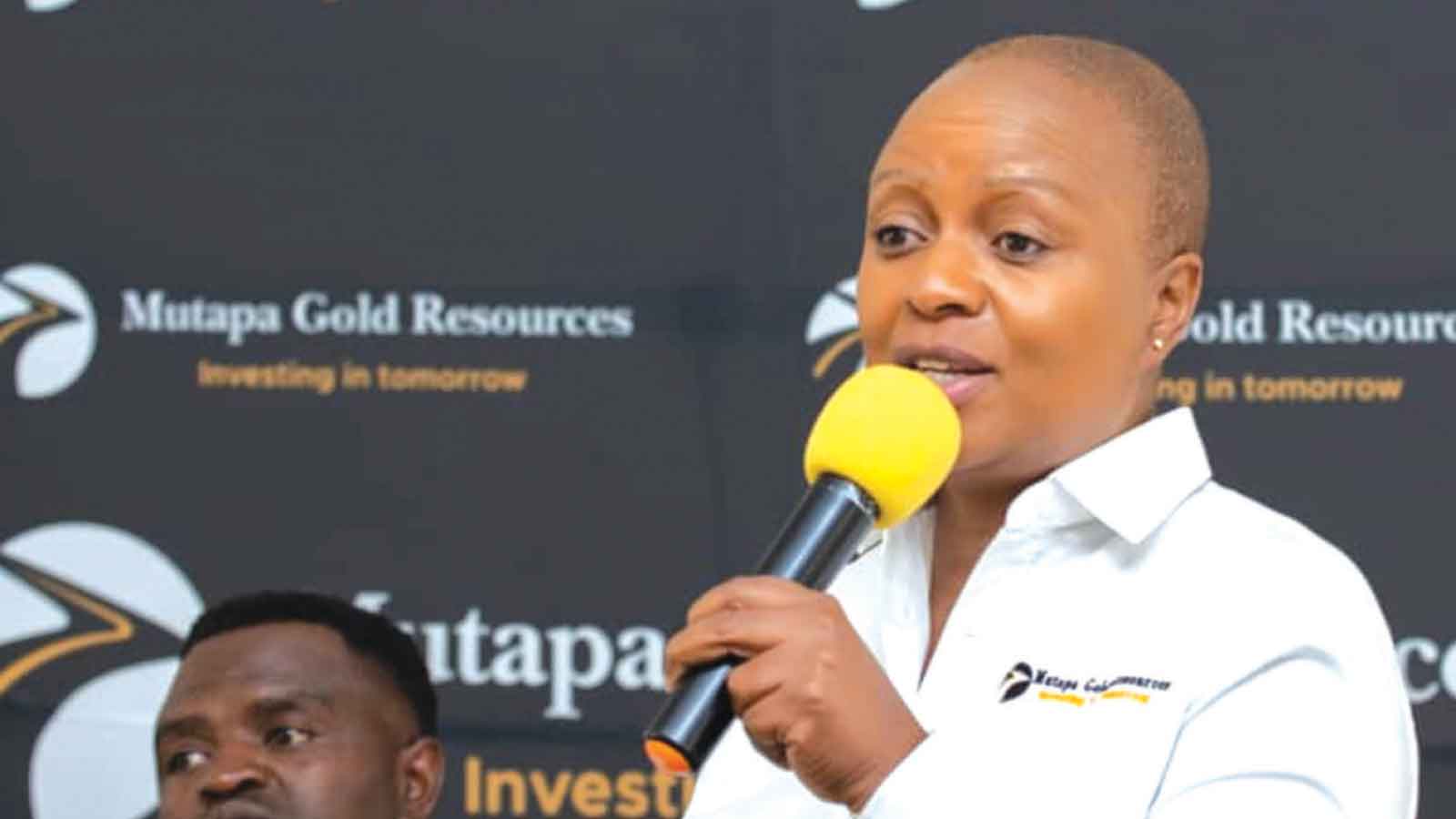
The company has placed female professionals in key positions across its structures, with Tendai Madondo heading Corporate Services.
It has also entrusted project management at Phoenix Prince to Nivad, a woman-led company headed by Angela Chisvo-Mpofu.
Such appointments are important because representation at decision-making level can change the character of institutions.
For years, women have often been viewed as beneficiaries of empowerment programmes rather than as people capable of running complex mining operations.
The elevation of women into executive, managerial and project leadership positions challenges that perception.
It sends a powerful message that competence, rather than gender, must determine who occupies positions of responsibility.
More importantly, it moves the debate beyond token representation.
As a mineral economics expert observed, the deliberate elevation of women into core operational and executive roles within State mining entities represents a structural shift from token representation towards genuine strategic empowerment.
That shift could have far-reaching consequences.
When women occupy positions where decisions on recruitment, procurement, production, safety, skills development and succession are made, gender inclusion becomes embedded in the institution rather than treated as a separate programme.
This is particularly important for Zimbabwe as it pursues an upper-middle-income economy by 2030.
Vision 2030 cannot be achieved while a significant section of the population remains marginalised from productive sectors of the economy.
Mining remains one of Zimbabwe’s major economic pillars.
The country recorded a record 46,7 tonnes of gold deliveries to Fidelity Gold Refinery last year, with artisanal and small-scale miners accounting for 34,87 tonnes, or 74,5 percent.
The figures demonstrate the economic weight of small-scale mining.
They also make a compelling case for ensuring that women are not left behind as the sector is formalised.
Mutapa Gold’s artisanal contract mining model at Phoenix Prince could provide an important opportunity in this regard.
The company is seeking to bring order to an area where there are an estimated 200 shafts, while maintaining economic activity.
Instead of shutting down artisanal operations, Mutapa Gold intends to integrate them into a formal structure, providing technical assistance through geologists, mining engineers, surveyors and metallurgists.
This approach could improve safety, productivity and accountability.
For women involved in artisanal mining, formalisation could potentially create a more predictable operating environment.
However, this opportunity will only be realised if gender considerations are deliberately incorporated into the model. Formalisation should not simply mean bringing existing miners under contracts.
It should also mean ensuring that women have equal access to mining claims, technical support, equipment, training, finance and decision-making structures.
Women should not remain concentrated in low-value activities while men control the most profitable parts of the mining chain.
The same principle should apply to skills development.
Mutapa Gold has indicated that gender mainstreaming will remain central to recruitment, skills development and succession planning.
This is an important commitment because the future of mining will depend increasingly on technical expertise.
Women must therefore be trained not only for administrative positions but also as geologists, mining engineers, metallurgists, surveyors, machinery operators and other technical specialists.
The mining sector must produce a pipeline of female professionals who can eventually take over senior positions.
The appointment of women in leadership positions today is important.
Building a generation of women capable of leading the mines of tomorrow is even more important.
There is also a broader lesson from Mutapa Gold’s transformation.
Gender mainstreaming should not be regarded as an issue confined to human resources departments.
It should be part of production, investment, procurement, safety, community engagement and corporate governance.
A mining company that increases production while failing to broaden economic opportunities for women will have achieved only part of its transformation.
The same applies to artisanal mining.
Zimbabwe cannot afford to formalise the sector while reproducing the gender inequalities that have characterised it for decades.
The country’s impressive gold production figures should therefore be matched by equally deliberate efforts to improve women’s participation in the value chain.
This means moving women from the margins to the mainstream.
It means recognising women not simply as workers, but as entrepreneurs, mine owners, managers, technical specialists and investors.
It also means creating safe working environments and ensuring that women are protected from exploitation and exclusion.
Mutapa Gold’s current transformation provides an opportunity to demonstrate how this can be done.
The company is simultaneously recapitalising its operations, introducing technical improvements, strengthening governance and restructuring artisanal mining. Women must be at the heart of all these processes.
The significance of the current developments goes beyond Mutapa Gold itself.
As Zimbabwe seeks to maximise the contribution of its mineral resources to national development, the country must ensure that the benefits of that wealth are broadly shared.
Women cannot be spectators in that process. They are already contributing to mining production.
What is required now is to give them greater visibility, authority, skills and access to opportunities.
The future of Zimbabwean mining should therefore not simply be measured by tonnes of gold produced, new mines established or investment attracted.
It should also be measured by how many women are leading mines, owning businesses, acquiring technical skills and participating in decisions that determine the future of the sector.
That is the real test of transformation.
And as Mutapa Gold demonstrates through its gender mainstreaming drive and artisanal mining formalisation programme, Zimbabwe has an opportunity to build a mining industry that is not only more productive and orderly, but also more inclusive.
Women must be placed firmly at the centre of that transformation.