Online Reporter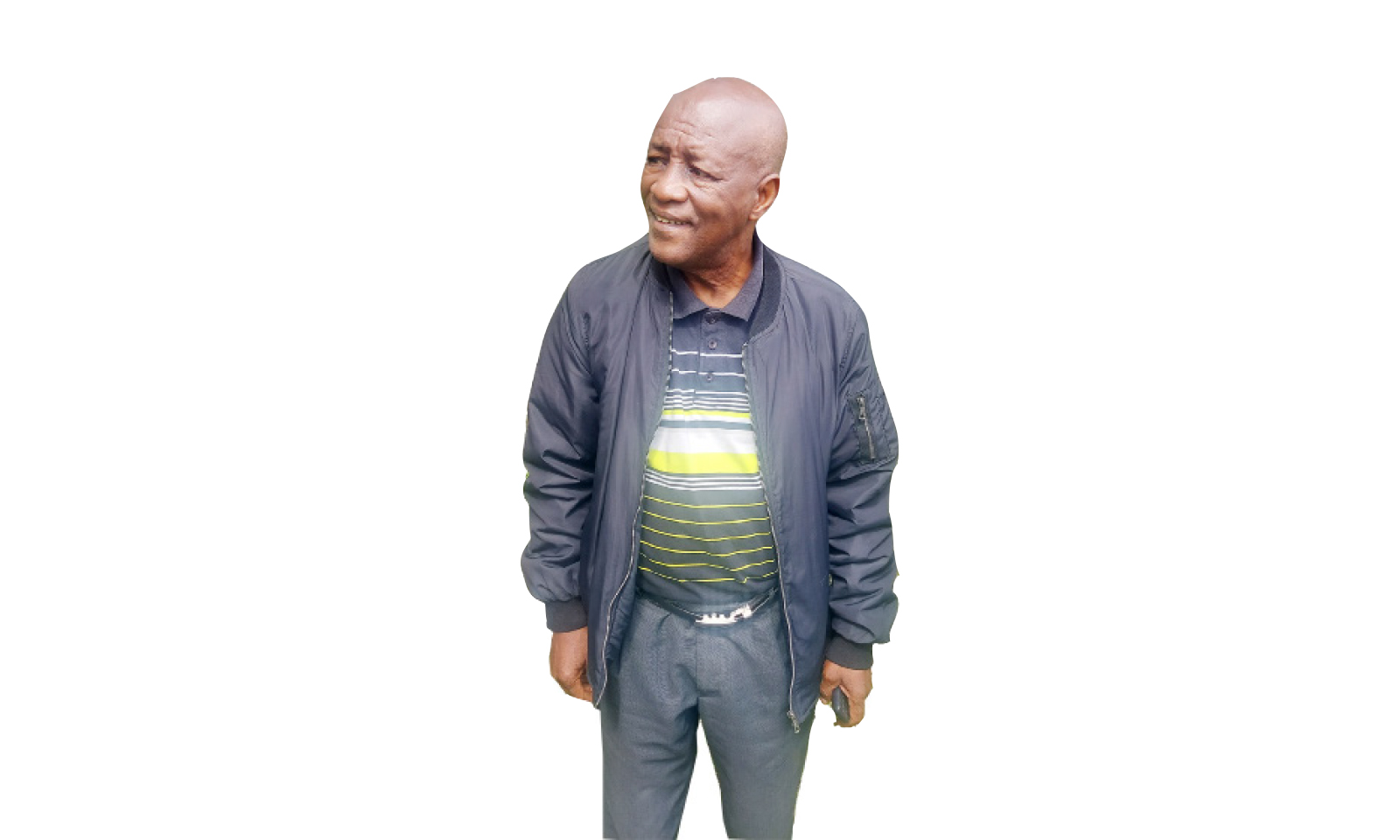
Chronicles from the 2nd Chimurenga
CDE RAYMOND DZINGAI TAKAVARASHA, whose Chimurenga name was Cde Ray Che Ncube, continues chronicling his experiences in the liberation struggle. This week, he tells our Features and Arts Editor PRINCE MUSHAWEVATO how, while working for the Abel Muzorewa-led African National Council (ANC), he organised people to reject the 1971 British government’s (Pearce Commission) proposals, which resulted in Rhodesian security forces launching a manhunt for him.
***************
Q: Our discussion last week ended with your appointment as the Lomagundi provincial secretary for the ANC branch established in Sinoia (now Chinhoyi). What happened next?
A: Working with the colleagues I mentioned earlier, I began mobilising the masses throughout the province.
Our effectiveness became a major irritant for the Rhodesian security forces, who were likely unaccustomed to such organised rejection of their plans.
It became clear to the colonisers that they would be unable to impose their proposals. Consequently, we faced increasing persecution.
Several plots were hatched against us, culminating in plans for my arrest.
The situation deteriorated to the point that the leadership decided I should relocate to the ANC headquarters in Salisbury (now Harare).
I complied, resigning from my position in Sinoia and later departing.
Upon arriving in Salisbury, I met with the ANC national treasurer, Cde Josiah Chinamano, who assigned me to work at the ANC’s temporary offices at Reliance House, within the office of the national organising secretary, Cde Michael Mawema.
While there, I continued my campaign against the British government’s proposals.
I assisted in printing ANC pamphlets and car stickers bearing the slogan “ANC says NO”, which I distributed to taxi drivers and other motorists in Highfield.
Recognising my effectiveness, the leadership, particularly Cde Mawema, dispatched me to Fort Victoria (now Masvingo) to mobilise a “No” vote.
I believe I was also sent there because it was my rural home, and I was familiar with the area.
I travelled there and joined other nationalists engaged in the same mission.
Between 1972 and 1974, I was a youth activist in Fort Victoria, which led to my appointment as the ANC’s provincial youth organiser in the area.
Q: You can carry on.
A: I then worked closely with the national chairman, Cde Samuel Munodawafa, within the African National Council — Zimbabwe (ANC—Z), leading up to its congress in Salisbury in 1975.
I will later explain how the “Zimbabwe” addition to the ANC name came about.
We were successful in our mission, as it was subsequently announced that the people of Zimbabwe had rejected the Pearce proposals.
Following this victory, it was decided that we would maintain the ANC organisation to raise political awareness and monitor the progress of the nationalist struggle for independence.
It functioned as a movement, though not strictly a political one per se.
The leaders continued with their regular work; (Edison) Sithole was based at Wonder Shopping Centre, along Julius Nyerere Way, near the area where people boarded transportation to Chitungwiza.
It was during this period that Cde (Eddison) Zvobgo and several other nationalists became involved. I should also mention that Simon Muzenda and John Nkomo joined the struggle through Muzorewa’s ANC.
They participated as two administrators (representing the then-banned ZANU and ZAPU).
Through the ANC, we began to see a significant number of people leaving the country to join the armed struggle.
It is also important to note that during this time, some of our commanders, like chief of staff Alfred Nikita Mangena, Brigadier-General Ambrose Mutinhiri (Retired) — who at one point was the acting ZIPRA army commander following the death of Mangena (Nikita) — and chief of training Harold Chirenda, who was known as Cde Elliot Masengo, were holding fort, training and motivating freedom fighters.
We knew that they worked with Joshua Nkomo under ZIPRA.
This was in the period between 1972 and 1974.
During this time, I, along with colleagues in Masvingo, the Midlands and Bulawayo, was responsible for recruiting cadres for the armed struggle.
Following the release of the nationalist leaders from detention in 1974, prior to their departure for Zambia, we were informed of a new development, the Lusaka Accord.
Q: Could you elaborate on the Lusaka Accord and its significance to the liberation struggle?
A: This was a crucial development, as it directly led to the release of nationalist leaders from detention during Kenneth Kaunda’s presidency in Zambia.
Mark Chona was dispatched to arrange their release and travel to Zambia.
This was done to facilitate talks between Ian Smith and the nationalists. Smith initially stalled the process, arguing that he could not engage with the nationalists because they lacked a unified leadership and a unified base.
He cited the Front for the Liberation of Zimbabwe (FROLIZI) and ZANU, whose leaderships were heavily dispersed.
He proposed that they unite under a single leader before negotiations could begin.
The nationalists, including ANC leader Abel Muzorewa, were summoned to Zambia.
James Chikerema was called to the State House without prior knowledge of the agenda and Joshua Nkomo also arrived. Nkomo’s arrival in a tinted VW minibus was discreet.
Upon arrival in Zambia, they were informed by President Kaunda that they needed to select a leader to head the talks with Smith.
This was among the conditions for their release from detention.
The Frontline States leaders joined the process. Joshua Nkomo was identified as the head of ZAPU and Robert Mugabe was recognised as the ZANU leader after Sithole’s deposition.
However, some Frontline (States) leaders (including those of Tanzania, Zambia, Botswana, Angola and Mozambique) disagreed with the new ZANU setup, insisting that they had worked with and only recognised Sithole.
FROLIZI, led by Chikerema, was also among the organisations to be recognised at the meeting, as was Muzorewa’s ANC. These were the four main parties.
Ultimately, it was decided that Sithole would represent ZANU.
Following this, it was agreed that ZANU, ZAPU and FROLIZI would all operate under Muzorewa’s ANC for the talks.
This decision was based on the fact that these parties had been involved in the ANC’s formation, making it easier for them to collaborate within that framework.
FROLIZI was included because Chikerema had previously served as ZAPU’s vice president.
In December 1974, it was announced that they were to return home and conduct a congress by March.
Q: Did the involved parties manage to select a single leader at the congress and were there other specific guidelines to follow?
A: They were supposed to utilise existing party structures to select a leader who would become the sole representative of the Zimbabwean liberation movement, encompassing all the parties I mentioned.
This leader would then be responsible for holding talks with Ian Smith.
ZAPU had established structures, while ZANU lacked clear ones.
FROLIZI had no structures at all and the ANC simply relied on individuals who supported the nationalist movement.
However, the parties were reluctant to hold the congress and select a leader.
Some suggested that Nkomo be chosen, but others opposed the idea for various reasons.
It was during this time that figures like Chavhunduka emerged, joining forces with other nationalists to propose an alternative leader. This caused chaos, which brought the armed struggle to a standstill.
This period is often referred to as détente.
Frontline States like Zambia no longer wanted our bases, particularly those of ZANLA, within their borders.
Mozambique had just gained independence. Due to the impasse and confusion, the Frontline States initiated the formation of the Zimbabwe People’s Army (ZIPA) in 1976.
They (the Frontline States) chose to work directly with the fighters, bypassing the politicians because of the political infighting among them.
They worked with influential commanders like ZANLA’s Rex Nhongo (Solomon Mujuru) and Brigadier-General Mutinhiri (Retired), who later on led the ZIPRA army as acting commander following the death of Nikita Mangena.
They led and trained freedom fighters on the battlefield but were not heavily involved in political leadership struggles.
Next week, Cde Raymond Dzingai Takavarasha will share the dramatic events that unfolded before the congress was finally held, including its surprising outcome. He will also explain how the course of the liberation struggle shifted at this crucial juncture.