Online Reporter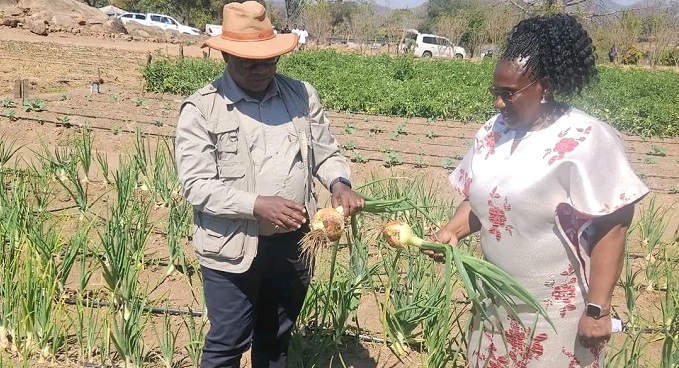
Theseus Shambare
JOSEPH Village in Ward 1, Mwenezi District, Masvingo Province, has emerged as a beacon of rural transformation, showcasing how innovation and resilience can turn some of the driest parts of Zimbabwe into agricultural hubs.
Permanent Secretary in the Ministry of Lands, Agriculture, Fisheries, Water and Rural Development, Professor Obert Jiri, who toured the village yesterday, hailed the progress.
“This transformation is a testament to the resilience of our agricultural sector and the determination of farmers. Sandy soils that were once depleted have been revitalised, and today we see tomatoes, peppers, cabbages, onions and green mealies in abundance,” he said.
The projects, spearheaded by the Mboweni family, have not only improved crop yields but also boosted livestock production.
Mrs Sarudzayi Mboweni said the gains were a result of collective effort: “Our success comes from the community working together and adopting innovative practices that ensure our soils and crops thrive, even with little rainfall.”
Joseph Village lies in Natural Region V, an area receiving less than 400mm of rainfall annually.
Despite this, farmers are leveraging irrigation schemes and Government programmes to boost their livelihoods.
“The Pfumvudza programme has been key in ensuring household food security, while irrigation has allowed communities to diversify crops and improve nutrition,” Prof Jiri said.
The village has also established Village Business Units, which have opened economic opportunities and strengthened nutrition.
“The concept of rural industrialisation is becoming a reality here,” Prof Jiri said.
Authorities say Joseph Village’s model could be replicated across other dry regions.