

 Chronicle Editor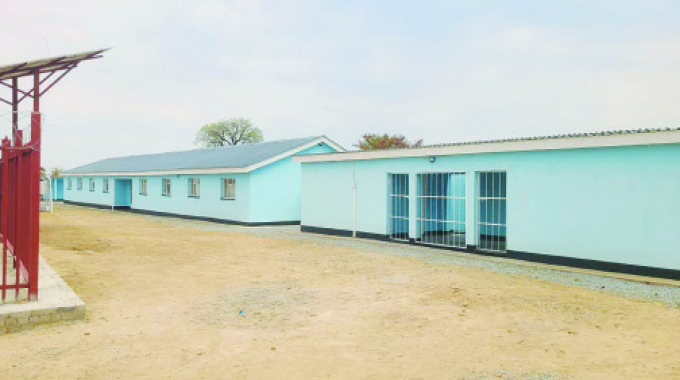
Michael Magoronga, Midlands Correspondent
EXHAUSTED beyond words, Linient Sibanda (15) would struggle to concentrate as the teacher delivered a lesson in class. She constantly dosed off as she just couldn’t keep her eyes open.
After walking about nine kilometres to school and having to cross the flooded Vungu River, risking her life in the process, she did everything to ensure that she got to school.
She endured many hardships and remained focused but lost many friends along the way.
The majority of them fell victim to the challenges they came across on navigating the thick bushes on their way to school.
“We encountered a lot during those days. Sometimes, we would come face-to-face with wildlife but we somehow escaped. Some of my friends opted to get married at a young age after they dropped out of school. Some were abused along the way by artisanal miners who waylaid them along the way,” said Linient.
As for the boys, the majority of them dropped out of school and joined artisanal mining.
Now Linient is the head girl of Msilahobe Secondary School which is one of the beneficiaries of the Low Cost Boarding Facility constructed by the National Aids Council (NAC) using funding from the Global Fund.
After realising that a significant number of Adolescent Girls and Young Women (AGYW) were vulnerable to sexual exploitation as they travelled long distances while going about their household chores or going to school, hence increasing the risk of contracting HIV/Aids, NAC came up with some interventions to curb the challenge.
Working with other development partners such as PLAN International, NAC, has since embarked on a programme to construct low-cost boarding facilities to cater for the AGYW who travel long distances to and from school.
This was after realising that some girls were now resorting to bush camps which exposed them to all sorts of abuse.
NAC is constructing eight such low-cost boarding facilities across the country and two of them are in Kwekwe District, with one having been constructed at St Jude’s Secondary School in Zhombe and the other one at Msilahobe Secondary School in Silobela.
According to statistics released by NAC, the Midlands Province has an HIV prevalence of 10,94 percent, with Zvishavane District having the highest prevalence of 16,37 percent and Gokwe North District has the lowest prevalence rate of 5,81percent.
Kwekwe District has the highest HIV population of 33 589 out of a total Midlands Provincial HIV population of 165 018.
Kwekwe District contributes the highest number of adult new infections amounting to 432 with 275 being females with causes being attributed to the district being largely agro-based having communal farms and resettlement areas and high artisanal mining activities which attract insurgence of sex workers.
At Msilahobe, a boarding facility with a capacity of carrying 32 learners is already housing 14 female learners.
The boarding facility is well equipped with a security fence, girl-friendly ablution facilities, solar-powered borehole which the girls are already utilising for a nutrition garden and a poultry project.
“Now I can concentrate on my school work with no hustle because I have all the time to concentrate instead of thinking about how I will get home. My performance has actually improved and I look forward to producing good results. I thank NAC for coming up with such a wonderful programme,” said Linient with a chuckle.

Speaking during the official opening of Msilahobe sustainable and affordable boarding facility, NAC Midlands provincial manager, Mr Mambewu Shumba said Kwekwe District is characterised by engendered power relations resulting in AGYW inequalities hence it was selected among the four priority hotspots in Zimbabwe to have such programmes.
Chimanimani in Manicaland, Umguza in Matabeleland North and Umzingwane in Matabeleland South are the other three districts where such boarding facilities are being constructed.
“The comprehensive AGYW programme has been running since 2018 and it complements other projects to provide referrals and layering of services to prevent new HIV infections among the constituency. In addition to the core AGYW, there is also the NAC sister-to-sister and male engagement programme. There is also DREAMS implemented by PLAN International and SASA (Start Awareness Support and Action) implemented by ZACH (Zimbabwe Association of Church-related Hospitals). The comprehensive approach is meant to close taps of new infections through addressing the major drivers, be it lack of school fees, limited knowledge and access to Sexual Reproductive Health Rights services and gender-based violence,” said Mr Shumba.
The boarding facilities were constructed targeting AGYW for school retention as a means to avert school drop-outs and child marriages which contribute to new HIV infections among the AGYW.
“The idea for low cost boarding facilities is meant to protect AGYW and to reduce the risk of HIV infection. Such risks emanate from various factors, including but not limited to long distances that they may travel to school, isolated and bushy areas that they may have to travel through which exposes them to sexual abuse among others factors,” he said.
Some girls even have to cross rivers which become impassable during the rainy season, translating to drop-outs leading to child marriages, a causal factor that might expose AGYW to the risk of HIV infection.
“Some students from this school come from as far as Langton Primary School which is about 18 kilometres away. The school also recorded 30 drop-outs in Term 1 alone and this has mainly been attributed to long distances. Some learners come from neighbouring Gweru Rural District and have to cross Vungu River which is impassable during the rainy season. It is against this background that Global Fund, NAC and PLAN International approved the construction of these facilities at Msilahobe Secondary School,” said Mr Shumba.
The school is surrounded by artisanal miners who pose a risk to the girl child as they lure them with cash to have sexual affairs. Some learners were already staying at teacher’s cottages and nearby homesteads as a means to avert the long distances, further cementing the need to have the low-cost facility.
Midlands Provincial Affairs and Devolution Minister Owen Ncube officiated during the official launch of the boarding facilities, saying the occasion marked yet another notable milestone achievement by the Second Republic under President Mnangagwa.
“This development marks how the Second Republic is leaving no one and no place behind as it pursues broad-based rural industrialisation that transforms the livelihoods of communities, particularly the girl child , through provision of quality and affordable education infrastructure,” said Minister Ncube.
He said the boarding facilities were not just physical facilities, but they represent the unwavering determination by the Second Republic to ensure that every child, regardless of their circumstances, accesses quality education and a secure and conducive environment to advance their studies.
“The construction of Msilahobe low-cost boarding facility underscores the people-centric and proactive efforts of the listening leadership of the Second Republic in leveraging domestic resources to address critical community needs. In this regard, the locally initiated boarding facilities complete with boreholes, fencing and solar electrification, mark a remarkable development with a profound impact on exposure of the girl child to victimisation by some rogue artisanal miners and associated challenges like limited study time and our 95-95-95 HIV testing treatment and viral suppression targets,” he said.
Minister Ncube said a number of interventions were being carried out in the province to try and combat HIV new infections.
“Various HIV/Aids interventions targeting AGYW are being implemented in Midlands Province. Kwekwe District has been identified as a drug and substance hot spot with high HIV prevalence, crime rates and gender based violence cases.
“I would like to warn learners against early child marriages, bullying, indulging in drug and substance abuse that threaten their physical and mental health and career prospects and dropping out of school to pursue short term benefits that ruin better prospects in their lives,” he said.


 Online Reporter
 derick.khumalo