peter
peter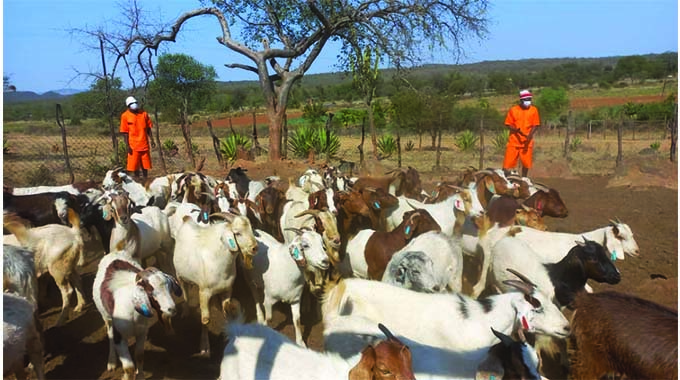
Sukulwenkosi Dube-Matutu, Matabeleland South Bureau Chief
THE National Aids Council (Nac) in partnership with Gwanda Prison has established a goat-rearing project at the prison farm in the Maphane area in Gwanda which now has a herd of about 204.
The project started in 2015 after Nac donated 83 goats to the prison. The kids which were being produced over the years were seeded to other prisons across the country. In total, the prisons in Matabeleland South province have 327 goats under this goat project.
The project has helped prisons provide a nutritious diet for inmates, especially those with HIV and Aids.
Nac also assisted to upgrade the water supply system at the Gwanda Prison three-hectare solar-powered horticulture garden, which has enhanced production.

The garden is also a reliable food source for prisoners and a source of income for the prison.
A group of journalists from various media houses recently visited the Gwanda Prison Farm during a media tour of projects being implemented by Nac in Matabeleland South working with various partners.
Speaking during the visit, Gwanda Prison Farm manager, Sergeant Joseph Fungai Muranda said inmates were actively involved in operating these projects. He said the inmates were trained on how to take care of the goats from the time they are born up to the time they are sold.
“In 2015, Nac gave us 80 does and three bucks, the Matabele and Kalahari breed. Nac also assisted us with goat housing and a dip tank to ensure that our animals perform well. Our herd has since risen to 204 goats. When we initially started the project our aim was to provide protein to the HIV-positive inmates.
“We were then tasked to become a seed centre for these goats. We have managed to give out 92 goats for breeding to various stations around the country. In Matabeleland South we now have 327 goats. We also feed our inmates with these goats. Our breeds are cross boer Matabele and Kalahari,” he said.
Sgt Mutanda said more breeds will be introduced to the herd. He said the target was to reach a herd of 700 at the Gwanda Prison Farm in the next five years.

Sgt Mutanda said Nac assists in providing feed for the goats. He said some of the goats are sold in order to buy vaccines and other necessities to ensure the goats perform well.
Sgt Mutanda said improved care of the goats has helped to reduce deaths. He said it has also helped to boost the conception rate.
He said the manure which comes from goats was used for their crops, adding that the garden has chomolia, rape, cabbage, butternut and onions.
“The upgrade of the water supply system has helped improve the performance of the crops. We now use a drip system. The garden gets its water from a solar powered borehole. We use the produce that we get from the garden to feed the inmates. We also sell some of the produce while we donate some to Gwanda Provincial Hospital and Gwanda Old People’s Home,” he said.
An inmate who cannot be named for ethical reasons said he was grateful for the knowledge he was receiving on goat rearing from the Gwanda Prison Farm.

He said he would apply the skills and others that he has obtained to sustain his family.
The inmate urged his peers to take the prison skills development training seriously as they seek to empower them as inmates.
Officer-in-Charge Gwanda Prison, Superintendent Ishmael Madzimbamutho said the intervention from Nac has helped to complement Government efforts in feeding the inmates.
He said the prison farm was already running a piggery, cattle and turkey project and the goat project has beefed up their livestock production projects.
“As a prison, part of our rehabilitation process involves equipping prisoners with various skills which they can apply once they are out of prison. We have now managed to equip prisoners with goat rearing skills as a result of our partnership with Nac and we are grateful for this intervention. The project has also helped us to improve the diet of the prisoners,” he said.
Superintendent Madzimbamutho said five prisoners were assigned to the goat project at any time.
Gwanda District Aids Coordinator Mrs Alice Moyo said their partnership with Gwanda Prison started off with the provision of teachings on HIV related issues. She said they decided to take their intervention further through the introduction of the goat project. Mrs Moyo said the herd has significantly increased over the years with Nac facilitating training of prison officers and inmates.
“As Nac, we also prioritise the diet of those who are HIV-positive. A proper diet generally contributes to their health and enables them to take their medication. The HIV-positive and negative are all benefitting from this project. We also identified a gap in the garden project and we assisted with a jojo tank and piping equipment for a drip irrigation system to assist in the production of crops. This has helped in expanding the land which is being irrigated in the garden,” she said. — @DubeMatutu



 Online Reporter