peter
peter
“HAVE you heard of the word, schadenfreude? It is a German word that means taking delight in the misery of others. In English, they call it epicaricacy. That is what you are practicing. It is not good.”
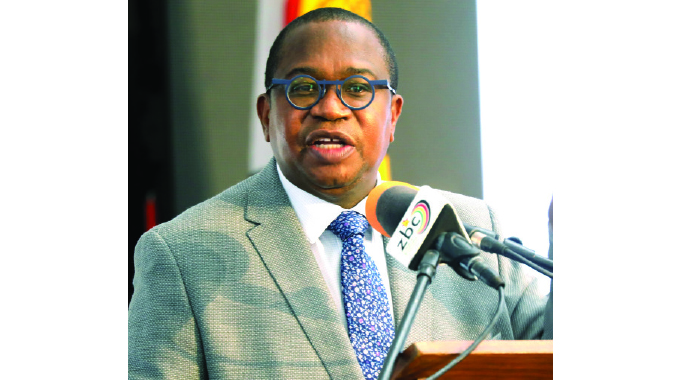
The Minister of Finance and Economic Development, Professor Mthuli Ncube, made the above statement last week when he confronted a manager at a retail shop in Bulawayo’s Central Business District after noticing the high prices of basic commodities. The minister also heard first-hand cries from shoppers over the galloping prices of basic goods and services, which are pegged against madly rising black market exchange rates of the US dollar to the local currency.
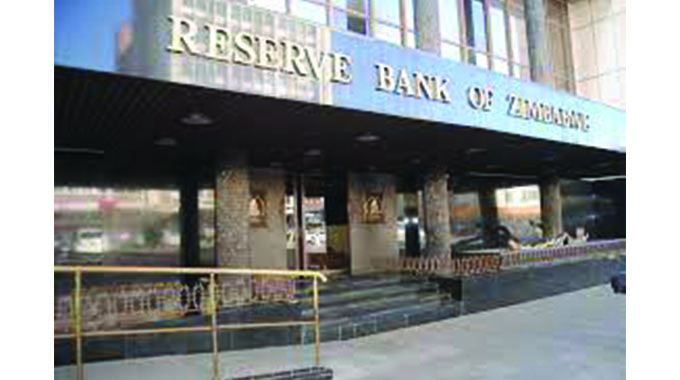
The statement by the Finance minister came shortly after President Mnangagwa warned businesses against malpractices that were reversing the economic gains made by the Government in recent years. The President noted that his Government had come up with a conducive environment for businesses to prosper, anchored on the Reserve Bank of Zimbabwe Foreign Currency Auction system. The system ensures that businesses get foreign currency at fairly lower rates compared to the black market in the streets so that they can import key inputs.
However, the President said the Government felt betrayed by the behaviour of some businesses, who after benefiting from a number of concessions made in good faith by the Government, were hell-bent on profiteering and forcing sales in US dollars at the expense of the local currency.
“Let me say that we made all the above concessions in good faith, and in the belief that we have a responsible business sector whose sole purpose is to manufacture and sell goods and services in the marketplace. Yet it is becoming increasingly clear our trust is getting abused and even betrayed. We even wonder if at all we are dealing with business anymore, or with politicians disguised as company executives, seeking a political upset. Privileges can be withdrawn; in the same way, they are granted.
Equally, politicians seeking to engineer market failures for definite political outcomes will be dealt with as political opponents, and through rules appropriate to politics,” said President Mnangagwa, writing in his weekly column in this newspaper recently.
Some of the concessions that the Government made to make life easy for businesses include the Foreign Currency Auction system and a reprieve on foreign currency earnings, which should ordinarily be surrendered to the central bank, but that law was waivered to help local businesses.
The Government also introduced the multi-currency system to benefit most businesses, as they are able to get foreign currency from their customers to import any inputs they desire. The Government also put in place measures to cushion businesses against constraints imposed by the Covid-19 pandemic where some businesses were able to apply for bailouts. Furthermore, since the onset of the Second Republic, the Government upheld the spirit of tripartism, where business was invited to discuss the best possible way forward to improve the economy.
“Cumulatively, over US$4 billion has been channelled into Business through the auction system. This money, which ordinarily belongs to Government, is over and above several concessions made to Business, which include 75 percent export retention and a further 15 percent retention in proceeds from domestic sales in foreign exchange, which used to come to Government. All these are monies which reach Business on relatively easier terms, than would obtain through direct bank loans. By and large, it is this US$4 billion from the auction system which explains upward of 66 percent capacity utilisation in Business, and for the over 80 percent of locally manufactured products now found on our shelves. Through this facility, businesses have been able to retool, modernise and to import much-needed raw materials,” said the President.
Authorities have said that 70 percent of national transactions are now being conducted in United States dollars, with the remaining 30 percent accounted for in Zimbabwe dollars. This phenomenon shows the widespread availability of foreign currency, something which ordinarily should work in favour of the local currency. Consumers are therefore left wondering why the exchange rate on the parallel market keeps rising, when the USD is already dominant in the local market.

Of note is that all the foreign currency made by the business, where manufacturers and retailers get over 80 percent of their domestic transactions in foreign currency, is for their operations, as another deliberate Government policy to support the sector.
What has also emerged is that some manufacturers and retailers were supplying kiosks and vendors to sell their products to the public exclusively in foreign currency. This system has partly led to an artificial shortage of some basic commodities. Some commodities are not found on the shelves of major shops, yet readily available in the streets and kiosks in major cities. Some shops were allegedly switching off Point of Sale Machines in order to force customers to buy in foreign currency only, a practice which is illegal. Furthermore, businesses have also been accused of supplying illegal foreign currency dealers with cash to mop up the USD on the streets.
“Here at home, activities in the black market now go beyond currencies. They now include redirecting basic goods into the informal sector where big companies have created a web of agents who sell such goods exclusively in foreign currency! Not only is the consumer hard done by; Government is prejudiced in that taxes are evaded, ironically by the same businesses Government will have foster-cared, funded, and grown through the auction system! Formal retail channels are no longer being used to reach the market, in favour of self-created agents who operate in the twilight zone of informality and downright tax evasion. Our multi-currency policy is also undermined as Zimbabwe dollar-earning workers are now being forced to buy basics priced exclusively in foreign currency.”

At some major supermarkets in Bulawayo, Prof Ncube expressed his dismay when he was told that the price of some basic commodities like mealie-meal had doubled in the last week or so. Prof Ncube also noted that prices in local currency were far higher, as retailers deliberately tried to push consumers into using foreign currency to buy some goods. He also noted that some retailers were only stocking basic commodities in smaller quantities, with sugar only available in packages of 1kg while they no longer put the prices of some goods on the shelf, as required by law. It also emerged that some businesses had come up with a way to force customers to buy in cash only when using foreign currency and avoid formal banking. This is done by charging more in USD for payments made via bank transfers.
One customer at a local supermarket, Ms Christina Chibaya, said at some shops, they were restricted on the number of goods they could buy using local currency.
“You come in today, note down the price, then you come in tomorrow and find that the price of that same thing has doubled.

When all of this is happening, some of us will be wondering where the Government is because we expect them to step in and protect us. In some shops, for example, I was told that if I want to buy sugar, using swipe, I can only get two packs. If I want more than that, then I have to use US dollars. In other shops, there are some items that we are told can only be sold exclusively in foreign currency and they won’t allow us to use our bank cards. Where do they expect us to get that money?” Ms Chibaya said.
A pensioner, Mr Esau Dube, said the cost of living was particularly biting for the elderly. The opaque system of forward pricing or speculative pricing was affecting customers negatively and eroding their income.
“We are struggling and this is especially true for old men like me. The prices are rising every day and we wonder where we are supposed to get money to keep up. We retired a long time back and we are now just sitting at home so we are finding it hard to keep up,” he said.
Nonetheless, the Government has responded with policy interventions to arrest the situation to make life bearable for the masses, most of whom are paid in local currency. One remedial move was to allow citizens to input basic commodities duty-free.



 Online Reporter