

 Online Reporter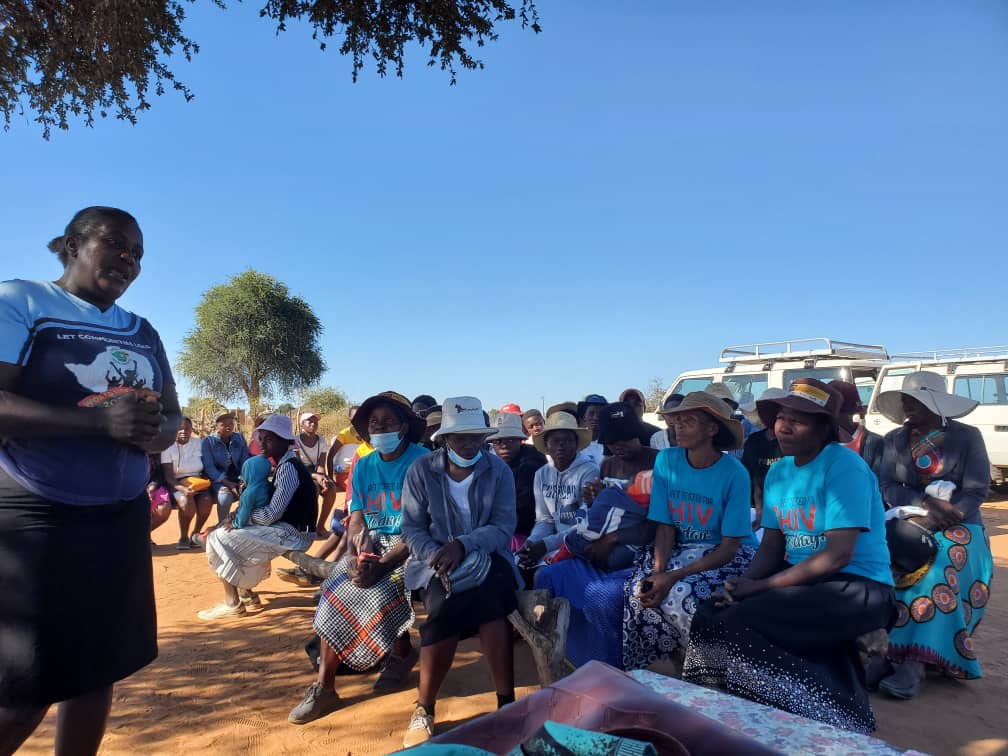
Robin Muchetu in Tsholotsho, Health and Gender Editor
The media has been hailed as a key stakeholder in the fight against HIV in Zimbabwe, as they disseminate critical information that saves lives.
This was highlighted by the National Aids Council (NAC) at the commencement of the Matabeleland North Province Media Tour of Umguza and Tsholotsho Districts.
“The media plays a vital role in ensuring accurate and educational information is disseminated to the people regarding HIV. They ensure that the work that we do is well packaged and assists the people as we work around ensuring that we reduce new HIV infections in Zimbabwe,” said Mr Mongiwabesuthu Ngwenya, the District Aids Coordinator for Umguza.
Tsholotsho District has a significantly high HIV prevalence of 21.1 percent among the age group 15 to 49 years, and 22.7 percent among the age group 15+ years. The HIV incidence rate is at 0.25 percent (National HIV Estimates 2024).
The adult ART coverage is at 97 percent, whilst in children it is at 51 percent. The estimated number of people on ART in the district is 15,865 adults and 1,003 children.
NAC highlighted that behaviours such as multiple concurrent sexual partnerships, prolonged spousal separation, low risk perception, incorrect and inconsistent condom use, age mixing/intergenerational sex (early sexual debut), and imbalanced power dynamics are the main drivers of HIV infection in Tsholotsho. Of note is the emergence of drug use among young people, clouding consciousness against HIV prevention methods.
NAC is implementing the male engagement programme in six districts of Matabeleland North, namely Binga, Nkayi, Lupane, Tsholotsho, and Umguza.
In the district, the programme is being implemented in 20 wards, contributing towards the NAC’s vision of: A Zimbabwe free of HIV infections, stigma and AIDS-related deaths by 2030.
The male engagement was necessitated by observations of low male participation in HIV services, limited programmes for males in the district, poor health-seeking behaviour by males, persistent GBV cases, and some negative social norms promoting GBV and child abuse.
The male engagement programme aims at increasing knowledge and utilisation of integrated HIV prevention, Sexual Reproductive Health (SRH), and Gender-Based Violence (GBV) services among men.
The programme has two approaches that include dialogue and Interpersonal Communication (IPC). In Tsholotsho, a total of 400 and 960 males are reached through dialogues and IPC per quarter, respectively. For dialogues, each Behaviour Change Community Mobiliser (BCCM) recruits 20 men per quarter and reaches 16 via IPC per month (48 people per quarter).
Pertinent to the dialogues are discussions about social norms that perpetuate GBV among men and women, exposing the affected to risks of HIV, STI infections, and negative mental health outcomes.
The BCCMs are also instrumental in screening community members for NCDs and referring those with challenges to health centres and relevant institutions in cases of GBV.
@NyembeziMu


