admin
admin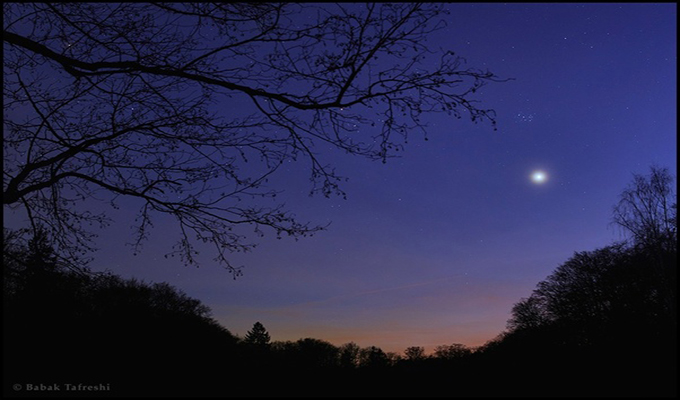
Phathisa Nyathi
SOMETIMES we hardly appreciate the extent to which the cosmos influences, informs and directs our lives on earth. Time and seasons are inconceivable, in practical terms, in the absence of the earth’s rotation and revolution. Celestial bodies are markers of time and dictate when agricultural activities such as planting, weeding, harvesting commence and when they should end. Similarly, rituals are timed in such a manner as to facilitate their execution. The one celestial body that is important in determining when certain cultural, ritual and economic activities are held is the morning star, indonsakusa, known in TjiKalanga as masasi.
Much as the morning star is a marker of time, equally important is why it is important in ushering certain human activities. Some reasons are practical, while others have to do with associated cosmological underpinning. We noted in the last article that indonsakusa heralds or summons the sun and its associated light. In practical terms, vision very much depends on available light that enters our eyes through the pupil. It comes as no surprise therefore, that where there is no artificial lighting, the advent of the sun marks the beginning of numerous human activities.
Over and above the practical considerations there are factors that relate to cosmology, worldview and beliefs. The two work in conjunction. One important consideration relates to sunrise in contrast to sunset. Sunrise is associated with regeneration, renewal; the beginning of a new life. It is a time of hope and a time of promise. At practical level people get out of bed to begin daily chores that require vision. Villagers go to attend to their crops either at the planting stage, weeding or harvesting.
Long journeys start as early as when the morning star emerges in the eastern sky, after ikhwezi. Temperatures are cool and sustained work is facilitated. When the sun goes up, so do temperatures. Oppressive heat militates against effective performance of physical work. Before it gets too hot, villagers return home only to resume work when temperatures are cool once again. However, it is attached cosmological considerations that are more fascinating and enthralling.
Rituals are infused with spirituality. Ancestral spirits play a part in rituals. Some rituals seek to propitiate ancestral spirits whose power is solicited for good human health, prosperity of crops and fertility of humans and their livestock. African spirituality pervades all human spheres. When ancestral spirits have a role to play, the time of day when they are approached is critically important. First light is the best time to do so. The time is known as ekuseni, a word derived from ukusa, meaning appearance of first light or dawn.
The meaning of the term ukusa is best understood and appreciated when its opposite is unravelled. The term is ukutshona, actually ukutshona kwelanga or setting of the sun. Ukutshona is a term associated with death. So and so sewatshona; so and so died. Literally, it means going down the other side. Ilanga selitshone ngale kwentaba, the sun has gone down the other side of a mountain. Ukutshona, whichever way it is understood is no cause for celebration. Death has never been celebrated even though it may, in some quarters, be associated with eternal life. Rather, it is associated with grieving and mourning.
To the contrary ukusa, heralded or summoned by the morning star is time to celebrate the promise of a new life, the reality of regeneration and commencement of positive work. Witches and wizards ply their trade during hours of darkness which is the absence of light. Positive African Spirituality is associated with light. On the other hand, witchcraft is associated with darkness or night, the time of day when there is no light because there is no sun. The two opposites balance out. Frozen ice in the form of glaciers would translate to no life. Similarly, hot magma in the core of the earth would spell doom on life on planet earth.
Africans will argue that to propitiate ancestral spirits at night would lead to prying witches noting and learning how power is negotiated between humans and the ancestral powers. Witches would then amass power and use it to harm others. As a result, they must be denied access to sources of power. Even names of individuals are never called out at night lest witches use the names to access power resident in named objects. Behaviour may sometimes be studied with a view to understanding and unravelling underlying beliefs, world-view and cosmology.
Traditional doctors who essentially are spiritualists, ought to be au fait with underlying beliefs that dictate that their work commence at dawn rather than at twilight or night. Their spiritual vision, which translates to diagnosis and insights into appropriate medicinal and or spiritual remedies, is at its zenith at dawn. As a result, they get up very early at the time the morning star appears ahead of the sun.
Those seeking to consult a traditional doctor do so when he/she is a her spiritual best. The searing and life-suppressing sun is far from its mid-day pornographic encounter with Mother Earth. Doctors suspend spiritual work for a little while till the erotic engagement is over. The day, including dawn, belong to positive spirituality and to traditional doctors. The night and its twilight belong to witches and wizards. The two provide the necessary balancing and stabilising forces.
With the advent of westernisation scales have been tipped in favour of witchcraft and to the detriment of positive African Spirituality. Witchcraft which, on account of being plied at night, is not readily observable hence it is unknowingly protected. Positive spirituality, as practised by traditional doctors in the open and during daytime, has been successfully demonised, denigrated and despised.
When a homestead is being fortified, ukubethela umuzi, that is done in the dark hours of the day so that malevolent neighbours do not see what is happening. Similarly, when a new homestead is being established, full glare is avoided on account of the mortal fear of witches and wizards who too are spiritualists, albeit endowed with malevolent inclinations and intentions. As a result, the new homestead was occupied permanently following its ritual establishment, ukucaba umuzi. The residents of a new homestead built temporary shelters, amadlangala/imishasha while they set up permanent structures. All this was done out of fear of the havoc the much vaunted witches could wreak.
Hopefully, this article has shed some light with regard to the name of the morning star, indonsakusa and, more importantly, beliefs, world-view and cosmology that underpin African behaviour regarding it and, indeed, other celestial bodies that surround us as inhabitants within the solar system located in close proximity to one of the four arms of the Milky Way.
Ends//…



 derick.khumalo