Online Reporter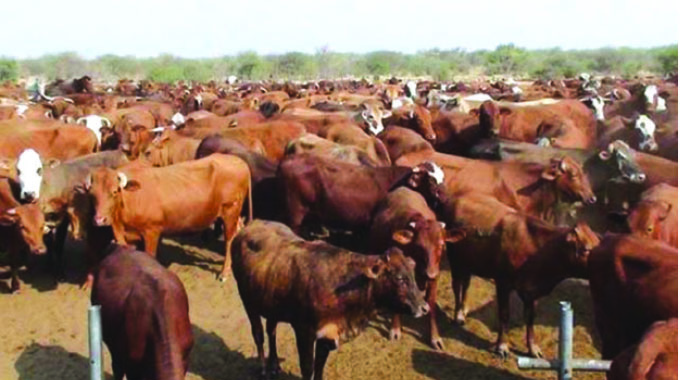
Tapiwanashe Mangwiro
Senior Business Reporter
The national cattle herd remains largely stable despite the lingering effects of the El Niño-induced drought, which negatively affected grazing conditions, according to the Zimbabwe National Statistics Agency’s 2024/25 Post-Harvest Survey findings.
The findings suggest that water availability and feed access improved slightly this year compared to last year, with most of the animals in fair condition.
Presenting the results, ZimStat agriculture and environment statistics manager Mr Nelson Mupfugami said, “The survey painted a cautiously positive picture of livestock resilience.”
He added that 73 percent of households with cattle reported their animals to be in fair condition, while another 25 percent described them as good.
“These figures show that while drought stress remains a factor, most herds are holding up better than feared,” he said.
The survey, conducted jointly with the Ministry of Lands, Agriculture, Fisheries, Water and Rural Development, covered 58 000 farming households across eight rural provinces.
It found that 1,12 million households owned cattle, with Midlands owning 19,2 percent of the total herd and Masvingo 17,8 percent, accounting for the largest shares.
“The provincial distribution shows the continuing dominance of the central and southern regions in beef production,” Mr Mupfugami noted.
Crucially, water access appears to have stabilised, with more than 84,9 percent of cattle-owning households reporting adequate water during the lean season.
In most provinces, animals trekked less than 3 kilometres to the nearest water source, with 42,5 percent reporting under 1 kilometre to water sources and 46,4 percent between 1 and 3 kilometres.
Manicaland stood out, with over half the farmers reporting distances of less than 1 km. “Improved borehole functionality and small-dam rehabilitation have shortened average trekking distances,” Mr Mupfugami said.
“That reduces energy loss and improves cattle body condition.”Feed patterns, however, underline persistent dependence on the open veld.
“Across all provinces, natural grazing combined with crop residues was the main feed source for more than 61 percent of households, while 35 percent of farmers relied solely on natural grazing.
Less than 2 percent used planted pasture or commercial supplements.“The figures confirm that fodder production and feed formulation remain limited at the smallholder level,” Mr Mupfugami said.
“Farmers continue to depend on seasonal vegetation, which makes herds vulnerable to climate variability.”
Regional contrasts remain sharp, with Matabeleland South, historically prone to dry spells, recording the highest proportion of cattle in good body condition at 43 percent, thanks partly to early feed supplement programmes.
In contrast, provinces such as Matabeleland North and Manicaland reported smaller shares of well-conditioned animals, reflecting uneven rainfall recovery and pasture regeneration.
“The southern rangelands benefited from targeted community interventions, but the northern belt still needs structured feed security measures,” he said.
While the physical condition is broadly satisfactory, productivity indicators remain weak. Few households reported adopting improved breeding or veterinary routines beyond dipping, and commercial off-take rates remain low.
ZimStat said that this limited the livestock sector’s contribution to the wider economy.
Livestock accounts for about 12 percent of agricultural gross domestic product; however, its growth potential is constrained by water scarcity, disease pressure, and market inefficiencies.
The Post-Harvest Survey calls for increased investment in rural water infrastructure, feed security, and farmer training. It urges expansion of fodder-crop production, such as velvet bean, lablab and fodder sorghum and promotion of hay and silage making at the household level.
“Feed development is the linchpin of resilience,” Mr Mupfugami said. “Without a structured fodder plan, every dry spell becomes a crisis.”
The report also advocates rehabilitating and constructing boreholes, small dams and solar-powered water systems to reduce trekking distances in drier provinces. Matabeleland North and South provinces were singled out as priority zones.
The report recommends capacity building programmes on cattle nutrition, water harvesting, and rangeland management through farmer-field schools.
“Knowledge transfer remains as vital as infrastructure,” he emphasised. “Empowered farmers adapt faster and lose less.”
Policy experts see the livestock findings as a warning against complacency. Even with fair body scores, they say, prolonged moisture deficits could quickly reverse gains.
Rising input costs, especially for supplementary feeds, have already discouraged many communal farmers from restocking after earlier drought losses.
Some farmers are shifting towards goats and poultry rearing, which require less capital and water. “Diversification is happening organically. The challenge for policy is to guide it strategically, not reactively,” said agronomist Ms Pamela Macheka.
The agency’s data indicates that more than four-fifths of farmers currently have enough water and that feed shortages, though real, are not yet critical.
Combined with moderate rainfall forecasts for the 2025/26 season, that suggests Zimbabwe’s national herd may stabilise in the medium term.
Mr Mupfugami cautioned that resilience must not be mistaken for recovery. “What we are seeing is survival, not expansion,” he said.
“To transform cattle production into a true growth driver, we need systematic investments in feed, genetics, and markets.”
He added that ZimStat would continue integrating livestock indicators into its annual agricultural statistics to track adaptation and productivity trends.