Online Reporter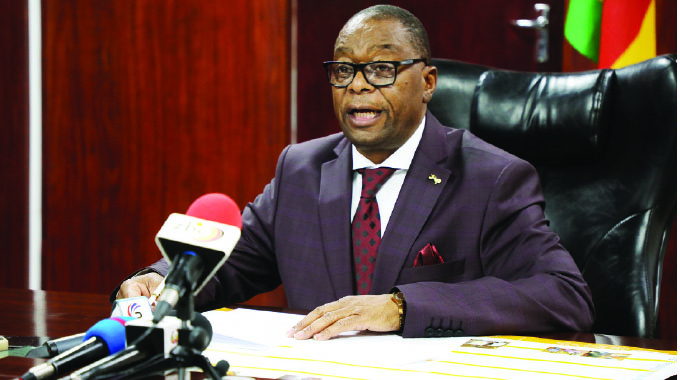
Business Reporter
ZIMBABWE’S journey towards a national health insurance (NHI) system has reached a critical stage as Government officials and health experts have reaffirmed the need to operationalise the scheme this year.
Despite past delays, stakeholders remain optimistic that the initiative would bring long-term benefits by ensuring universal healthcare coverage for all citizens.
The Minister of Health and Child Care, Dr Douglas Mombeshora, recently reflected on the progress made, stating: “Last year, we presented the rules to the Cabinet and we passed that stage. We had intended to operationalise the NHI in 2025, but delays in drafting, particularly pressures at the Attorney-General’s Office, slowed us down.”
However, he confirmed that the ministry had worked through a draft of the National Health Insurance Bill, with contributions from key stakeholders, including the Ministry of Finance, Economic Development and Investment Promotion.
“We are about halfway through reviewing the document and we hope to complete it soon before taking it back to the Attorney-General,” he added.
The road to establishing a national health insurance scheme in Zimbabwe has been long and complex.
Previous discussions on the matter, as reported before, highlighted concerns about funding mechanisms, potential resistance from private healthcare providers and the Government’s capacity to implement such an ambitious programme.
In earlier reports, the Government had acknowledged that establishing a national insurance scheme required significant financial and administrative commitments.
However, officials had consistently argued that the long-term benefits of universal health coverage outweighed the challenges.
Health economist Dr Takudzwa Marerwa stated: “A well-structured national health insurance system could alleviate pressure on overburdened public hospitals while ensuring that even low-income citizens can access quality healthcare.”
He emphasised that healthcare costs had been a leading cause of financial hardship for many Zimbabwean families, and a national scheme could help spread the financial risk across a broader base.
The Government’s renewed urgency to push the NHI forward in 2024 came amid increasing concerns about healthcare accessibility and affordability.
Past reports pointed to severe funding shortages in the public health sector, which had led to persistent drug shortages, deteriorating infrastructure and healthcare worker strikes.
Through the introduction of an NHI scheme, the authorities aim to provide a more sustainable funding model for the health sector.
Mr Shingirai Masawi, a health practitioner, has long advocated national health insurance, citing the strain on Zimbabwe’s public hospitals due to high demand and limited resources.
“For years, we have seen cases where patients go untreated because they cannot afford medical fees. Many rely on out-of-pocket payments, which are unsustainable,” he said.
Mr Masawi believes, if properly implemented, the NHI would reduce the financial burden on patients and improve access to essential services.
Despite the anticipated benefits, concerns over the implementation of the scheme had been raised. In previous discussions, some health insurance experts questioned how the NHI would be funded without placing excessive financial strain on either the Government or the working population.
Mr Fungai Maravanyika, an expert in health insurance, has warned that without clear regulatory frameworks, the system could face operational inefficiencies.
“Successful implementation will depend on proper governance, transparency and ensuring that collected funds are used effectively to improve service delivery,” he remarked.
Experiences of other African nations that introduced national health insurance schemes are good learning points, according to stakeholders.
Countries such as Ghana and Kenya have implemented similar programmes, but their early stages were marred by logistical challenges, including enrolment difficulties and inadequate funding.
Dr Mombeshora indicated that the Government plans to present the NHI Bill to Parliament by mid-year.
“If everything goes according to plan, we should be able to take it to the Cabinet Committee on Legislation before it reaches Parliament by June,” he explained.
This timeline suggests that, if the legislative process proceeds smoothly, the NHI could be operational within eight months to a year.
Commenting on the importance of the scheme, Dr Marerwa stated: “This is an opportunity for Zimbabwe to take a significant step towards health equity. It is not just about expanding coverage but ensuring that all citizens, regardless of income level, can access necessary healthcare services.”
While challenges remain, there is growing consensus among stakeholders that Zimbabwe can no longer afford to delay the NHI. With past research and public discourse underscoring the necessity of universal healthcare, the upcoming parliamentary debates would be critical in shaping the future of healthcare financing in the country.
The introduction of the NHI will represent not only a long-overdue policy shift but also a commitment to bridging the gap between healthcare needs and financial accessibility.
If successfully implemented, Zimbabwe could finally achieve a system where healthcare will be a right rather than a privilege.