Sundaymail Editor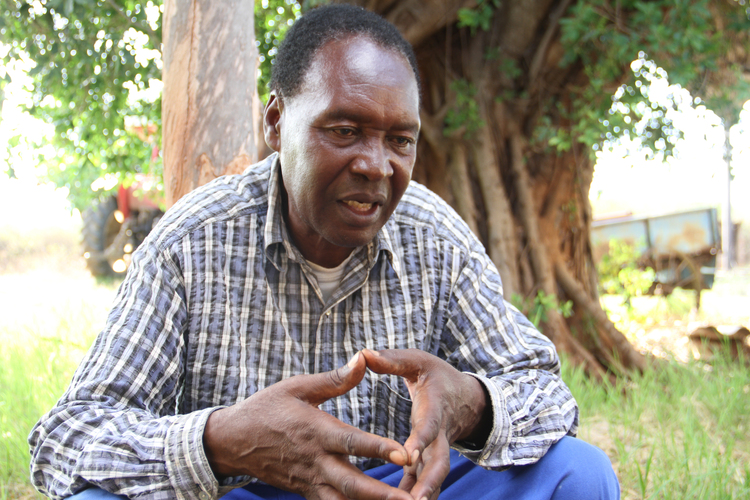
Soon after 1980, Government established the youth brigades initiative, whose purpose was to create a politically conscious vanguard that would take an active role in developing the newly-independent state.
Although the initiative had its moments, it probably never reached the heights that its founders anticipated on inception.
Its successor, the National Youth Service, was introduced at the turn of the millennium, again with the aim of instilling a sense of nationhood in young people, and imparting in them life skills.
This saw about six centres such as Border Gezi in Mashonaland Central, Kamativi in Matabeleland North, Dadaya in Midlands, Guyu in Matabeleland South, Vumba in Manicaland, and Chikwerengwe, and Mshagashe in Masvingo being established to spearhead the initiative.
This time around, while again the programme likely did not achieve its major objectives, the National Youth Service created a highly-sourced labour resource as graduates were commended for their high levels of discipline and maturity.
However, the initiative suffered the proverbial kiss of death when in 2008 the inclusive Government came with its Finance Minister who was totally opposed to the initiative.
Now, there is a new push to bring this initiative back to life.
Among the resolutions of the 6th National Congress of the Zanu-PF Youth League was that programme must be revived.
The recommendations have since been adopted and were among the resolutions passed at the 6th National People’s Congress in early December.
The recommendations pointed out that well-cultured and disciplined youths, who would have undergone the rigorous orientation of the training curriculum, were a vital human resource base in the successful implementation of Government programmes such as Zim-Asset.
Internationally it has also been noted that a disillusioned and directionless young generation in any society is a catalyst for anarchy, bringing to the fore the importance of having a patriotic and enlightened citizenry.
However, critics have claimed that the failure of past local initiatives mean that we are yet to learn the lessons of the past and resuscitation of the programme now will be a futile endeavour.
Some have totally rubbished National Youth Service, describing it as an indoctrination programme that turns youths into “mindless” Zanu-PF supporters. They also point to alleged sexual and other abuses that are said to have occured in the poorly-funded camps.
So, what has changed now? Have the lessons of the past been learnt?
A senior official in the Youth Ministry, speaking on condition of anonymity, said one of the previous drawbacks – which has not been reported on – is that some “bigwigs” deliberately sabotaged the programme because they were paid by agents of regime change who did not want to see National Youth Service in Zimbabwe succeed.
“They fully understood the concept but they were advancing their own agendas and knew that the success of the programme was going to hinder their ulterior motives, hence they worked hard to suppress the whole initiative,” said the official.
“Whoever is in the leadership of the programme must understand and realise the importance of the National Youth Service, and that is the only way the resolution made at the just-ended Congress to re establish the National Youth Service can come to fruition,” says Cde George Rutanhire, who was the previous Commander of the National Youth Service.
“If the leadership does not understand the importance of the programme, then problems which hampered the first and second initiatives will come back to haunt us again.”
Cde Rutanhire goes on: “Only president Mugabe fully understood the importance of the National Youths Service initiative, but others never fully grasped the concept.
“For Government to fully implement such an initiative there was need for it to receive directive and support from the party which had the majority in Parliament, so if the leadership at party level was not abreast with the goals and aspirations of the concept, then the initiative was bound to fail.”
Minister of Youth development, Indigenisation and Economic Empowerment Christopher Mushohwe, under whose jurisdiction the initiative falls, says there is need to look at the modalities such as statutory instruments that operationalise the entire concept.
He says every country would want its younger generations to be educated on issues to do with objectives of their revolutions, nationhood and national aspirations.
“It’s a long overdue process which should have been pursued way back soon after Independence, as it is the history of the country which enforces sovereignty and reinforces one’s nationalism,” says Minister Mushohwe.
He says the initiative inculcates the spirit of ubuntu/unhu in young citizens and this contributes to national development.
Many other people concur with this line of thinking.
“A young generation without direction, patriotism, lacking history of nationhood and without a clearly defined role to participate in nation building is a rich minefield of lawlessness,” says Cde Ndugo, who was a staffing officer at the Border Gezi Youth Training Centre in Mt Darwin.
“A nation can never be at peace with a disoriented young generation, and without peace, development and social progress are retarded.”
Zimbabwe is not the first country in the world to undertake such an initiative.
The United States of America and a host of European, Asian and African countries have also undertaken these programmes as a bridge from tertiary education to adulthood.
It is viewed as a sort of “right of passage” in many countries.
To do it, though, requires serious material investment and a leadership that knows exactly what it wants to achieve.


 Online Reporter