admin
admin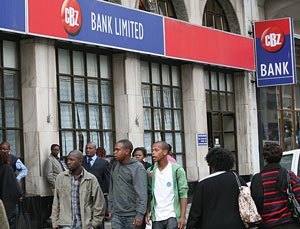
Benny Tsododo Correspondent
It is disheartening that while Government is reviewing the indigenisation policy to enable it to fully meet the country’s indigenisation targets and at the same time address concerns by foreign investors, some media groups are busy projecting the economy in a mode that is likely to chase away the same investors.
There is nothing wrong with the media reporting on the sanctions-induced economic challenges afflicting the economy since their existence is uncontestable.
What is unsettling is for the media to mischievously fiddle with general information to come up with stories that paint a gloomier economic environment than is prevailing.
Last week we had such misleading stories about the local banking sector and company closures being published by in the media.
Despite the attendant economic challenges, a cursory review of financial statements from local banks reveals that they have registered varied net profits for the year ending December 2013.
CBZ Bank posted US$36,7 million profit after tax, CABS recorded a net profit of US$33 million and ZB Bank and Barclays Bank posted profits of US$4,3 million and US$3 million respectively.
Not only that. While other economic sectors are struggling to woo foreign investment, several banks have managed to secure foreign investment deals.
Notable among these is the Mauritian-based AfrAsia Bank’s grabbing of 62,5 percent shareholding in AfrAsia Kingdom Limited.
Allied Bank concluded a US$30 million deal with a Mauritian investor. MBCA got US$75 million from South Africa’s Nedbank Group while BancABC received US$210 million investment from UK-based Atlas Mara.
With such a profitable and investor-friendly milieu, it is mind boggling that some media organisations could choose to ignore such compelling evidence on viability to report on a conjured up crisis in the banking sector.
A certain media house published a story on the alleged banking crisis in Zimbabwe that is escalating.
The story reported on some comparative assessment of regional banks by an advisory firm, IH Securities, and concluded that banks in Zimbabwe were sinking into a “crisis”. The analysis by the advisory firm noted that local banks had recorded profits that were below regional average.
Riding on the back of this information, the paper desperately painted a gloomy environment in the local banking sector, which it called a “worsening crisis”.
That was despite the paper mentioning that the Deputy Governor of the Reserve Bank of Zimbabwe, Kupikile Mlambo, had noted that in the first quarter of this year, the banking sector had generated an aggregate profit of US$20,5 million.
So with such profitability, how can there be a crisis? Is it possible for banks in a crisis to make profits?
We hear that when banks in the US plunged into the financial crisis of 2007 – 2008, there were no profits to talk about. The financial institutions had to be bailed out by their government in order to get back on their feet.
The paper also carried an alarming story revealing that 10 companies were closing down every month in Zimbabwe.
It quoted an unnamed National Social Security Authority source on this story. One could not help but question the veracity of this statistic. Could it be true that 10 companies are closing down each month in Zimbabwe?
Unfortunately, accurate and verifiable information about company closures cannot possibly come from NSSA.
Despite acknowledging that the NSSA source does not have the official authority and professional wherewithal to issue out such information, the paper went on to publish the story claiming that companies were closing down at an alarming rate in Zimbabwe.
Why the paper did not seek information from relevant Government departments such as ZIMSTATS and the Ministry of Finance and Economic Development remains anyone’s guess. It smacks of an established tendency by some media houses to always depict the economic situation in the country as more dire than it really is.
My worry here is not about the dynamics of financial reporting but about the corrosive tendency by some media publications to paint a gloomier picture about the current economic challenges facing the economy than the reality.
This kind of media reportage sends wrong signals that there is a banking crisis in Zimbabwe or an economic implosion, which is not the case.
This could create an insipid market perception that may hurt the country’s bid to attract foreign investors.
The negative perception will not only cost Government but also hurts the generality of the people, for if Government fails to meet its policy objectives by failing to access external funding, it will also fail to deliver on its promises to the people. What this means is that due partly to the negative reportage from the media, Government could fail to improve on service delivery or create more jobs.
What needs to be addressed is the penchant by some media houses to take an antagonistic position towards Government, that proclivity to undermine and underplay Government policies and programmes.
With this in mind, it would not be off the mark to say that the same warning given to non-governmental organisations (NGOS) by the European Union (EU) Ambassador to Zimbabwe, Aldo Dell’Ariccia not to take an adversarial stance against Government, should also be extended to some media houses in the country.
Dell’Ariccia rebuked the NGOs for perennially being hostile to Government. He said: “The civil society has a role to play but I have the impression that you are a little bit anchored to the past where instead of seeing NGOs one perceives AGOs, Anti-Government Organisations. And if you start catching the flair of the time, the trend, there is an opening to be worked upon.”
Just like the NGOs, some media houses have acted like Anti-Government Media Organisations, opposing anything pronounced by Government at any given moment, while acclaiming anything from opposition political parties.
We are not denying that some companies are closing down and we acknowledge that it is the duty of the media to report on such developments.
But it is important for the media to publish correct and accurate information about the company closures to avoid misleading the public and potential investors.
That is why the Minister of Finance and Economic Development, Patrick Chinamasa, on Friday appealed to the media to avoid publishing stories that scare away potential investors. Minister Chinamasa aptly said: “What you write about your country is amplified outside and wherever I go, I am made to explain stupid reports which have no basis and facts.”



 Online Reporter