

 daniel chigunwe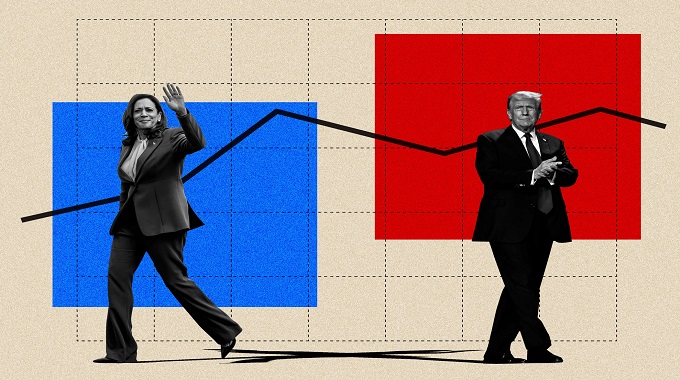
Isaac Jonas
As we approach the US presidential election on November 5th, 2024, Zimbabwean traders with stakes in the US stock market face unique challenges and opportunities.
This election, featuring Kamala Harris against Donald Trump, presents a scenario where market volatility could be high due to the tight race, potentially affecting sectors differently based on policy outcomes.
Here’s how you can strategise:
Understanding Election Impact
Historically, presidential election years in the US show a tendency for positive stock market returns, albeit with higher volatility. The current election’s closeness, as reflected by recent polls and market sentiment, suggests an increase in market uncertainty leading up to election day.
Election Scenarios and Market Implications:
a) Kamala Harris Victory:
Policy Focus: Likely continuation of progressive tax policies, emphasis on green energy, healthcare reform, and potentially higher corporate taxes.
Trading Strategy: Focus on sectors expected to benefit from government spending or incentives like renewable energy (solar stocks could be a hedge), healthcare, and technology.
b) Donald Trump Victory:
Policy Focus: Potential tax cuts, deregulation, especially in energy and finance sectors, could boost traditional energy, manufacturing, and financial stocks.
Trading Strategy: Energy stocks, particularly oil and gas, along with sectors like defense and aerospace due to potential policy shifts towards military spending.
Contentious or Close Election Outcome:
Market Impact: High volatility, potentially benefiting those who can trade volatility itself through options or ETFs like the VIX.
Strategy: Short-term strategies like trading volatility, or holding defensive stocks like utilities and consumer staples which tend to weather uncertainty well.
General Strategies for Capital Protection:
Diversification: Spread investments across asset classes, including bonds, commodities like gold, and international equities to reduce exposure to any single outcome.
Index Funds or ETFs: Broad market exposure reduces the risk of picking the wrong sector. ETFs focused on stability during uncertainty (e.g., low volatility ETFs) could be beneficial.
Defensive Investments: Sectors like utilities, consumer staples, or healthcare might not offer high growth but provide stability during volatile times.
Currency Hedging: Given Zimbabwe’s economic context, consider investments that benefit from a weaker USD or directly hedge against currency fluctuations.
Options Trading: For those comfortable with higher risk, buying puts on the market or specific sectors expected to decline could act as insurance.
Growth strategies:
Sector Rotation: Anticipate policy shifts and rotate investments into sectors likely to be favored post-election.
Long-term Perspective: Historically, markets tend to recover post-election. Keeping trades for the longer term time horizons might mitigate short-term losses.
This could be done through swing trading and avoiding using leverage to avoid paying interest on borrowed funds in case it takes longer for the markets to settle.
Monitor Policy Changes: Post-election, closely watch for policy announcements. Early Trades in sectors aligned with new policies could yield significant returns.
Disclaimer: Predicting elections via market returns is inherently uncertain due to numerous variables like voter turnout, policy impacts, and unexpected events.
In summary, for Zimbabwean traders, the 2024 US election presents a landscape of both risk and reward.
By understanding the potential implications of different election outcomes, maintaining a diversified trading portfolio across different asset classes such as currencies, commodities, and strategically engaging with both defensive and growth sectors, you can not only protect your capital but also position yourself for growth.
Remember, while elections bring uncertainty, they also offer unique trading opportunities for those who navigate wisely.
If you want a detailed trading strategies analysis, feel free to conduct me via the undersigned details on a paid consultation basis.
Till next time, trade and invest wisely and may the market be on your side!
Isaac Jonas is a Canada based economist and consultant at Streetwise Economics. He is also a retail investor and retail trader, focusing mainly on the US and Canadian capital markets. He regularly shares insights via his social media handles. His website is www.streetwiseeconomics.com and can be reachable on [email protected]. Insights shared in this article do not amount to investment advice.



 Online Reporter