admin
admin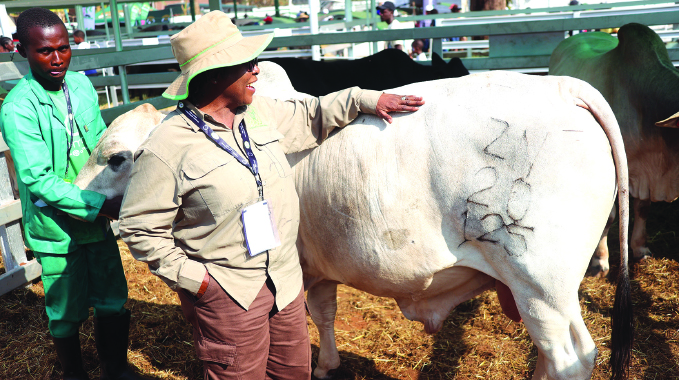
Ivan Zhakata, Features Correspondent
ZVIKOMBORERO Farms in Featherstone recently hosted a dynamic and impactful field day that attracted over 500 participants eager to witness first-hand the innovative and sustainable farming practices transforming the agricultural sector.
Dr Divine Simbi Ndhlukula, the farm’s owner and a prominent entrepreneur behind Securico Security Services, a security firm, welcomed farmers, researchers, students and Government officials to showcase ground-breaking advancements in livestock farming that prioritise sustainability and innovation.
In an interview, Dr Ndhlukula shared her deep commitment to responsible farming and said her approach was not solely about profits.
“Farming is not just about making money today, but about ensuring the land remains fertile and productive for future generations,” she said.
“We cannot just focus on short-term gains. We must farm responsibly so that four or five generations from now, people will look back and say, ‘these were responsible business people.'”
With climate change continuing to pose mounting challenges, Dr Ndhlukula said sustainable livestock practices have become more crucial than ever.
“One of the key strategies we have employed is harnessing water across all the land we farm,” she said.
“Wherever there is a possibility of damming water, we have done so. Over the past 10 years, we have had more than 14 dams on my farm. These measures are essential for managing our resources in the face of climate uncertainty.”

Hundreds of farmers, including those from surrounding communities and other stakeholders, gathered around one of Dr Ndhlukula’s cattle pens, which housed a thriving Mashona breed, during an open day she hosted at her Zvikomborero Farms in Featherstone last week. — Pictures: Believe Nyakudjara
Sustainability is not only about managing water resources. Dr Ndhlukula is also investing in advanced technology to streamline operations and minimise waste.
Zvikomborero Farm, spanning 2 300 hectares, is now home to cutting-edge tools like drones and electric fencing to monitor livestock and ensure optimal grazing patterns.
“Technology helps us improve efficiency and prevents overgrazing,” she said. “This is how we ensure that the resources we have are used responsibly.”
The farm has also been proactive in improving pasture quality.
Through the strategic planting of grasses like Panicum, they are replenishing depleted grazing lands, which benefits both productivity and environmental conservation.
Dr Ndhlukula elaborated: “Farming is a business, but can we just make a profit without understanding the key variables? Sustainability is at the heart of it and we have to farm responsibly.”
The field day was also a moment to reflect on the changing role of women in agriculture — a transformation Dr Ndhlukula said she was proud to be part of.

Dr Ndhlukula (second from left) poses for a picture with her children at the field day at Zvikomborero Farms in Featherstone last week
Historically, women in agriculture were limited to owning smaller livestock like chickens, while cattle—the backbone of commercial farming—were often reserved for men.
“Now, women are taking their rightful place in agriculture. Women own land, cattle and even entire agricultural enterprises,” Dr Ndhlukula said.
“More and more women are entering commercial farming, and I am proud to be a part of that transformation.”
What was even more encouraging was that half of the young people who attended the field day were women, signalling a promising shift towards female empowerment in farming.
“It is inspiring to see young women taking up the mantle of innovation and sustainability in agriculture,” she said. “This is the future of farming, and it is a future driven by women.”
However, Dr Ndhlukula acknowledged that challenges persist and said one of the most significant barriers to growth in the agricultural sector was access to long-term financing.
“Farming requires patient capital and short-term loans of one to three years do not support sustainable growth.
“We need financing that spans at least five to 10 years, so we can invest in the long-term health of our farms and ensure that future generations can continue to thrive.”
The field day was not just about showcasing best practices—it also provided a platform for knowledge exchange. Agricultural service providers exhibited their products, allowing farmers to connect with the latest solutions in the industry.
That kind of collaboration was critical in bridging the gap between innovation and practice.
As both a businesswoman and a farmer, Dr Ndhlukula said she knows that strong management systems are the foundation of any successful agricultural enterprise.
“You need systems in place to track everything—from fuel consumption to livestock health. Without these systems, you are not running a business,” she said.
The event reinforced the idea that women, armed with knowledge and innovation, were poised to drive the sustainability agenda in agriculture.
By integrating technology, responsible farming practices and sound business strategies, they are not only securing their livelihoods but also contributing to national food security.
Dr Ndhlukula’s journey served as a powerful inspiration, proving that with determination, innovation and sustainable practices, women can reshape the future of agriculture.
“We are not just building businesses,” she said. “We are leaving a legacy for future generations—a legacy rooted in responsibility, innovation and sustainability.”
Dr Ndhlukula is the founder and managing director of DDNS Security Operations, the holding company for Securico Security Services, Canine Dog Service and Multi-Link. She is also the Zimbabwe National Chamber of Commerce president since June 2017.
She has managed to establish and grow an almost 4 000 strong workforce, of which 900 are female, making Securico the largest employer of women in Zimbabwe outside of Government.
She has been internationally recognised as one of Africa’s most successful women.



 Online Reporter