Online Reporter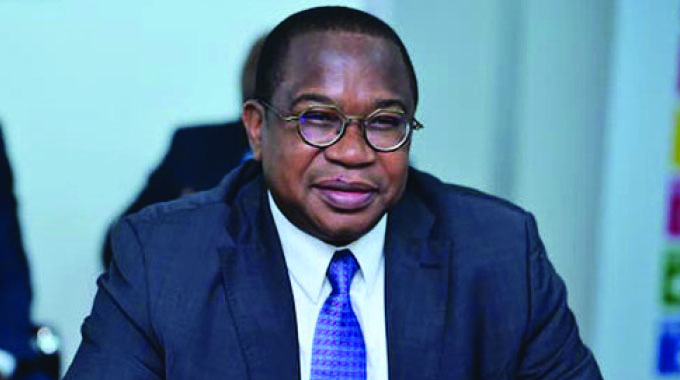
Mukudzei Chingwere, Zimpapers Reporter
ZIMBABWE is advancing steadily towards its vision of an empowered upper-middle-income society by 2030, with key stakeholders gathering in Harare yesterday to discuss the National Development Strategy 2 (NDS2) roadmap.
The meeting brought together various stakeholders, marking a crucial step in the implementation of NDS2 that aims to guide Zimbabwe towards achieving its goals highlighting the Government’s commitment to sustainable growth and development.
The meeting, which was attended by Government officials, academia, labour and stakeholders from almost all sectors, showcases a collaborative effort by the Second Republic underscoring the importance of inclusive participation in shaping the future trajectory of the country.
NDS2, which will follow the conclusion of NDS1 in December this year, aims to address critical national priorities, including macro-economic stability, infrastructure development and food security.
Minister of Finance, Economic Development and Investment Promotion Professor Mthuli Ncube said the successful implementation of the priorities will require active engagement from various sectors, including civil society, academia and the private sector.
“To promote inclusivity and ownership, the NDS 2 consultations, under the leadership of the Thematic Working Groups, will be conducted through a wide-reaching, participatory approach,” said Minister Ncube.
“This engagement process with the stakeholders has already started and will continue until the draft final document has been produced. The meeting we are having today is part of that consultation process.
“Consistent with the principle of ‘leaving no one and no place behind,’ these consultations will encompass private sector stakeholders, academia, the media, civil society, citizens, development partners, Parliament, and the Judiciary as reflected by the composition of stakeholders in today’s meeting.
“A terminal evaluation of NDS1 will be undertaken to assess the strategy’s outcomes and inform future planning including the NDS2,” said Minister Ncube.
Chief Secretary to the President and Cabinet Dr Martin Rushwaya said there is a need for a comprehensive approach in formulating the NDS2 since the Second Republic has laid a strong foundation for long-term sustainable economic growth, with a projected growth rate of six percent for 2025.
This growth outlook is indicative of the Government’s effective policies and strategic planning.
“This year’s projections of prospects for positive growth estimates of six percent for our economy during 2025 provide the momentum for the launch of NDS2, as we move towards Vision 2030 to enhance the living standards of our citizenry,” said Dr Rushwaya.
“Government recognises that a successful strategy cannot be developed in isolation of the Nation’s stakeholders. This requires the active collaboration of all its stakeholders. Hence, your presence here today is not by coincidence.
“As stakeholders, you represent a critical group in our journey towards the development of the NDS2 blueprint. This should guide Zimbabwe’s national development over the five years, 2026-2030.
“Government appreciates that insights gained from past initiatives should inform strategies, strengthen institutional frameworks and enhance service delivery.
“Hence, the crafting of NDS2 draws lessons from the implementation of NDS1, which from its onset in 2021 was guided by 14 National Priorities and respective thematic areas,” said Dr Rushwaya.
He said President Mnangagwa requires that the consultative process be transparent, comprehensive and inclusive ensuring that a wider spectrum of voices from across the country are heard.
Dr Rushwaya said the development of NDS2 will involve consultations at national, provincial and district levels.
He said critical themes of the NDS2 include economic diversification and industrialisation, agriculture and food security, climate change and resilience, infrastructure development, human capital development, health, devolution transparency and accountability.
“It is my appeal that you contribute to the Thematic Working Groups where you would have been proposed or chosen to participate in,” said Dr Rushwaya.
“It is my expectation that the chairpersons of the different Thematic Working Groups have made additions to their list of stakeholders of their respective Groups and that the stakeholders have since been advised.
“I expect the different chairpersons to have advised their stakeholders of the respective Thematic Working Groups where they have been placed, to enable meaningful contribution to the development of Zimbabwe.
“I believe that the different chairpersons are now in the process of holding their NDS2 Thematic Working Group inception meetings which should be completed before the commencement of the broader consultations,” said Dr Rushwaya.
Deputy Chief Secretary in the Office of the President and Cabinet Mr Willard Manungo spoke on the importance of the terminal evaluation of NDS1, which will inform the transition to NDS2.
Mr Manungo said this evaluation will help identify successful initiatives and areas that require further development, ensuring that lessons learned are integrated into future strategies.
“The vision towards an empowered and prosperous upper middle-income society envisages the realisation of the aspirations of the people of Zimbabwe,” said Mr Manungo.
“For us to be able to capture the progress made over the NDS1 period and the activities that need to be continued in the NDS2 period for Zimbabwe to attain Vision 2030, the terminal evaluation of the NDS1 blueprint becomes key.
“A terminal evaluation of NDS1 will be conducted to assess whether the five-year targets set for the NDS1 Thematic Working Groups have been attained.
“The NDS2 epitomises the sheer resilience of the country’s economy as it continues to grow from strength to strength, as observed in the NDS1 Mid-Term Review.
“The Office of the President and Cabinet embodies the pinnacle of our nation’s leadership, tasked not only with the highest decision-making authority but also with the responsibility to ensure that our economic policies are effectively designed and implemented.
“The NDS2 that is being drafted is not merely a document, it is the roadmap that will outline the collective vision for the future that Zimbabweans want as a people, a future characterised by shared prosperity for all, and sustainable development,” said Mr Manungo.