Online Reporter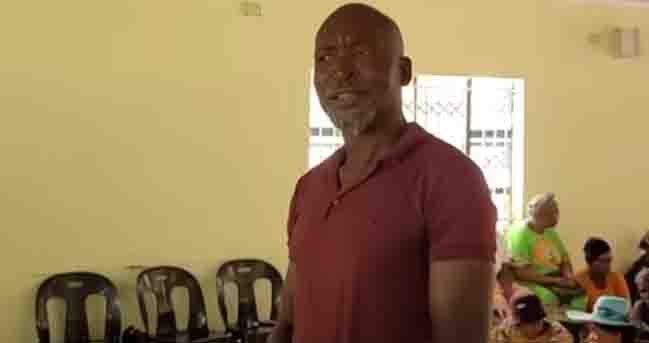
Tendai Gukutikwa
Weekender Reporter
A MUTASA man, Jacob Matamba, stands accused of attempting to disinherit his maternal uncles by claiming that his late grandfather had promised him sole ownership of the family land.
Matamba, who grew up at his mother’s rural homestead, is alleged to have seized portions of his maternal grandfather’s property, sparking a bitter dispute now before Chief Mutasa’s community court.
The case was brought forward by his uncle, Isaac Chikomba, who insists Matamba is encroaching on land he rightfully inherited from his mother.
Chikomba told the court that Matamba, his sister’s son, was raised at their homestead and has since developed a sense of entitlement to land that does not belong to him.
“Matamba is my nephew. He is my sister’s child. He grew up with us, not with his father’s family. I believe that is what made him feel entitled to our land,” said Chikomba.
He added that after their father’s death, Matamba moved into houses left behind by their late parents without objection, as Chikomba was working elsewhere at the time.
“We allowed him to stay because he had been raised here. But now he is claiming ownership of land that is not his,” said Chikomba.
The dispute has escalated into a full-blown inheritance battle, with the community court tasked to determine whether Matamba’s claims hold any legitimacy.
“He has now gone further and taken land that belongs to us. He planted banana plantations on land that we inherited,” said Chikomba, adding that the encroachment had triggered fresh tensions among siblings.
“This has caused confusion in the family. My brother is now accusing me of allowing Matamba to take over my land. He says if I continue tolerating it, he will also claim a share of my portion,” he said, insisting that Matamba had already been allocated a small piece of land by their late father, but had overstepped boundaries.
“I allowed him to remain on the piece our father gave him. But now he is extending into my own land without consent,” he said.
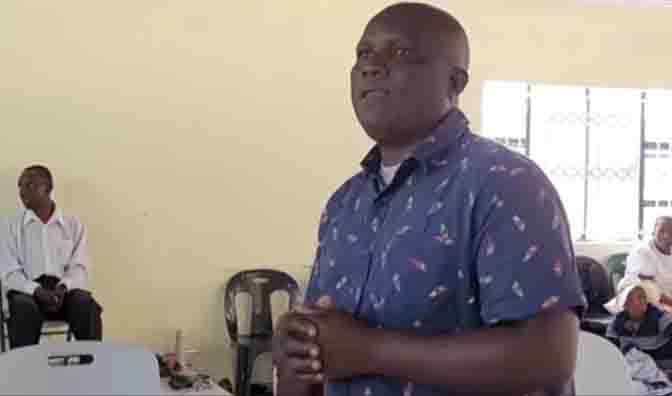
In response, Matamba did not deny occupying the land, but defended his actions, arguing that he was acting within his rights.
“What my uncle is saying about me growing up there is true. I was raised within the Chikomba family. That is the only home I have ever known,” said Matamba, further arguing that before his uncle’s death, instructions were given regarding his future.
“When my uncle fell ill, he gathered his sons and told them that when he passes on, they should not abandon me because I was now part of the family just like them,” said Matamba.
He further complicated the dispute by challenging Isaac’s standing in the matter.
“Chikomba is not my mother’s biological brother. He has his own father and his own inheritance elsewhere. His entitlement is not solely here,” claimed Matamba.
He maintained that the land he is farming was personally allocated to him by his uncle before his death.
“Before my uncle’s death, he gave me a piece of land. That is where I planted my bananas. I am not farming on land that does not belong to me. It was my uncle’s land,” he said, adding that he had already sought legal recourse over the matter.
“I even took the issue to court because I wanted clarity. I cannot be treated as a stranger in a home where I was raised,” said Matamba.
The exchange drew a stern response from Chief Mutasa, who questioned Matamba’s approach to the dispute.
“Instead of being grateful to this family for raising you and accommodating you, you are now dragging them to the courts,” said Chief Mutasa.
He stressed that inheritance laws and customary practices prioritise the deceased’s direct descendants.
“The estate we are discussing did not belong to your father. This man had his own sons. They are the primary beneficiaries,” he said, further explaining that grandchildren only inherit under specific conditions.
“Unless there is a written will clearly stating otherwise, the land of the deceased is inherited by his sons.
“Grandchildren do not automatically become beneficiaries when the sons are still alive. Land issues destroy families.
“You grew up together, you shared meals, and now you are turning against one another over boundaries,” he said.
Chief Mutasa adjourned the matter to tomorrow (Saturday) to allow all relevant family members to testify.